Welcome to the Kayhan Life Week in Review
The United States and the Islamic Republic once again started to exchange fire after more than a month of relative calm. U.S. carried out strikes on Islamic Revolutionary Guard Corps (IRGC) targets, while the latter launched missiles and drones at the United Arab Emirates, Bahrain, Jordan, Kuwait and Iraq. Additionally, two Saudi oil tankers were attacked near the Strait of Hormuz. Tehran also warned Washington against an Israeli offensive on a Hezbollah-held ridge in Lebanon, prompting Israel to threaten sweeping retaliation if it carries through with the threat. Meanwhile, the U.S. intensified its economic pressure campaign by issuing warnings to foreign governments and targeting airlines, banks, maritime trade, and digital assets. With the Rial in free fall, inflation surging, foreign trade declining, and corruption exposed, the Iranian regime is beset by internal division and the prospect of a civilian uprising. Meanwhile, Iranian films screened at the Venice Film Festival, and Iranian-born Masud Gharahkhani took charge of Norway’s royal succession.
📌
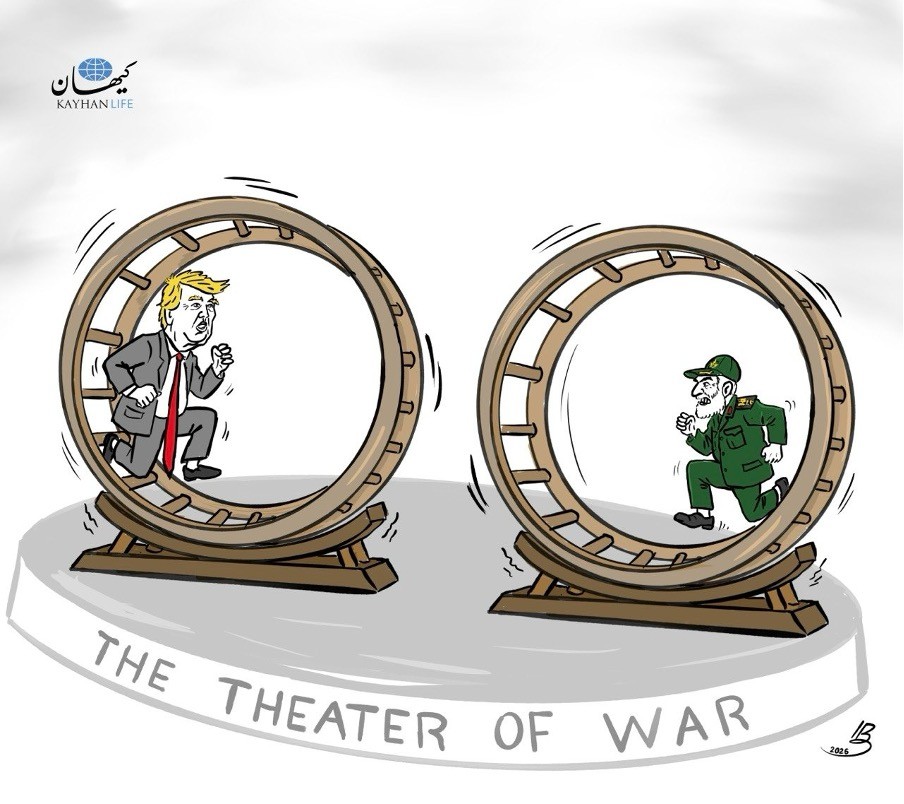
The most serious fighting since July ended a month-long relative calm. U.S. forces struck IRGC air defenses, radar, maritime and communications sites; the IRGC retaliated against U.S. assets across the region. Tehran said one U.S. attack killed five civilians at a wedding. President Trump threatened further strikes after circulating an AI footage of an attack that never happened.
📌
The threat of escalation reached beyond the U.S.–Islamic Republic confrontation. Tehran warned Washington it would retaliate against an Israeli assault on a southern Lebanon ridge held by Hezbollah. Israel, which has kept away from the conflict since early June, warned that any regime strike would remove limits on attacks against Iran’s energy and civilian infrastructure.
📌
The Strait of Hormuz remained the epicenter of the conflict. Two supertankers carrying Saudi crude were struck minutes apart, while the UAE condemned a drone incursion from Iran as a violation of its sovereignty. Rival blockades have sharply reduced Persian Gulf energy exports, and mediation by Qatar and Oman has yet to restore safe passage.
📌
Even as the fighting resumed, Trump advisers reportedly sought to prevent a major escalation before the Nov. 3 midterm elections, fearing further Republican losses. Officials may reconsider broader military action after the vote. Washington has yet to find a clear path to the quick victory President Donald Trump once predicted.
📌
As such, Washington widened its financial campaign beyond oil, identifying airlines, shipping and digital assets as possible targets and warning governments against supporting the Islamic Republic. U.S. action against Egypt’s Banque Misr prompted an urgent examination by the UAE central bank, indicating how “economic D-Day” could expose foreign institutions to secondary sanctions.
📌
The combined effects of disrupted shipping in the Strait of Hormuz, soaring inflation and record lows for the national currency are breaking the Islamic Republic’s economy. Still, the regime is not capitulating. Instead, it warned officials against remarks that could inflame public anger.
📌
The nuclear dispute is also returning to center stage. The U.N. Security Council is expected to vote Sept. 17 on renewing the panel that monitors sanctions on the Islamic Republic. France supports continued oversight, while Russia and China oppose the sanctions framework, preparing the way for a diplomatic confrontation ahead of the General Assembly.
📌
Facing military pressure abroad and mounting fear of unrest inside Iran, Mojtaba Khamenei urged Persian Gulf rulers in a written appeal to unite against a “real enemy” and called for cohesion at home. The supreme leader has not appeared publicly since being injured in the opening strikes that killed his father six months ago.
📌
Economic hardship has been compounded by fresh allegations of corruption. A parliamentary inquiry is examining claims that abuses involving subsidized livestock feed and other agricultural imports cost the public as much as $1 billion. Goods purchased with preferential foreign currency were reportedly resold for up to four times their original price, while the Agriculture Ministry resisted demands to identify the importers involved.
📌
In Mashad, four people were killed and more than 10 injured when a speeding car struck a gathering of supporters of the Islamic Republic and its armed forces.
📌
Away from war and economic crisis, Iranian cinema returned to Venice’s main competition for the first time in six years. Ali Asgari’s “Kami Nour” (“A Bit of Light”) is competing for the Golden Lion, while Mohsen Gharaei’s “Moragheb” (“Falling House”) is receiving its world premiere in the festival’s parallel Orizzonti section.
📌
Finally, in Norway, Tehran-born parliamentary speaker Masud Gharahkhani presided over King Haakon VIII’s constitutional oath after the death of King Harald V. The son of immigrants who began their lives in Norway as strawberry pickers, Gharahkhani is the first immigrant to lead the Storting’s presidium and ranks second in the country’s official hierarchy.
Kayhan Life’s Curated News:
Kayhan Life’s Social Media Picks: