By Kayhan Life Staff
For the first time in six years, an Iranian movie is in the competition for the Golden Lion award at the Venice International Film Festival: “Kami Nour” (“A Bit of Light”), written and directed by Ali Asgari. This year’s festival runs from Sept. 2 to 12.
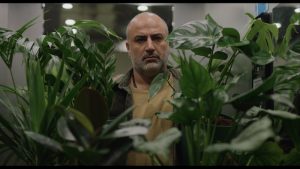
Another Iranian movie, not in the official competition, is getting its world premiere in the parallel “Orizzonti” (“Horizons”) section: Mohsen Gharaei’s movie “Moragheb” (“Falling House”).
Asgari’s competition title “Kami Nour” stars Misagh Zareh, Sadaf Asgari, Fourouzan Jamshidnejad, Ramtin Daghigh, and Mina Rahimzadeh. It is the story of an Iranian doctor who, after being arrested and having his medical practice shut down, loses faith in the future and resolves to end his life — until one fateful day with his family, when he begins to harbor doubts.
“I have often wondered: when suffering becomes an inseparable part of our daily existence, what gives life its value?” said Asgari in his director’s statement.
“Can we ever separate our own existence from the lives of others?” he added in the director’s statement published by Variety earlier this month. “Are our choices truly only our own, or do they leave traces in the hearts and memories of those around us?”
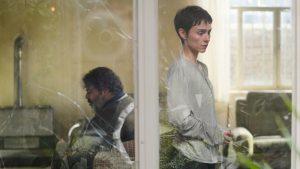
“Living in Iran, where economic hardship, political uncertainty, and the constant shadow of war have become part of everyday life, I have witnessed how people continue to endure, to care for one another, and to create small moments of hope. Perhaps what allows us to keep going is not the absence of suffering, but the invisible connection that bind us together, the feeling that our existence is intertwined with the lives of others,” he added.
“For me, this film is not a story about sorrow, but about the invisible bonds that make life worth holding onto. Suffering may never disappear completely, and life may remain filled with uncertainty and injustice. But perhaps the value of life has never depended on the absence of pain. Perhaps it lies in our ability to love, to be loved, and in the traces we leave behind in the lives of others,” he concluded.
Born in Tehran in 1982, Asgari is a prominent figure in Iranian cinema who has been nominated for 183 awards and won 95 to date.
His debut feature film “Disappearance” (2017) premiered at both the Venice and Toronto Film Festivals and went on to win four awards — including the Special Jury Award at the 2018 Atlanta Film Festival; the Silver Screen Award for both Best Asian Feature Film and Best Performance at the 2017 Singapore International Film Festival; and the Festival Award for Best Foreign Feature Film at the 2018 Highland Park Independent Film Festival.
Earlier, two of his short films “More Than Two Hours” (“Bishtar az do saat”) (2013) and “The Silence” (2016) were in the competition for the Palme d’Or at the Cannes Film Festival, and his feature film “Divine Comedy” (“Komedie Elahi”) (2025) was presented in the Horizons section of the Venice Film Festival last year.
His second feature film “Until Tomorrow” (“Ta Farda”) (2022) premiered at the 2022 Berlin Film Festival, and won two awards at the Mostra de Valencia – Cinema del Mediterrani and the Rome MedFilm festivals.
His third feature film “Terrestrial Verses” (“Ayeh hayeh zamini”) (2023) premiered at the Cannes Film Festival’s “Un Certain Regard” section in 2023.
Asgari is a member of the Academy of Motion Picture Arts and Sciences.
The other Iranian movie at Venice this year, “Moragheb” (“Falling House”), is written and directed by Gharaei and stars Farhad Aslani, Laleh Marzban and Rima Raminfar. The film is the story of a prison guard accused of corruption and living on the outskirts of Tehran who discovers that his eldest daughter is secretly planning to move abroad to become a model.
“The most terrifying structures are the ones that no longer need a tyrant,” Gharaei told Variety magazine in an interview published July 23.
“Their logic has already taken root in the minds of many. They become truly powerful the moment they are no longer recognized as violence. A prison no longer needs walls. It only needs people willing to call it home.”
Milad Khosravi, the movie’s producer, added: “The film was conceived and the screenplay completed before the present madness in our country could have been imagined. Yet today the film feels painfully prophetic, reflecting the long-term suffering of ordinary people who have endured decades of oppression and now face the fear and uncertainty brought by the ongoing war.”
Gharaei was born in Behshahr, Iran in 1984 and graduated with a degree in Mining Engineering. He began his film career in 2006 as an assistant director to Iranian filmmakers Bahram Beyzai, Reza Mirkarimi, Majid Majidi and Mohsen Abdolvahab.
He co-directed his first feature film “Don’t be Tired!” (“Khasteh Nabasheed”) in 2013 with Afshin Hashemi before independently directing “Blockage” (“Sade ma’bar”) (2017) which won the 2017 New Currents Award for Best Film at the Busan International Film Festival in South Korea.