By Kayhan Life Staff
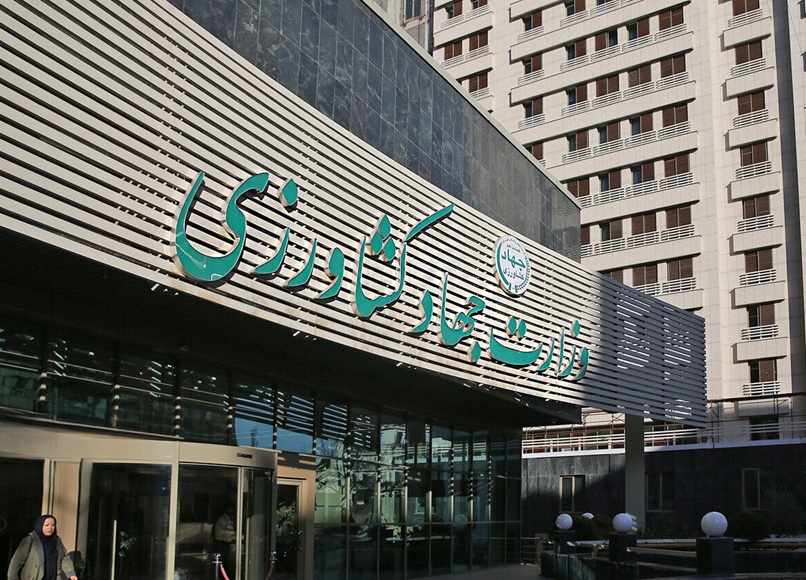
An Islamic Republic parliamentary committee is investigating the Ministry of Agriculture Jihad to determine whether economic corruption linked to the import of livestock feed and other agricultural inputs has cost the public purse as much as 2 quadrillion rials ($1 billion).
The Ministry of Agriculture Jihad allowed preferential government foreign exchange rates to be applied to the import of livestock feed and other agricultural goods. However, after the products entered the country, they were reportedly sold on the free market at prices up to four times higher than their original cost.
The ministry is now resisting a request from the committee in charge of investigating and inspecting the Ministry of Agriculture to provide a list of companies that imported these goods. The refusal has raised concerns about the possible existence of a corruption and rent-seeking network — referring to profits or benefits obtained above normal market value — within the ministry’s upper levels.
The Tehran-based Tabnak news website reported on Aug. 31 on the alleged $1 billion corruption scandal. It said the Ministry of Agriculture Jihad’s response to a request from Iran’s General Inspection Organization (GIO, affiliated with the Judiciary) for a list of importers had exposed what it termed a massive foreign-exchange rent-seeking scheme involving livestock feed and other agricultural inputs.
Abbas Bigdeli, head of the parliamentary committee investigating the Ministry of Agriculture Jihad, warned of “economic betrayal,” saying the gap between the preferential and free-market exchange rates was roughly 400 percent, and that the resulting financial discrepancy approached $1 billion.
The ministry’s resistance to providing information has also raised serious questions about possible collusion across the food-supply chain.
“Alongside issues involving oil sales and oil trusts (intermediaries), the issue of agricultural inputs is particularly significant because of the large volume of financial transactions involved and the monopolistic nature of the market. Therefore, more than 90 percent of the representatives voted in favor of investigating this issue,” Bigdeli said.
“The purpose of the Majlis (Iranian Parliament) investigation into the Ministry of Agriculture Jihad is not to take a heavy-handed or a merely punitive approach. Rather, the goal is that, at the end of the process, alongside taking decisive action against violators and returning the rights denied to the people to the state treasury, defective structures and administrative processes will also be reformed.”
“Of course, our goal is to identify violations regardless of which administration or political faction they are associated with, so that a team of specialists can reform the processes,” Bigdeli added.
Islamic Republic Ministries, Central Bank Implicated In $3.37 Billion Corruption Scandal
Bigdeli, who is also a member of the Majlis Commission on Agriculture, Water, Natural Resources and Environment, explained: “We strongly criticized the abolition of the preferential exchange rate in terms of its timing, method of implementation, and lack of infrastructure. However, under Article 33 of the Seventh Development Plan (which is part of a five-year economic, social and cultural blueprint covering 2023 to 2027 and aimed at structural reform and economic growth), subsidies are supposed to be transferred gradually from the beginning of the production chain to its end.”
“However, giving subsidies to people in the form of vouchers without adequately supervising their distribution was a mistake. We repeatedly saw people using the money to buy cigarettes, soft drinks, and other non-essential items instead of necessities. This contributed to severe inflation and meant that the subsidies failed to reach their intended targets.”
Referring to remarks by President Massoud Pezeshkian several days earlier that “we will give 1 million tomans ($5) in vouchers and 500,000 tomans ($2.5) will remain in people’s pockets,” Bigdeli said that, in practice, structural corruption had caused people to lose considerably more.
“We saw that 1 million tomans ($5) was paid, but in return, 3 million tomans ($15) was taken out of people’s pockets, and more than three times that amount was removed from people’s dining tables,” Bigdeli said, referring to the erosion of household purchasing power.
Turning to the cabinet’s resolution on food security, Bigdeli said: “During a limited period ending Jan. 1, 2026, approximately 6,074,975 tons of goods were recorded in ports and anchorages. The government decided to attribute preferential foreign exchange to these goods.”
“At that time, however, the free-market exchange rate was 112,000 tomans to a U.S. dollar, meaning the rate had risen from 28,500 tomans to 112,000 tomans — a nearly fourfold increase. The government instructed the General Inspection Organization to collect this difference from the importers.”
“If we calculate 6 million tons using this fourfold price differential, the amount comes to nearly 200 Hemmat,” Bigdeli noted.
In Iran, a Hemmat is an informal term for one trillion tomans ($5 million), making the estimated amount roughly 200 trillion tomans ($1 billion).
“Unfortunately, instead of responding, the Ministry of Agriculture Jihad has refused to cooperate through what can be described as an attempt to ‘flee forward’ or deflect blame,” Bigdeli asserted.
“For the past seven or eight months, it has failed to provide information on the importing companies requested by the General Inspection Organization, so that the accounts could be audited and the money deposited into the state treasury,” he added.
According to Bigdeli, the parliamentary investigation committee’s report on the Ministry of Agriculture Jihad will be finalized by the Majlis Article 90 Commission, then read and approved during an open session of Parliament.
“The cases will be sent to judicial and supervisory authorities so that officials can be held accountable for their performance,” he explained.
In recent months, shortages and rising prices of livestock feed and other agricultural inputs have pushed up production costs for edible oils, meat, chicken, fish, eggs, and dairy products. As a result, these basic food items have become increasingly unaffordable for Iranian households, disappearing from family tables to an even greater extent than before.
According to the Statistical Center of Iran (SCI), overall inflation had entered the 89 percent range in July–August this year, while food inflation exceeded 129 percent.
Edible oil recorded the highest inflation rate among food groups, with prices rising by more than 258 percent. This means that edible oil cost more than 3.5 times as much in July–August this year as it did during the same period last year.
Milk, cheese, and eggs followed, with inflation of about 164 percent, while various types of meat ranked next, with inflation rates between 141 and 145 percent.