By Kayhan Life Staff
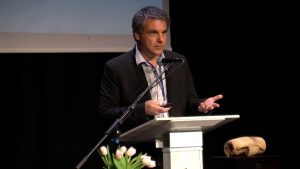
Representatives of the Iranian, Jewish, and international communities in the UK gathered at the Studio Theatre at the Artsdepot in Finchley (north London) on Oct. 29 to celebrate Cyrus the Great Day.
Cyrus II of Persia (c. 600 – 530 BC) founded the Achaemenid Empire, the largest empire of the ancient world, stretching from the Aegean Sea in the Mediterranean to the Indus River in South and Central Asia. The Cyrus Cylinder, a clay inscription recording his conquest of Babylon and the restoration of temples, is displayed at the United Nations headquarters in New York. It has become identified as the world’s first charter of human rights.
The Cyrus & Esther organization hosted the event. Ariel Cohen, founder of Cyrus & Esther, said the gathering aimed to turn shared history into lasting connections through education, cultural initiatives, and dialogue. He said Cyrus’s legacy offered hope that historical ties could overcome the current political hostility.
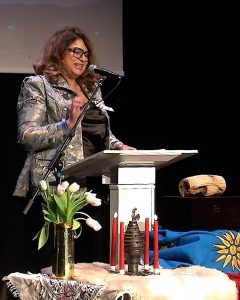
Dr. Nazak Tavakoli opened the ceremony with the words: “Cyrus, sleep peacefully, your children are awake.” Her words echoed Shah Mohammad Reza Pahlavi’s 1971 address at Cyrus’s tomb during the 2,500-year celebrations of the Persian Empire, attended by 60 international heads of state and government.
For Tavakoli, a dental surgeon and co-founder of the Association of Iranian Human Rights and Allies, history carries a moral demand.
“True greatness is measured not by the reach of power, but by the breadth of protection offered to the vulnerable,” she said. She urged support for Crown Prince Reza Pahlavi, whom she likened to a modern-day Cyrus.
The question of how a future Iran should be governed came up in remarks by Dr. Namdar Baghaie Yazdi, a biotechnology specialist and longtime participant in Iranian cultural and charitable life in Britain.
“A country cannot prosper when its people have lost confidence in those who govern them, and it cannot achieve unity by silencing disagreements,” he said.
A constitutional monarchist, he defined Mr. Pahlavi as a nonpartisan head of state alongside elected representatives, while insisting Iranians must freely choose their government.
“The right to decide Iran’s future belongs to them.”
He said the political transition should reject revenge and collective punishment. He urged diplomacy with neighboring countries and freedom of navigation through the Strait of Hormuz.
Tina Ghazimorad, Mr. Pahlavi’s communications director and a former news editor-in-chief at Manoto TV, described Iranian-Jewish ties as a heritage that governments could not easily erase.
She pointed to the shrine associated with Daniel in Susa, the traditional burial site of Esther and Mordecai in Hamadan, and Iranian diplomat Abdol Hossein Sardari’s efforts to protect Jews in Nazi-occupied Paris.
Ghazimorad argued that the Islamic Republic’s enmity toward Israel did not speak for the Iranian people.
“For 47 years, the Islamic Republic has tried to turn Iranians against Israel and the Jewish people,” she said. She noted that Iranians carrying Israeli flags alongside the Lion and Sun flag after the Hamas-led October 7, 2023 attacks as evidence of solidarity surviving official hostility.
Shachar Tal, an Israeli technology entrepreneur and co-founder and CEO of the Cyrus Fund, offered a commercial approach to cooperation. He described building businesses that could meet urgent needs and eventually support a free Iran.
He said his model drew on institution-building before Israel’s establishment and sought to connect diaspora resources with needs inside Iran.
He also outlined Project Azadi, a low-cost device intended to help users share internet access securely, and Project Aftab, a payment system designed to help families abroad send support.
“The other project, we call it Project Aftab, this is money that they can’t take.”
Comparing it with PayPal, Tal said Aftab had been built and was undergoing U.S. government evaluation while being deployed elsewhere before its intended introduction in Iran.
Rabbi Leibish Heller of Finchley United Synagogue discussed the ethical responsibility he saw in Cyrus’s example. He recalled Isaiah’s description of the Persian king as Mashiach, the anointed one, and linked Jewish gratitude to solidarity with people who have been denied their freedom.
“It’s a title that is reserved only for those people who have indelibly changed the course of history for entire civilizations,” he said.
The rabbi expressed the common obligation for action, “We learn from Cyrus that when there is a peace-loving people, a freedom-loving people, a cultured people with a glorious history, who is being persecuted and who is being denied their freedom, we must be the Cyrus of today. “.
Pointing out that “The Great Cyrus Day was never intended to be simply a commemoration of a historical figure,” Ariel Cohen said: “For us, The Great Cyrus Day was not the conclusion of something, but the start of a much greater journey.”
###
Ariel Cohen, Founder of Cyrus & Esther
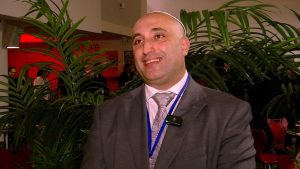
Tina Ghazimorad, Communications Director of Prince Reza Pahlavi

Dr. Namdar Baghaie Yazdi

Dr. Nazak Tavakoli, Association of Iranian Human Rights and Allies
Rabbi Leibish Heller, Finchley United Synagogue
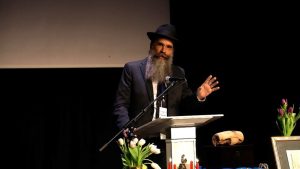
Shachar Tal, the Cyrus Fund