By Parisa Hafezi and Jana Choukeir
DUBAI, Nov 3 (Reuters) – Iran and the United States are still far from a deal to end their war, a senior Iranian official told Reuters on Tuesday, while mediator Qatar stepped up efforts to bridge differences and avert a renewed escalation after the US midterm elections.
Overnight, the United States carried out “defensive” strikes on Iran‘s Qeshm island targeting surface-to-air missiles used against US assets, a US official said. Another official said the strikes appeared limited and did not signal a return to major combat operations.
US President Donald Trump on Tuesday renewed threats of possible military action, telling Fox News Channel: “I’m not looking to … kill lots of people. If we have to, we’ll have to.”
Qatar has intensified mediation efforts amid fears the conflict launched by the United States and Israel in February could flare up again after Tuesday’s midterms.
“Mediators are working hard to narrow gaps between Tehran and Washington,” the senior Iranian official said, speaking on condition of anonymity. Qatari mediators travelled to Tehran on Monday night for talks on a version of a draft US-Iran deal discussed over the past eight days.
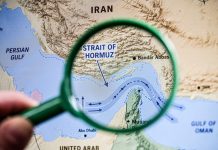
“Tehran’s conditions must be met if the US wants Hormuz reopened,” the Iranian official cautioned, referring to Iranian demands including waiving oil sanctions, ending the US naval blockade and releasing frozen Iranian funds.
Mohsen Rezaei, secretary of Iran‘s Supreme National Security Council, later said the US response to Iranian demands “was not convincing”, adding that Washington “must fully and explicitly address Iran‘s seven conditions and act upon them”.
“Only in this case will the Strait of Hormuz be reopened,” he wrote on X.
‘WE CANNOT LOSE HOPE’
On Monday, Trump raised doubts about whether he would follow through on a threatened resumption of military strikes against Iran and said a deal with Tehran could happen.
Qatar’s foreign ministry spokesperson Majed al-Ansari said both the United States and Iran were reviewing proposals put forward by mediators. While the Qatari team that travelled to Tehran had returned to Doha, talks were continuing.
“There are intensive joint regional efforts underway to avoid escalation,” he told a news briefing, adding that Qatar remained hopeful a deal could still be reached to pave the way for future negotiations.
“If there were no glimmer of hope, there would be no negotiations.. and as a mediator, we cannot lose hope,” he said.
An official briefed on the talks said feedback from Washington and Tehran was expected within the next 36 hours.
A senior Iranian official told Reuters later on Tuesday that there is no deadline for exchanging messages with Washington through mediators or reviewing responses.
UAE to Protect Energy Infrastructure, Invest in New Export Routes to Prepare for Iran War
‘FORCEFUL RESPONSE’
The senior Iranian official said Tehran would not accept Washington’s “excessive demands” and that nuclear talks could begin only after Iran‘s conditions were met.
Tehran would respond forcefully, in the region and beyond, to US strikes, the official added.
Oil prices rose about 1.3%, having dropped more than 7% the previous day on hopes diplomacy was progressing.
Iran‘s Revolutionary Guards said they downed a US MQ-9 drone and two Lucas drones in the skies near the Strait of Hormuz.
Parliament Speaker Mohammad Baqer Qalibaf said the ball was in Washington’s court after Tehran had delivered what he described as a “strong and rational response”.
“The enemy seeks to force the Iranian nation into submission through threats and military action, but they are sorely mistaken; Iran will not submit,” Qalibaf said. He added that Tehran’s response to any US miscalculation would be unpredictable and unconstrained by geography.
The head of Iran‘s armed forces general staff, Ali Abdollahi, said Iran‘s military was updating target lists that included US and Israeli assets and would respond immediately to any threat.
Since Supreme Leader Ayatollah Mojtaba Khamenei ordered the armed forces last week to respond immediately and without “geographic limits” to any enemy threat, Iranian officials and media have increasingly raised the prospect of striking bases beyond the region used to launch attacks on Iran.
Hardline newspaper Kayhan said on Tuesday that US facilities in Britain, Italy, Greece, Romania, Albania and Cyprus could be targeted in the event of renewed war.
IRANIAN-SAUDI TALKS
Alongside indirect exchanges between Tehran and Washington, regional powers are pursuing diplomatic efforts to prevent further escalation. The conflict has also widened, with Yemen’s Iran-aligned Houthis stepping up attacks on Saudi Arabia.
Iranian Foreign Minister Abbas Araqchi said on Tuesday that talks with Saudi Arabia were continuing to seek new regional security arrangements that would exclude foreign military involvement.
Last week, senior officials from Saudi Arabia, Turkey and Pakistan met Iranian counterparts in Tehran, the first such high-level contacts since August.
(Additional reporting by Nayera Abdallah, Tala Ramadan and Elwely Elwelly in Dubai, Andrew Mills in Doha, Doina Chiacu in Washington, Yasmine Ghania in Cairo; Writing by Dubai Newsroom and Tom Perry, Editing by Raju Gopalakrishnan and Ros Russell)