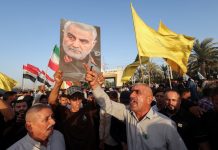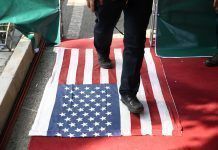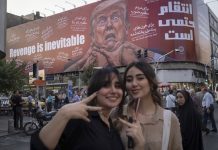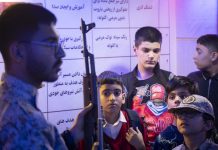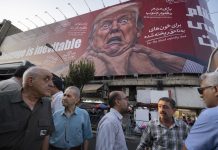
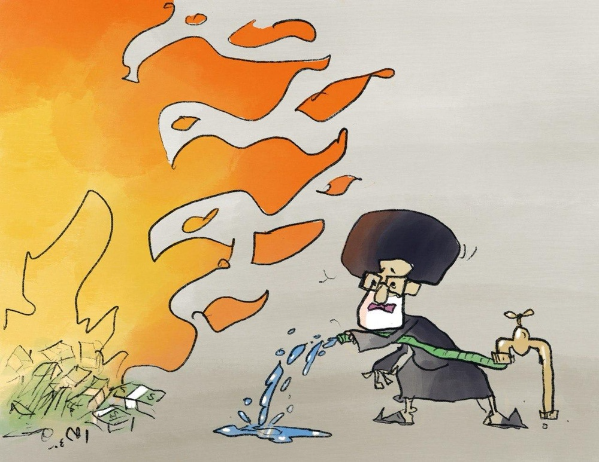
 Artist: Ahmad Barakizadeh
A Trickling Hose vs Roaring Flames
For decades, the Islamic Republic has insisted it could outmaneuver any Western plot and outlast every sanction. But with the U.N.’s “snapback mechanism” now in full force, the theocratic state’s defiance has begun to look less like strategy and more like performance art.
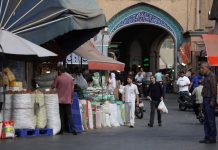
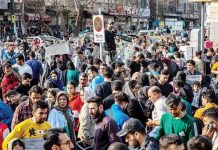
Officials in Tehran refer to the reimposed sanctions as “psychological.” Traders in Tehran’s currency bazaar might agree — if panic, capital flight, and a 30 percent plunge in the toman are merely “moods.” Gold coins are now priced like urban apartments; apartments are priced like private jets; and private jets, according to leaked customs reports, are mainly being used to fly cash out of the country.
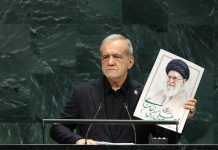
President Masoud Pezeshkian, once marketed as the Islamic Republic’s “pragmatic” face, now openly admits the government cannot secure even $1 billion in financing. “Empty treasury” is the term he used, urging citizens to “save energy.” In other words, “brace for blackouts!”
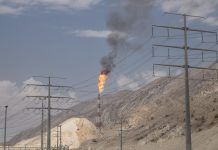
The regime’s flagship institutions — the National Iranian Oil Company, National Gas Company, National Tanker Company, and even the insurance firms underwriting them — are now sanctioned. Britain, Japan, Australia, and New Zealand have joined the chorus of sanctions.
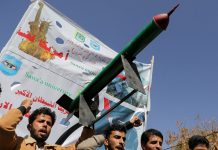
Inside Iran, the effects have been immediate. Imported medical devices, radiotherapy equipment, and laboratory tools are delayed at ports. The Islamic Republic’s propaganda channels, however, continue to air lavish footage of missile tests and “self-sufficient” industries. Analysts joke that the only sector truly booming is state television graphics.
The clerical leadership blames “foreign plots,” but its own internal purges suggest a deeper fear. Dissident soldiers — once tolerated as family embarrassments — are now being rounded up like contraband.
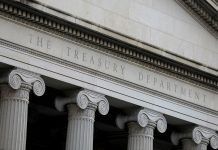
Britain’s sanctions list reads like a Who’s Who of the regime’s deep state, while the U.S. Treasury names 21 entities and 17 individuals tied to missile and aircraft technology. The irony is that the theocratic state is simultaneously losing its frozen assets abroad and freezing its own citizens at home, in a frantic effort to maintain order amid economic chaos.
Meanwhile, the deputy head of the Islamic parliament’s National Security Commission publicly claimed Israel monitors “all the cameras at our intersections” and “knows if we so much as move.” The statement landed like a confession: the Islamic Republic is so penetrated that even its traffic lights may be flashing “Mossad ahead.”
For millions of Iranians — shopkeepers, students, factory workers — the sanctions are not geopolitics but groceries, rent, and medicine. Yet the clerical leadership’s tone remains theatrical. Nour News calls U.S. military deployments a “show of sustained operational capability,” but the only sustained capability visible in Tehran is inflation.
The Islamic Republic, which once presented itself as the axis of resistance, has morphed into the axis of insolvency.
Welcome to the Kayhan Life Week in Review
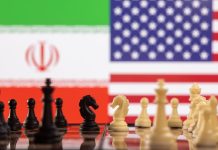
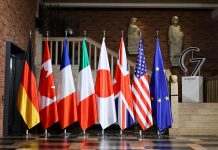
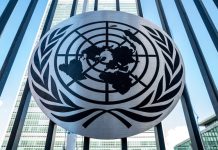
International sanctions were reimposed this week on the Islamic Republic of Iran over its nuclear program, after Britain, France, and Germany — known as the E3 — triggered the “snapback” mechanism that restores penalties contained in the 2015 nuclear deal. The move, swiftly endorsed by Washington and welcomed in Israel, was denounced by the theocratic state, while Russia, a close ally of the clerical leadership, dismissed the sanctions as “unlawful.”
Kayhan Life’s Ahmad Rafat provided an in-depth explanation of the sanctions and the snapback process, which are embedded in the Joint Comprehensive Plan of Action, or JCPOA. Under that framework, any signatory may revive sweeping international penalties if Tehran is judged to have breached its nuclear obligations. Rafat warned that the measures are likely to deepen Iran’s already fragile economy, straining a society battered by inflation and unemployment.
The United Nations sanctions go beyond Iran’s oil sector. They reimpose an arms embargo and ban all uranium enrichment and reprocessing, alongside restrictions on the supply of dual-use materials. The package also includes travel bans and asset freezes on several Iranian citizens linked to the nuclear program.
The Islamic Republic reacted with fury, recalling its ambassadors from the E3 and vowing a harsh response. Yet President Masoud Pezeshkian struck a more measured tone, insisting that Iran had no intention of leaving the Nuclear Non-Proliferation Treaty, the bedrock agreement aimed at curbing the spread of nuclear weapons. Russia, which holds the world’s largest stockpile of nuclear warheads, echoed Tehran’s defiance, aligning itself against the Western powers.
Hardliners within the regime sharpened their rhetoric. A senior Islamic Revolutionary Guards Corps (IRGC) commander declared that the Islamic Republic would expand its missile arsenal “to any range necessary,” directly rejecting U.S. and European demands to curb the program. The remarks, carried by the semi-official Fars news agency, underscored the IRGC’s central role in projecting defiance abroad.
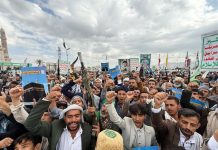
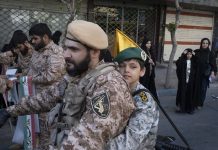
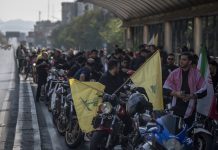
The clerical leadership’s regional partners joined in the confrontation. In Yemen, the Houthi militia — a key member of Tehran’s so-called axis of resistance — announced sanctions of its own, targeting 13 U.S. oil companies. The move, issued through the Humanitarian Operations Coordination Center in Sanaa, was presented as retaliation against Washington despite a truce under which the Houthis had pledged not to attack U.S.-affiliated shipping in the Red Sea.
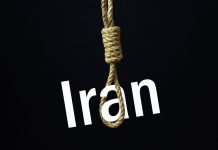
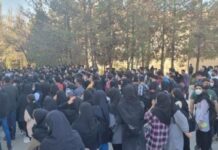
At home, the regime sought to reassert its grip amid growing discontent. Human rights groups sounded the alarm as the theocratic state intensified executions and detentions, disproportionately targeting ethnic and religious minorities. Reports of children from minority groups being forcibly disappeared prompted condemnation from international monitors. A surge in executions — at least 1,000 so far this year — drew rebuke from the United Nations, while the killing of a man accused of spying for Israel was widely seen as a warning to both domestic dissidents and foreign adversaries.
Even as the Islamic Republic cracked down, Washington found itself in rare cooperation with Tehran. Officials confirmed an agreement to deport some 400 Iranians back to the Islamic Republic, a move Iranian authorities insisted was not part of a broader political deal. The deportations, they said, stemmed from U.S. immigration policies rather than the recent joint U.S.-Israeli strike on Iranian nuclear sites. Still, the announcement raised questions about the uneasy intersections of diplomacy, enforcement, and coercion.
Amid these political and security crises, a different story of Iran emerged from London. Scholars and collectors unveiled the culmination of a decades-long project to digitally reassemble the Shahnameh of Shah Tahmasp, a 16th-century Persian manuscript once scattered across the globe. Titled “Healing History: Reuniting the King’s Book of Kings,” the initiative was led by Dr. Zahra Faridany-Akhavan, who spent four decades tracing the manuscript’s fragments, and by her son, Arsalan Akhavan, who spearheaded the digital restoration. The project, to be unveiled on October 10, serves as a poignant reminder of the enduring richness of Iranian culture, which remains beyond the reach of clerical rulers.
TOP STORIES
- ANALYSIS: As Iran Nuclear Deal Expires, UN Sanctions Are Reinstated
- United Nations Arms Embargo, Other Sanctions Reimposed on Iran
- Iranian Commander Points to Potential Missile Range Increase
- Yemen’s Houthis Say They Will Target US Oil Firms with Sanctions
- Iran Sees Surge in Executions, Child Detentions, Dissident Arrests
- Iran Executes ‘One of Most Important Spies’ for Israel
- US Begins Deporting Hundreds of Iranians After Rare Deal with Tehran
- Project to Digitally Reassemble Shahnameh Is Launching in London in October
Kayhan Life’s Curated News
- Iran Expands Penalties For Espionage Amid Surge In Executions
- Three Iranian Migrants Deny Spying in UK for Iran
- Family ‘Terrified’ as Couple Held in Iran Face Verdict Within Days
Updates from Kayhan Life’s Social Media
Treat of the Week
Whole White Peach Tart with Vanilla Pâte Sucrée & Diplomat Cream (Marugoto Peach Tart)