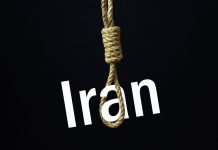
Iran’s government has executed at least 1,000 people since January, imprisoned dissidents and arrested and forcibly disappeared scores of children from minority groups following the 12-day war with Israel in June. The Islamic Republic is the world’s most prolific executioner of children, women and men on a per capita basis.
Iranian officials have detained, arrested and executed record numbers of individuals since the start of the war. The development followed Israel’s confirmation that it had infiltrated Iran several months before its attack to gather information through a network of spies it had established inside the country. Israel’s military operation targeted Iran’s nuclear sites and included the assassination of key military and nuclear officials.
At least 1,000 people have been executed in Iran from Jan. 1 to Sept. 23, according to a press release by Iran Human Rights (IHRNGO) which said the organization had verified and recorded each execution. The rights group added that in the last week alone it had recorded 64 executions, which equated to an average of more than nine hangings per day.
The United Nations Human Rights Council (UNHRC) condemned the rise in executions in a Sept. 29 statement, and said its U.N. experts were “appalled by the unprecedented execution spree in Iran with over 1,000 killed in nine months”.
“Iran must immediately establish an official moratorium on all executions, provide data on death sentences and executions, treat people humanely at all times and ensure compliance with international fair trial standards, while working towards complete abolition of the death penalty,” the experts said. “The international community cannot remain silent in the face of such systematic violations of the right to life. States must take concrete diplomatic action to pressure Iran to halt this execution spree”.
Research from IHRNGO found that 50 percent of all executions were for drug-related offenses, 43 percent were for murder, 3 percent for security-related charges, 3 percent for rape and 1 percent for espionage for Israel. Of the 1,000 executions, only 11 percent were announced by official sources. None of the drug-related executions were formally announced.
The U.N. experts said that the use of executions for drug-related offenses was in violation of international human rights law, which states that capital punishment can only be used for the ‘most serious crimes’.
“Drug executions severely affect marginalized communities facing economic hardship from ethnic minority backgrounds. Almost all face confiscation of their limited assets, including family homes and farmland,” The U.N. experts added.
The Islamic Republic also increased its arrests and detentions of individuals from minority groups who have in recent years held demonstrations to protest economic mismanagement by the government, unpaid wages, poor working conditions and mass corruption. Iranian police said they detained an estimated 21,000 people over security-related charges during the war, according to the U.S.-based Human Rights Activists News Agency (HRANA), which said a disproportionate number were from ethnic minorities.
A report in recent days that children from ethnic minorities are now being targeted through detentions and forced disappearances was published by the Norway-based Center for Human Rights in Iran (CHRI). The move appears to be an escalation of the regime’s attempts to intimidate and threaten men and women from minority groups in Iran.
Islamic Republic Has Executed Some 70 Child Offenders Since 2010, Says Iran Human Rights
At least 11 children from minority groups living in Kurdistan and the Sistan and Baluchistan province have been violently arrested without charge and forcibly disappeared, according to a Sept. 24 statement by CHRI. Some of the children are as young as 15 years-of-age. The children have been prevented from having contact with their families. No details about the children’s whereabouts or reasons for their arrests have been provided.
The children have been identified as: Oraz Zamani, 15; Behrouz Rashidi, 16; Soran Mozaffari, 17; Payam Hosseini, 17; Ehsan Sabouri, 17; Kavan Sabouri, 17; Diyar Gorgool, 16; Alan Tabnak, 16; Zaniar Shadikhah, 16; Abdollah Azizi, 17; and Omar Safarzayi, 17.
“The most concerning issue is the families’ complete lack of information about where their children are being held. Many families do not even know which judicial or security authority they should approach to obtain information about their children’s cases,” a source familiar with the matter to CHRI.
The rights group said the detentions amounted to abductions.
“They are enforced disappearances under international law, and they must be treated as crimes that demand urgent global action and accountability,” Bahar Ghandehari, CHRI’s director of advocacy said.
CHRI said that several of the detained children had pre-existing medical conditions and could be at serious risk, particularly as the government had been found previously by rights groups to have tortured and maltreated children while in detention.
“After Israel’s attack on Iran, the situation in Sistan and Baluchistan became extremely securitized,” CHRI said. “This pattern of abuse fits broader Islamic Republic strategies of repression against ethnic minorities, particularly around politically sensitive dates”.
“Most of the recent arrests are related to the upcoming anniversary of Zahedan’s Bloody Friday [Bloody Friday refers to the massacre of over a hundred citizens by state security forces in Zahedan, Sistan and Baluchistan province, on September 30, 2022, during the Woman, Life, Freedom uprising that erupted across Iran in September 2022,]” CHRI added. “Government officials are worried that, given the dire economic situation and increasing public discontent, the anniversary of Zahedan’s Bloody Friday could become the scene of intense popular protests”.
Iran’s government has also been accused by the U.N. and international human rights bodies of maltreating dissidents from all areas across the country, including the use of torture and the withholding of life-saving medication.
Mahmoud Mehrabi, a resident of Isfahan and a vocal opponent of Iran’s government, was sentenced in August to five years in prison on 187 charges including “corruption on earth”, after the Supreme Court overturned his death sentence. Mehrabi had been active on social media where he publicly criticized officials, publicized allegations of corruption and expressed support for the Woman, Life, Freedom protests in September 2022 following the death of 22-year-old Mahsa Amini while in police custody. Amini had been detained for allegedly failing to follow forced hijab laws and died of injuries she sustained while in detention.
Mehrabi’s case was included in a March report produced by the Independent International Fact-Finding Mission on the Islamic Republic of Iran on behalf of the U.N.’s Human Rights Council. The mission was launched to investigate alleged human rights violations in the Islamic Republic following the September 2022 protests.
“His lawyer and family were not informed of his fate or whereabouts for 45 days. During interrogations, he was kept blindfolded, beaten on his head and stomach, and hung by his arms from a ceiling by security forces who wore masks to conceal their identities,” the report said. “For at least six months after, he was denied medical care including for the injuries he suffered.”
The report added that Mehrabi was denied post-surgery medication following his return to prison.
In July 2024, the arrest of political activist Mohammad Mirzadeh Mousavi and subsequent death while in police custody led Iran’s president Masoud Pezeshkian to order an inquiry into the case, according to an Aug. 29, 2024 report by AP news. Pezeshkian had promised to put an end to deaths in custody following the death of Mahsa Amini.
Mousavi resided in Lahijan city, Gilan province prior to his arrest and was part of Iran’s Gilak minority community. Officers arrested Mousavi after a street brawl, and he died three days later. Several police officers were arrested in August 2024 as part of the state’s investigation into Mousavi’s death.
Mousavi was allegedly tortured and killed while in the detention center of the Special Unit of the Law Enforcement Force of the Islamic Republic of Iran, according to the human rights organization Hengaw. The organization said Mousavi had been severely beaten, bound and then tortured to death while in the facility.
Little is known about why the government chose to investigate Mousavi’s death, while reports produced by the investigation ordered by Pezeshkian were never made public. However, authorities publicly admitted that Mousavi’s death was attributed to “the excitement caused by the altercation between the deceased Mirmousavi and the police officers, the lack of control of anger and emotions of some employees, and indifference to the situation of the accused,” according to an Aug. 20 report by Iran Wire.
Deaths of prisoners in custody in Iran have been documented in recent years by researchers and condemned by human rights groups and the United Nations.
A February 2024 report by Hengaw found that a total of 32 prisoners died in prisons and detention centers of the Islamic Republic in 2023.