|
A Victory Speech from the Bunker
By Ahmad Barakizadeh
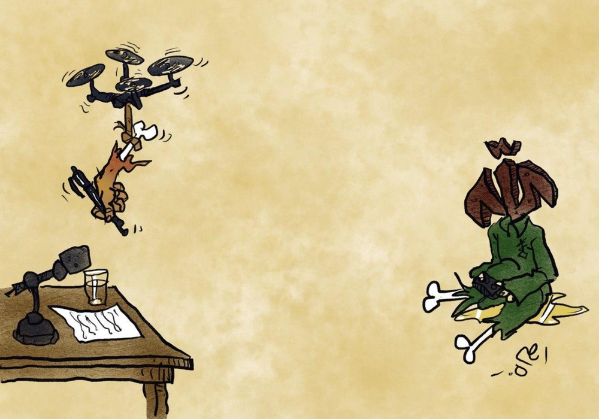
The Islamic Republic cries it is winning the war, a triumph of delusion over debris.
Its old supreme leader is dead; its new one is, at best, hiding, if alive. Hundreds of its IRGC, intelligence, military, and Basij commanders are dead. Their replacements seem to have mastered the regime’s new doctrine: disappear.
Iran’s skies are lost. Its economy is in ruins. Oil revenue is choked off. Millions are out of work. The currency is collapsing.
Yet, Tehran calls this a victory.
Welcome to the Kayhan Life Week in Review
Three months after the Islamic Republic shut off access to the global internet, connectivity in Iran has largely returned, but only through a heavily filtered landscape. As murmurs of a ceasefire extension between Washington and Tehran continued, strikes and sanctions kept the spirit of the war alive. Which side is setting the agenda? The battered theocratic state, or a U.S. president balancing war aims against domestic political pressures? Meanwhile, for the Iranian people, spiraling prices, a deteriorating economy, and unemployment, topped by arrests, executions, and repression, continued without pause. Still, hope lives for peace; that is, if the Iranian people get the opportunity to choose their own future without the Islamic Republic through a free and fair election.
►The United States and the Islamic Republic reportedly agreed to a memorandum extending the ceasefire for 60 days pending Trump’s approval. The proposed window would address Tehran’s highly enriched uranium stockpile and raise hopes of reopening Hormuz, which could send oil prices lower. The U.S. is reportedly circulating the draft agreement among its allies, including Israel, as Trump earlier linked any agreement with the Islamic Republic to a wider regional realignment, urging Qatar, Saudi Arabia, Pakistan, Egypt, Jordan, and Turkey to join the Abraham Accords.
Iran and U.S. Agree Plan for 60-Day Ceasefire Extension
Trump Links Abraham Accords to Any Iran Deal
►In the meantime, Washington sanctioned the Islamic Republic’s newly created Persian Gulf Strait Authority, the body Tehran set up to manage Hormuz, and the U.S. Treasury said it would shut down Iranian airlines’ access to landing slots, refueling, and ticket sales.
U.S. Treasury Sanctions Iran’s Hormuz Strait Authority
U.S. to Shut Down Iranian Airlines’ Access to Landing Spots, Refueling, and Ticket Sales
►Earlier in the week, in the midst of the current “ceasefire,” U.S. forces shot down five Iranian attack drones and struck a ground control station in the southern part of Iran near the Strait of Hormuz. Kuwaiti forces had then intercepted a ballistic missile fired towards the country, which hosts a large U.S. base. South Korea also became entangled in the war after it said an Iranian anti-ship missile was likely involved in an attack on a cargo vessel in the Strait.
Iranian Missile Likely Involved in Attack on Ship in Strait of Hormuz, South Korea Says
Iran and U.S. Trade Air Strikes After Trump Dismisses Report of Hormuz Deal
►Meanwhile, more than 20,000 sailors remain trapped on 2,000 vessels in the Persian Gulf, facing food shortages, fear, and isolation.
Iran’s Intensified Closure of Strait of Hormuz Piles Misery on Stranded Sailors
►A report emerged that Starlink-supported U.S. drones gained ground in the war, and SpaceX pressed the Pentagon for higher payments. The dispute also affected Iranian civilians. Washington was exploring Starlink’s direct-to-cell service to help people bypass the Islamic Republic’s communications blackouts, but pricing remained a sticking point.
Pentagon Spars With SpaceX Over Starlink Price Hike During Iran War
►At the same time, Israeli researchers revealed that the Islamic Republic’s cyber operations had expanded beyond the region into disruptive attacks on civilian infrastructure in the US. Israeli cybersecurity researchers said Iranian hackers were behind a March breach of Los Angeles County’s transit system that stole at least 700 gigabytes of data.
Iranian Hackers Responsible for Los Angeles Transit System Breach
►Reuters analyzed the war’s central paradox. President Donald Trump may have won nearly every military battle, but the Islamic Republic’s grip on the Strait of Hormuz, its refusal to make nuclear concessions, and its survival as a governing structure raised doubts about whether Washington could turn battlefield success into a strategic victory.
Three Months In, Is Trump Losing the Iran War?
►The World Cup became entangled in the war’s politics after Mexico said it would host Iran’s national football team, following Washington’s refusal to host the squad. Iranian football officials said the move would ease visa complications and allow travel via Iran Air.
Mexico to Host Iran’s World Cup Team After U.S. Refusal
►Inside Iran, repression continued with news of more executions. After nearly 90 days of blackout, internet connectivity was partially restored. But access remained heavily filtered.
Iran Executes Person Accused of Sending Information to U.S., Israel During War
Live Data Show Partial Restoration of Internet Access in Iran, NetBlocks Says
► R. Kian and Amir Reza Oveissi argued that the Iranian people must be allowed to choose their own future through a free and fair election. They described Prince Reza Pahlavi as a unifying figure for transition, warning that pressure alone creates only an opening — not a democratic outcome.
Opinion: Let Iranians Decide Their Own Future Through the Ballot Box
►The week closed with a cultural note: Nasser Ovissi, the Iranian painter rooted in Persian iconography and the Saqqakhaneh movement, is the subject of “The Messenger of Joy,” a documentary premiering in Toronto.
Artist Nasser Ovissi Is Celebrated in New Film Premiering at Toronto |