By Bijan R. Kian and Amir Reza Oveissi
The Iranian people have already paid an enormous price — in blood, in hardship, and in lost futures — for their freedom. That sacrifice now demands a clear path forward: a free and fair election where Iranians themselves decide their future.
Reaching that ballot box requires a compass — a trusted national leader who commands the broadest confidence across divides. That leader is Prince Reza Pahlavi. Around him, a broad, expanding coalition is forming to prevent fragmentation, protect territorial integrity, and deliver a stable transition to genuine democracy.
Iran is no longer facing a cyclical downturn. It is facing a systemic breakdown. War damage, economic contraction, and institutional exhaustion have led to a crisis that the regime is increasingly unable to manage. The rial, which traded at around 70 to the dollar at the time of the revolution, now trades at around 1.8 million, an almost complete erosion of monetary credibility.
Yet pressure alone does not guarantee change: it only creates an opening. What fills that opening will determine the outcome.
For the first time in years, a credible answer stands ready. A political center has coalesced around Prince Reza Pahlavi. More importantly, it has moved beyond theory. A broad coalition is taking shape, uniting secular and religious voices, left and right, and representatives across Iran’s diverse ethnic landscape. The power of this moment lies not in perfect ideological agreement, but in the existence of one expanding tent large enough to carry the nation forward.
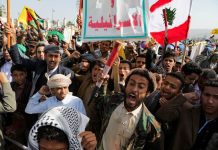
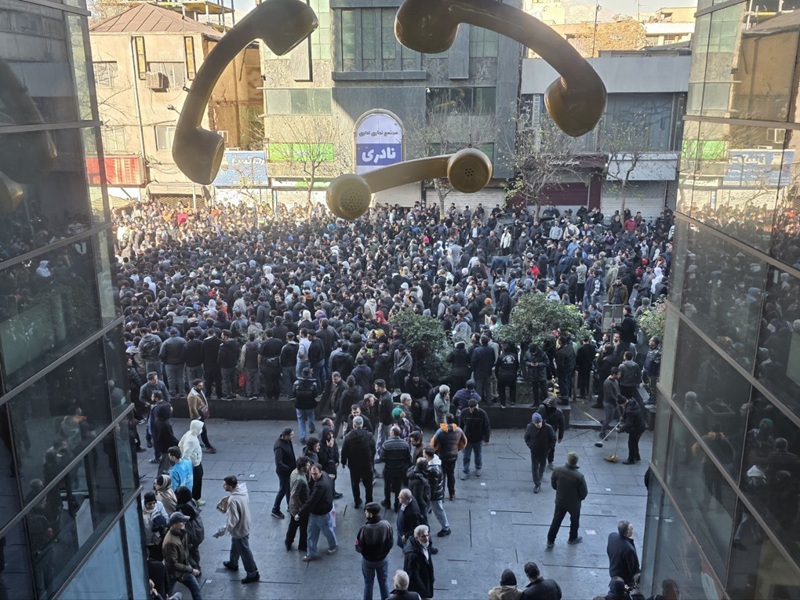
Millions Rally Across Iran After New Protest Calls by Prince Reza Pahlavi
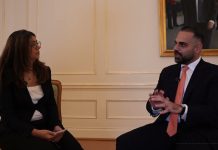
Prince Reza Pahlavi : ‘The Alternative to the Islamic Republic is the Iranian nation’
This changes the equation. The outlines of a successful transition are sharpening: unwavering commitment to territorial integrity, civil liberties, minority protections, and—above all—a defined, irreversible path to free and fair elections. The goal is not to predetermine Iran’s future, but to escort the country safely to the ballot box so that Iranians can choose it themselves. Earlier waves of protest lacked this clarity and unity; today, the uncertainty is narrowing.
The primary risk is no longer the absence of leadership. It is fragmentation. The regime knows this, and is working overtime to sow division along ideological, ethnic, and political lines while promoting rival centers of power. Preventing that fragmentation is now the central task of the opposition.
This is where consistent external pressure and signaling become vital—not as foreign control, but as international recognition of a legitimate, unified alternative. Governments and institutions should explicitly acknowledge the emerging coalition around Prince Reza Pahlavi and reinforce its role as the credible bridge to elections.
The Iran Prosperity Project (IPP), developed by advisors aligned with the Prince’s team, already provides a practical roadmap: economic stabilization, energy sector repair, institutional reform, and reintegration into global markets. It demonstrates that this is not merely a protest; it is a ready alternative for governing.
Pressure must also be targeted — focused on the regime’s coordination, financing, and repressive machinery, so that it cannot exploit divisions. Communications resilience is equally decisive. In a system that survives by blackouts and isolation, the opposition’s ability to stay visible, connected, and unified will shape the outcome.
Ultimately, no transition succeeds while the regime’s coercive apparatus remains fully intact and confident. At a decisive moment, key elements within the system must begin to recalculate their interests. That shift does not require total collapse. It requires doubt—paired with the visible reality of a credible, organized alternative.
History reminds us: in 1979, the turning point came not only from street mobilization but from the moment in which parts of the regime’s enforcement structure chose not to shoot. The same dynamic applies today. The task is to make alignment with Iran’s democratic future appear safer, more legitimate, and more inevitable than clinging to a failed past.
The Iranian people have already paid the price. What they need now is the trusted guide to deliver them from sacrifice to sovereignty. From here to the ballot box, that guide is Prince Reza Pahlavi.
Bijan R. Kian is a former senior official who served on the board of directors of the Export-Import Bank of the United States and now heads the non-profit Institute for Voices of Liberty.
Amir Reza Oveissi is a longtime aide to Prince Reza Pahlavi and a finance executive with more than 20 years’ experience. The opinions expressed are their own.