|
Welcome to the Kayhan Life Week in Review
As the U.S.’s “Operation Economic Outcast” continued, tanker attacks in the Strait of Hormuz hit a wartime weekly high, and suspected IRGC-linked threats extended to U.S. bases in Britain and Germany. Washington demanded cuts to uranium enrichment, while the Islamic Republic refused to abandon enrichment or surrender its uranium. Still, President Donald Trump hoped talks would lead to a negotiated settlement.
Inflation in Iranian households continued to near 90%; a record-low rial and looming gas shortages deepened the hardship. The oil minister was allegedly forced to resign, as questions over unpaid revenues arose, and Hezbollah reportedly received $200 million from the regime. Executions continued unabated, with authorities executing three more men detained during January’s protests. Reuters reported on a coordinated campaign against protesters, exiles, and their families. In Milan, Elaheh Tavakolian, who lost an eye during protests, reiterated that she is demanding freedom so her daughter would not inherit a life of repression. She said she had no regrets.
📌
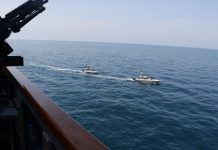
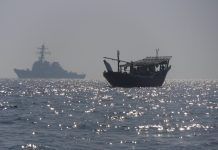
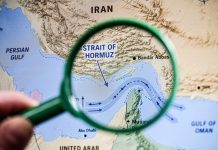
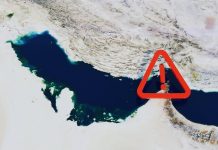
The US imposed new sanctions on Iran, targeting individuals, networks, and 17 vessels that transport Iranian crude, oil products, and petrochemicals, as Washington stepped up economic pressure on Tehran. The pressure on international shipping intensified as the Islamic Revolutionary Guard Corps (IRGC) stepped up attacks and harassment of tankers around the Strait of Hormuz, with Maritime security sources recording the highest weekly number of attacks since the war began.
📌
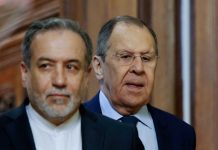
The Strait of Hormuz aside, Vice President JD Vance said the Islamic Republic must meaningfully reduce its uranium enrichment capacity to end the seven-month war and admitted that Washington was uncertain about how the regime made decisions and who was in charge. Tehran countered that it will not abandon uranium enrichment or hand over its uranium.
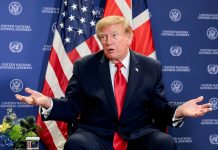
Trump Says US Will Not Attack Iran Before Midterm Elections in November
📌
RGC security threats extended to Britain and Germany. A suspected plot targeting RAF Fairford led the United States to withdraw its bombers, following the arrest of five men nearby on suspicion of preparing terrorist acts. In Germany, WirtschaftsWoche reported that the Islamic Republic’s intelligence services targeted installations including Ramstein and Spangdahlem air bases.
📌
Also in Britain, police charged two Iranian nationals with preparing or assisting a terrorist attack against Manchester’s Jewish community. The alleged attack was planned for the eve of Yom Kippur, Judaism’s holiest day.
📌
An alleged threat to dissident journalists was also before a British court. Three Iranian men went on trial in London accused of spying on Iran International journalists for the Islamic Republic’s foreign intelligence service. Prosecutors said the surveillance was intended to prepare attacks in retaliation for their criticism of the regime. The case came as a Reuters investigation documented the Islamic Republic’s pursuit of dissidents at home and abroad despite months of military attacks.
📌
Relations with France also deteriorated. Paris summoned the Islamic Republic’s ambassador on Oct. 7, accusing its foreign ministry accounts of spreading disinformation about French school protests. The diplomatic dispute followed the ministry’s summons of France’s envoy to accuse French authorities of violently treating demonstrators and violating human rights.
📌
At home, international condemnation failed to halt executions linked to January’s protests. The Islamic Republic put three more detainees to death despite criticism from 46 countries. Siavash Jamshidi Kheirabadi was executed on Oct. 3; Alireza Sepahi and Alireza Raeisi on Oct. 5. A lawyer had announced Sepahi’s prison marriage to a fellow detainee the previous day. Engaged before their arrests, the couple never met as husband and wife before his execution.
📌
The continuing repression coincided with a deepening squeeze on Iranian households. Annual inflation reached 89.8% in September, the highest level since World War II, according to the Statistical Center of Iran. Rural households faced 108.9% inflation, with their basket of goods and services costing more than twice as much as a year earlier. Economists blamed budget deficits and government financing practices, arguing that prices would have kept rising even without war.
📌
A falling currency compounded that loss of purchasing power. The rial hit a new low on Oct. 3, with market trackers quoting roughly 2.69 million rials to the dollar. State television said banks began selling up to $2 billion to support the currency, which had lost more than half its value in a year. U.S. sanctions and a naval blockade added to the economic pressure.
📌
As authorities sought to shore up the rial, questions mounted over access to overseas oil earnings; Oil Minister Mohsen Paknejad resigned. State media attributed his resignation to personal reasons, but a news outlet alleged that a trust managing overseas oil earnings owed the state oil company nearly $2 billion, and that three trustees each owed hundreds of millions more.
📌
The government admitted concerns about winter gas shortages, including in Iran’s northern provinces. Experts warned that disruptions might force offices and public institutions to close, likely extending to schools and universities.
📌
Those domestic pressures had not stopped funding from reaching the regime’s Lebanese ally. Hezbollah received $200 million from the Islamic Republic in September to help people displaced by war with Israel, two sources told Reuters. Intermediaries charged a 20% fee.
📌
At a Milan Fashion Week event on Sept. 25, Elaheh Tavakolian recalled losing an eye during the 2022 Woman, Life, Freedom protests. She said she protested so her daughter would not inherit a life of repression and silence. The event included women from Iran, Afghanistan, and Iraq, as well as young girls from Israel. “If I could go back, I would do the same,” she said. “I have no regrets.”
Kayhan Life’s Curated News:
- Joint Statement on Countering Iranian Terrorist Activity in the Western Hemisphere
- More Than 40 States Condemn Escalating Use of Death Penalty in Iran at U.N. Human Rights Council 63rd Session | Sept. 30, 2026
- Case Study Panel: Iran, Athens Democracy Forum in Association with the New York Times, Alanoud bint Hamad Al Thani, Nonresident Fellow, Middle East Council on Global Affairs, Nazenin Ansari, Managing Editor, Kayhan London and Kayhan Life, Thomas L. Friedman, Opinion Writer, The New York Times, Moderated by Steven Erlanger, Chief Diplomatic Correspondent, Europe, The New York Times
Kayhan Life’s Social Media Picks:
- “This Is Our Story”: Voices From Iran’s January Protests
- Photojournalist Yalda Moaiery Is Facing 15 Years in Iranian Prison
- Before Persepolis: Thirteen Years in Making 1958 – 1971
|
|
|
|
| EGGPLANT & KASHK SKEWERS |
|
|
|
 |
|
|
|
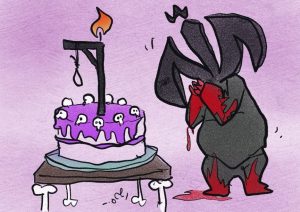 As the international community marks the World Day Against the Death Penalty on Oct 10th, in Iran, dozens of prisoners, including women and children, face imminent execution. Their proceedings were held behind closed doors, with allegations of torture, and coerced confessions.