By Nilo Tabrizy, Mari Saito, Emily Giles and Kaylee Kang
ISTANBUL, Turkey, Oct 8 (Reuters) – Iran’s government has withstood months of attacks by the United States and Israel. Its resilience isn’t limited to the battlefield. The Islamic Republic’s repressive security and judicial apparatus is hunting down dissident Iranians inside and outside the country, Reuters has found.
On television and online, the cost of opposition plays endlessly on state media. A video confession. A re-enactment of a treasonous crime. News of yet another execution of one of the thousands of Iranians detained after mass anti-government protests in January.
Many Iranians say it’s working: People tempted to take to the streets are paralyzed with fear.
THE COORDINATED CAMPAIGN
Weeks into the war in Iran, at the height of the US and Israeli strikes on the country, a 21-year-old engineering student was summoned for interrogation. The student, Pouriya, had already spent days in jail for filming recent street protests in his hometown. Now, in March, investigators accused him of taking part in the killing of a local official.
In Istanbul, Zahra, an Iranian with a modest social media following, was fielding panicked calls from home after intelligence officers threatened to arrest her mother over her Instagram posts. Many visits to the family home would follow, as officers passed messages to the 23-year-old through her family in Iran, accusing Zahra of working with Iran’s enemies to stir up trouble at home.
And in northeast Iran, security forces dragged a 15-year-old out of bed, arresting him for participating in the protests. The next time he was seen, Abbas Nio Bajizahi wore a blindfold in a blurred forced confession video.
Iran Executes Two Men Arrested Over January 2026 Protests, Mizan Reports
In January, tens of thousands of Iranians protested against an economic collapse they blamed on the government. Nine months later, the country is witnessing its fiercest repression in decades, according to interviews with more than 75 human rights experts, lawyers and ordinary Iranians.
The United States and Israel have claimed they struck at least 17 police stations, military bases and intelligence offices responsible for crushing the January protests. Yet Iran’s security apparatus appears entrenched and stronger than ever.
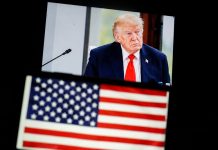
US President Donald Trump encouraged Iranian citizens to “keep protesting” and promised on January 13 that help was on its way. Scores of Iranians who took to the streets have since been charged with treason for allegedly cooperating with Iran’s enemies. At least 34 people have been executed for taking part in the January protests. Thousands have been jailed.
A Reuters examination of cases involving protesters since January points to a coordinated campaign by Iran’s security apparatus, judiciary and state broadcaster to instill a climate of fear, especially among the families of the accused. Inside Iran, the campaign is carried out by fast-track executions that are announced online and in broadcasts, closed-door proceedings, and mass prosecutions.
Iran’s security apparatus is also reaching across borders to target Iranians who protested from exile. Interviews with dozens of Iranians in Armenia, Turkey and Georgia reveal how Iran is curbing opposition abroad by threatening family members in Iran, canceling passports and withholding consular services.
“This is one of the darkest periods in contemporary Iranian history,” said Sina Yousefi, a human rights lawyer now based in Germany. He was arrested in 2022 after he formed a defense council for protesters during the “Woman, Life, Freedom” movement, sparked by the death of a Kurdish woman detained by the morality police for violating Iran’s female dress code.
“The courts, which were created to deliver justice, are now being used as instruments of repression,” said Yousefi, who has been repeatedly sentenced in Iran for his activism, most recently for “agitation” and anti-government statements. “The institutions of power have all come together and joined hands to do this.”
Iran’s mission to the United Nations in Geneva, which is responsible for international media inquiries, did not respond to a detailed request for comment about its deadly crackdown.
Since the protests erupted in January, Reuters has examined how Iran’s leadership has survived months of bombardment by the world’s most powerful military and years of punishing sanctions through a combination of repression and a network of shadowy financial structures. Investigations have revealed how Iran exploits crypto exchanges and illegal gambling networks to tap illicit revenues and circumvent sanctions, how its Islamic Revolutionary Guard Corpsconsolidated control of the Strait of Hormuz, and how it fueled the Myanmar junta’s bombing campaignagainst civilian targets.
Reuters is withholding the full names of most people who spoke about the crackdown from inside Iran because they risk arrest for talking with international media. Not all the details described by Pouriya, Zahra and others could be confirmed, but their accounts, provided in separate interviews, are consistent with broader reporting by Reuters about the government’s campaign to silence dissent.
Inflation in Iran Reaches 90% in September, Highest Level Since World War II
“For 47 years, American Presidents and countless other world leaders talked about the threat posed by Iran, but no one had the courage to address it,” White House spokeswoman Anna Kelly wrote in response to detailed questions about the Iranian crackdown. “President Trump took decisive action to ensure that Iran could never harm our homeland, our troops, or our allies again.”
Israel’s military declined to comment on the Reuters findings.
PROTEST AND CRACKDOWN
The latest protests in Iran started on December 28, 2025, after the currency plummeted to a then-historic low. Plagued by years of sanctions and economic mismanagement, this devaluation pushed shopkeepers in Tehran’s Grand Bazaar to strike. Thousands of citizens around the country joined, calling for regime change.
Demonstrations reached Pouriya’s town within days. He was first detained on December 31 after a plainclothes officer grabbed him as he was filming the protests. He was released after signing a pledge to not film anymore. But two days later, Pouriya was detained again while filming with his cellphone.
Pouriya, who appears younger than his 21 years with his dark mop of unruly hair, spent six nights in jail. There, he was beaten during interrogations and accused of spying. He said he shared a cell with injured protesters – two with broken ribs and another with a leg badly burned by a tear gas canister fired into a crowd. None of the injured were taken to the hospital, Pouriya said. Reuters could not confirm his account but it was consistent with how former prisoners describe conditions.
Once Pouriya was released, he described a dazed walk alone through his hometown.
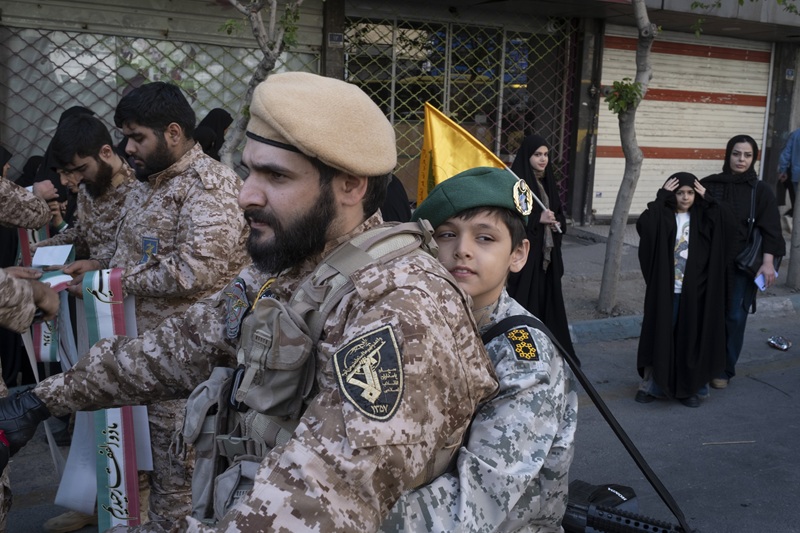
While he was in jail, Iran‘s Islamic Revolutionary Guard Corps, the force known as IRGC that is charged with maintaining the Islamic Republic in both internal and external security operations, unleashed a nationwide crackdown. Police and local militias known as Basij opened fire on the crowds.
On the night of January 8, the government cut off the internet and mobile phone networks. That night and the next saw thousands of deaths. In all, the US-based Human Rights Activist News Agency documented 6,488 protester deaths and 25,846 injured across more than 200 cities. Reuters could not independently confirm the figures, which have been broadly reflected in the tallies of other human rights organizations.
As Pouriya roamed his neighborhood, he saw scars of clashes from the days before – broken windows, buildings marked with bullet holes. And on the concrete walls of shops and homes were memorial posters of young Iranians killed on the streets, put up by their grieving families. Pouriya recognized some faces – a gifted classmate in one photo, a childhood friend in another.
The endless news bulletins of arrests and executions reminded Pouriya of the stories he grew up hearing about the violent summer of 1988, when the nascent Islamic Republic killed thousands of political dissidents. Each morning, Iranians awoke to the names of the dead filling their newspapers and television broadcasts.
This time, the names flashed across social media apps.
On the morning of January 8, Zahra, an Iranian student at a college in Istanbul, opened her phone to see dozens of missed calls and unread messages from her family and friends in Iran. She tried responding but could not get through. Her stomach dropped.
Zahra, brushing her long dark hair out of her face, recounted how she watched, zombie-like, at news reports of security forces shooting young protesters in the streets. Young neighbors and friends back in Iran had been so excited about their first street demonstrations. She had no idea if they were dead or alive.
“I had no feelings left,” she said. “No sadness, no happiness.”
Islamic Republic’s Basij Militia Starts Training Boys Aged 12 to 15
Zahra marched in the 2022 protests but left her home in central Iran in 2024. She rarely discussed politics after moving to Turkey. On Instagram, she mostly posted videos of herself lipsyncing and dancing to music.
All that changed last November, when strangers in Iran began sending her messages, describing their financial hardships. Zahra shared their stories online and posted her support for the last shah of Iran, whose rule was overthrown in 1979 during the Islamic Revolution.
In December, Zahra posted Instagram reels venting her frustration at the Iranian government. Young people from her hometown saw her posts and messaged her, asking for advice on where to gather. Zahra gave tips on meeting points and advised them to hide their faces.
For many Iranians living abroad, the weeks leading up to the nationwide protests in January offered hope. In Turkey, Armenia and Georgia, all countries with significant Iranian diaspora populations, people like Zahra with little experience in political activism posted support for the protesters on social media and tried to organise their own gatherings abroad. These early international protests were widely covered. Unlike Iranians back home, most participants did not cover their faces.
One day after the protests were violently suppressed, local intelligence officers visited Zahra’s father at his house in central Iran.
“They told him, ‘You have to tell her, she has to stop posting,’” she said.
“It was really bizarre because even though I’m a nobody, the security officers told my dad, ‘Your daughter’s like a ringleader, she’s brainwashing young people,’” she said. The officers told her father the local protest would never have happened if it were not for her social media posts.
Zahra, who is focused on her studies and devoted to her family, says she’s no opposition mastermind.
“I’m a nobody,” she repeated. She no longer posts about politics.
A SPRINGTIME OF EXECUTIONS
Iran briefly restored internet access at the end of January. But after Israel and the US launched the war on February 28, the Islamic Republic plunged its people into darkness again. This information blackout would last until late May.
Pouriya, the engineering student, was summoned to an interrogation in mid-March. Intelligence officers accused him of causing the death of an official who was killed in the protests during the six days Pouriya was jailed. Three weeks later, Pouriya learned his sentence.
“They gave me six years: one year for propaganda against the system and five years for disturbing the peace and causing a commotion,” said Pouriya. But he left Iran after he was released on bail while appealing the sentence.
Several young men from his town were a part of a group trial in the death of the same government official. These men face the death penalty and their cases are pending, according to Iranian human rights organizations. Reuters reviewed documents related to Pouriya’s conviction but could not confirm the cases involving the other young men and could not reach officials in Iran.
Since March, at least 34 protesters have been executed in connection with the most recent uprising, according to the United Nations and human rights groups. By contrast, 15 people were executed relating to the 2022 protests over a four-year period. Of more than 560 executions announced by mid-September, more than 10% have involved political prisoners, according to Mahmood Amiry-Moghaddam of Iran Human Rights, which has been documenting the death penalty since 2007. In previous decades, he said, executions for political crimes accounted for 3% to 5% of the total number of people put to death. Reuters could not independently confirm his analysis.
“We have never had such a high number of political prisoners being executed in such a short time,” he said.
Five men have been executed in the past 10 days, indicating an accelerating pace.
Yousefi, the lawyer, said legal proceedings are faster than before, and the appeal window has been cut in half. That’s largely because of a new espionage law passed after US and Israeli airstrikes on Iran in June 2025 that killed many of Iran’s military leaders, said Hamidreza Azizi, a senior Iran analyst at the International Crisis Group, a Brussels-based research institute. And hardline elements of the Islamic Republic now view the current conflict as a “hybrid war” that requires both foreign and domestic operations.
“They really believe that this is a war just being fought on different fronts, and wartime measures have to be applied on all these different fronts as well,” Azizi said.
Since January, Iranian state officials have emphasized the deaths of its security forces during the demonstrations, branding protesters as collaborators with the US and Israel.
“Does this look like a ‘protest’ for FREEDOM? Or the exact kind of scenes that the US Administration would NEVER tolerate within its own borders?” Iran’s Foreign Minister Abbas Aragchi wrote on X in January, days after the crackdown.
As the war continued through spring, group trials of young men charged with murdering officials or committing arson began in the cities of Tehran, Esfarayen and Mashhad.
Two mass trials opened in Isfahan, one of Iran’s largest cities, which saw mass demonstrations in January. Videos showed crowds of people marching in the streets. They chanted “Iranians, get loud! Shout for your rights,” while storeowners shuttered their shops in solidarity.
About 60 people were arrested in connection with protests in Isfahan’s Alikhani Square. According to Mizan, the judiciary’s official media outlet, the men are accused of killing four security force members, destruction of property and being leaders of protests on January 8.
The state quickly produced and promoted propaganda around the Alikhani Square case. On January 23, state television released a documentary called “Shock: Fire Starter.” The show included confessions of three detainees alongside CCTV footage and eyewitness accounts that claimed to provide evidence of their crimes. The protestors are referred to as “terrorists” throughout the film.
The UN, human rights groups and former Iranian prisoners have said for years that Iran uses torture and abuse to extract confessions from detainees.
In a July 27 report, a UN panel of experts noted that 12 defendants in the case were sentenced to death in a single hearing in a closed courtroom, without clarity as to each defendant’s individual responsibility, violating standards for fair trials.
If investigators had strong evidence of murder, these cases would either be handled by criminal courts, or the visual evidence would be all over state networks, said Roya Boroumand, executive director of the US-based Abdorrahman Boroumand Center for Human Rights in Iran.
“What they have areforced confessions,” she said of the 12 condemned defendants.
Mizan released announcements for the 34 January protesters who were executed. In all but two cases, Reuters found the announcements included multimedia such as courtroom footage, confessions on the stand, and infographics listing the alleged crimes. Mizan, which also promoted the Alikhani Square documentary at least twice, did not respond to a request for comment on the Reuters findings.
Iran’s state broadcaster and the judiciary’s media outlet collaborate closely in publicizing alleged political crime cases, said Nahid Siamdoust, an assistant professor in media and Middle East studies at the University of Texas at Austin, said. Reuters found the two outlets frequently post in tandem.
“State television has really just become more extreme, and more the purview of the most conservative faction that is catering to the most hardline segment of the population,” said Siamdoust. “They take parts of the story that are credible, or potentially even real, but then just build a whole castle out of a little rock.”
THE VISITS
In late February, officers visited the house of Zahra’s father once more. The message: Zarah needed to delete all her Instagram posts within eight hours, or her mother would be arrested. Zahra got rid of most of her critical posts and shared an Instagram story, stating that she was an adult and her activities had nothing to do with her family.
The harassment continued. Over the following months, officers threatened to confiscate the family’s property, she said. Reuters could not independently verify the threat, but it was consistent with what other people described as a wider push by the Iranian state to pressure dissenters abroad.
In a June 7 statement relayed by Mizan, a spokesman for the judiciary said that assets of hundreds of individuals had been identified and seized because of alleged links to the enemy. The chief justice of Isfahan province wrote that the confiscations sap the energy from protests abroad, making them “emptier, more lifeless, and more despairing.”
Zahra said her Iranian bank account has been frozen but her parents’ assets have not been confiscated. In early August, Zahra’s cousin was summoned to the local IRGC office.
“The head of the local intelligence office told him, ‘Give Zahra our regards. She’ll have to return to Iran eventually.’”
Zahra shared with Reuters a series of voice memos she received from her cousin after his interview, telling her how he was questioned about his own social media posts, her and her family. He said the intelligence officer threatened him with sexual assault.
A few weeks later, her father was also called to a local intelligence office. Zahra shared screenshots of text messages from her father, showing calls from an unknown number that he received. At the meeting, an official showed him a folder containing 500 pages of evidence, including screenshots of her Instagram posts. The main charge against her, he was told, was of being a protest leader. Her father was also shown a list of his assets and warned they would all be confiscated. Zahra said her father was not allowed to take notes or receive a copy of anything from the case file. Defendants in security cases are often restricted from seeing their full file.
“He was told, ‘if only for your sake, your daughter must somehow either stop what she is doing or return to Iran,’” Zahra said.
In September, Zahra connected to her Iranian phone to see a message dated the previous week informing her of a court summons. In screenshots of the judicial site she shared with Reuters, the summons said Zahra was required to appear in court within five days to face money-laundering charges. No further information was included, and Zahra has no idea how her failure to appear in court will affect her family.
Other Iranians abroad came under similar pressure. Interviews with several dozen Iranians who took part in anti-government demonstrations outside Tehran’s embassies in Armenia, Turkey and Georgia detailed a pattern of harassment by Iranian diplomats that the protesters link directly to their public opposition.
Reza Saeed Afkhamolshoara, a former legal advisor from Mashhad living in Yerevan, the Armenian capital, took part in protests in front of the Iranian embassy and publicly supported the son of Iran’s last shah. He returned to the embassy in May for a passport renewal only to be told by an official there that he would get it only after admitting, in writing, that he had attended an especially controversial event that memorialized American soldiers killed in the war in Iran.
After hours of arguing with an Iranian embassy official, he said he was forced to sign the letter, which amounts to a document confessing to treason.
“I can’t survive without identification documents and my family insisted I go through with it,” said Afkhamolshoara.
In Georgia, new rules around asylum and visa overstays allow authorities to fast-track deportations.
Iman Asghari, a 37-year-old petroleum engineer who was a prominent voice at anti-government protests in Tbilisi earlier this year, is especially vulnerable should he be deported back to Iran.
According to documents prepared by Asghari’s family, he was sentenced to 10 years in prison for participating in anti-government protests in Iran in 2018. Asghari is appealing a deportation order issued by Georgian authorities in June.
The Iranian embassy in Tbilisi has refused to issue Asghari a new passport, his father said, so he cannot leave Georgia to another country. His father, who lives in Britain, warns he would risk immediate arrest and imprisonment in Iran. Georgia deported 95 Iranians in the first half of this year, government statistics show. Reuters could not determine what happened to them.
The Georgian government is targeting immigrants as part of a broader sweep but has drawn closer to Iran in recent years.
Iranians in Georgia, Armenia and Turkey say they no longer feel safe holding demonstrations, citing safety concerns and pressure from local authorities.
A Turkish diplomatic source said there were no restrictions on peaceful demonstrations by foreigners “provided that the necessary permits are duly obtained in accordance with the applicable provisions of domestic law.” The governments of Georgia and Armenia did not respond to requests for comment.
A small group of Iranians who protested regularly in front of Tehran’s embassy in Yerevan said they were told in May the local authorities had credible information about threats against them. They were advised to leave Armenia for their and their families’ safety.
“They warned us that these individuals had allegedly been sent to kidnap us, assassinate us, or otherwise harm us,” said Ashkan, a 30-year-old Iranian man who met with Armenia’s security service.
Ashkan’s account was corroborated by another Iranian protester present at the same meeting and by a recording of the meeting reviewed by Reuters.
Ashkan has remained in Armenia nonetheless.
CLIMATE OF FEAR
In late July, a video was going viral: A passerby filmed an orange crane going up in Alikhani Square. Iranians knew the equipment’s purpose: a gallows.
People gathered to try and stop what was about to come. Videos showed security forces dispersing the crowd. Hours later, just after sunrise, Amirhossein Safari Hosseinabadi and Abolfazl Sepahi Badjani, two men in their 20s, were publicly hanged, according to human rights groups and local reports. Mizan announced their deaths.
Of the 12 people known to be sentenced to death in connection with the Alikhani protests, seven have been executed so far.
Amir Hossein Maleki, 20, an Alikhani defendant with a death sentence, has been moved to an undisclosed location since the public hangings, according to a person familiar with his case. The person said Maleki was not at the protests, has been tortured to confess, and has no access to a lawyer nor even his charges.
Yousefi, the lawyer, said that during the January demonstrations, more than 30 human rights lawyerswere arrested for attempting to defend protesters. Under Iranian law, those accused of security-related offenses like in the January protests can only choose a lawyer from the judiciary’s pre-approved list, which none of the lawyers were.
Legal experts told Reuters the heightened climate of fear makes it hard to get information. They said sometimes defendants can make calls from prison, and that’s often how word emerges of their situation.
Abbas Nio Bajizahi is a boy from a working class family who protested on January 8 and 9 in his small town of Azadshahr in Iran’s northeast. The next day, five untagged cars pulled up to the home and the men grabbed him from his bed, according to a person familiar with his case. The person told Reuters that he’s been held in a juvenile facility without a formal charge.
The boy, who was 15 when he was arrested, has been starved and beaten by the IRGC’s intelligence unit, according to the person. A propaganda video was made of him, blindfolded and forced to confess to burning a car, allegations the person said were untrue.
Since his arrest, there has been no news of his case. Each time an acquaintance goes to the courthouse for information, they are thrown out, the person said.
Abbas turned 16 behind bars.
Pouriya, the former engineering student, is now focused on surviving exile.
Thousands of kilometers away in an unfamiliar town outside Iran, he works as a day laborer. Back in Iran, authorities call constantly and intimidate his family. To protect them, Pouriya has completely cut off contact, but his friends tell him what’s happening.
“It’s a very bad feeling being separated from your family … with no money or help, and not even knowing the language or culture at all,” Pouriya said.
Each morning, he looks at his phone in the darkness, hoping for news from home.
(By Nilo Tabrizy, Mari Saito, Emily Giles and Kaylee Kang. Additional reporting by Marine Delrue, Lucy Papachristou and Eleanor Whalley. Edited by Lori Hinnant)