As the Islamic Republic comes under an all-out U.S.-Israeli military attack — with the weekend killing of Ayatollah Ali Khamenei — eyewitness accounts are emerging on the horror and brutality of the repression which he ordered in January to crush a wave of mass anti-regime protests across the country.
Two residents of Arak (capital of the central Iranian province of Markazi) told Kayhan Life of the extreme violence they experienced firsthand on Jan. 8 and 9, when the crackdown reached a climax.
Narges, a 30-year-old resident of Arak, and her 60-year-old mother said that on the night of Jan. 9, they were shot by security forces at close range with pellet guns — and witnessed snipers specifically take aim at the heads of the youngest protesters.
According to their account, the demonstrations began in Arak’s city center before spreading to Shariati, Malek, Imam, and Mokhaberat streets. An acquaintance of theirs who works at the Arak cemetery told them that more than 300 bodies were delivered there on Jan. 8 alone.
The following day, more than 100 families reportedly arrived at the cemetery, desperately searching for their children. By Jan. 9, the violence had escalated to unprecedented levels.
Iran Detaining Protesters Being Treated in Hospitals as Part of Crackdown, Says UN Expert
They described scenes of terrible brutality.
On 22 Bahman Street, near the end of the Mokhaberat area, several individuals were allegedly run over by a fire truck, leaving their bodies unrecognizable. Residents remained in the streets until midnight, and at around 1:00 a.m., security forces were seen washing blood from the roads.
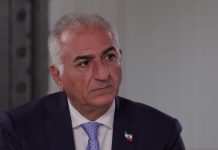
Narges said she joined the protests to demand her rights, as she had done since her university days in 2009. This year, however, her mother accompanied her. The Iranian people were encouraged by Crown Prince Reza Pahlavi to chant slogans in public at 8:00 p.m. on Jan. 8 and 9 — whether in the streets or from their homes — and the turnout surged dramatically.
“After the announcement, the streets were far more crowded. I believe more than half of the city came out,” Narges said. “There were men and women, families with children, women with and without hijabs, and people of all ages. I had never seen such unity.”
At approximately 8:10 p.m. on Jan. 9, shortly after the protests began, Narges and her mother were shot with pellet guns. “They fired at us from close range,” she said. “Both of us were hit in the legs. I have 50 pellets lodged in my legs; my mother was hit by five.”
She added that security forces shouted threats at them after the shooting, and that she believed they came prepared with a deliberate strategy.
“I personally saw that snipers were aiming exclusively at the heads of younger individuals,” she said. “They were fully prepared to kill. Even though we were standing together, they appeared to target the youth more deliberately.”
She recalled seeing the red laser sights of the snipers and said she did not understand why she was spared. “Perhaps because I was standing with my mother and other older women,” she reflected. “It seemed their primary target was young people.”
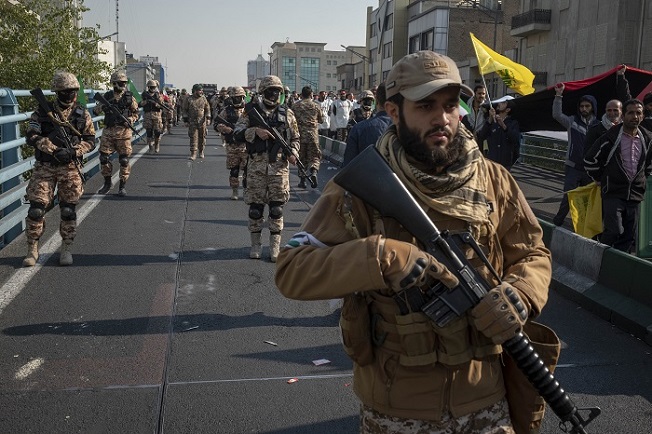
She described a city saturated with security forces: “Snipers positioned throughout key areas, tear gas so dense it impaired visibility, and protesters tactically trapped.”
“If my mother had not been with me, I might have been able to escape,” she said. “But she was terrified and in shock, and we were surrounded on both sides by officers.”
Her mother continued the account, saying they were encircled by officers, one of whom wore the uniform of the Basij or the Islamic Revolutionary Guard Corps (IRGC).
That officer began firing at them, she said, while other officers — particularly police — attempted to restrain him. After shooting them, he ordered them to kneel and remove their masks.
“He insulted and cursed us,” Narges’s mother explained. “He claimed he had the same rights as we did but was not ‘filthy’ like us and said ISIS should come and ‘turn you into human beings.’”
Other officers again intervened and ultimately told them to leave. They returned home wounded and shaken.
She also described an incident in which a woman standing nearby, terrified, said she had only come to watch. The officer allegedly kicked her in the chest and insulted her further.
“I apologize for repeating such language,” Narges’s mother said, “but this is what we heard.”
Narges said the highest number of killings occurred on Malek Street, Imam Street, and near the Telecommunications area, where more snipers had reportedly been deployed.
“Security forces were positioned inside banks, in a high school that was later set ablaze, in a shopping mall, on bridges whose entrances had been blocked, and even atop a silo on Jahan Panah Street.”
She distinguished between police in black anti-riot uniforms and IRGC and Basij forces. According to her, some police officers attempted to restrain the more aggressive forces.
“In previous years, some police officers even helped us avoid falling into IRGC or Basij hands,” she said. “They know those forces show no mercy.”
Narges’s mother reiterated that violence peaked on Jan. 9. Protesters remained in the streets until midnight, and by 1:00 a.m., authorities were cleaning the streets.
They mentioned finding doctors prepared to offer covert medical care for the injured. Through personal contacts, they obtained radiology images. Fortunately, neither woman suffered nerve damage.
A doctor prescribed antibiotics and asked them not to disclose his name. Those requiring surgery were reportedly treated in private offices under local anesthesia.
Because pellets struck her ankle and heel, Narges’s mother struggled to walk and still experiences pain after long distances.
They described an acquaintance with approximately 400 pellets lodged in his body, including nerve damage to his arm. Doctors removed only some pellets, as full removal requires hospital surgery — something many fear due to the presence of security forces.
According to Narges’s mother, officers were stationed in hospitals from the first nights of unrest. Some were disguised as service staff and allegedly searched for wounded protesters. She said many victims suffered severe eye injuries, with some requiring eye removal.
Narges added that security officers were present in major hospitals in Arak, including Sina Hospital and Amir al-Momenin Hospital, and especially Vali Asr Hospital (AJ) in the city center.
Even where officers may no longer be physically stationed, she claimed that regime supporters relay information about the injured. She cited a friend at Ayatollah Khansari Hospital, who said administrators report the names of gunshot victims.
Asked about the death toll, Narges’s mother said she could not confirm exact figures. Still, she reiterated that more than 300 bodies were reportedly brought to the Arak cemetery on Jan. 8 alone, followed by hundreds of families searching for missing relatives.
She again described the incident on 22 Bahman Street, where individuals were allegedly crushed by a fire truck.
Reflecting on past protests, Narges noted that Arak had previously seen peaceful demonstrations over severe air pollution and frequent clashes during labor protests.
“But this time was different,” she said. “Ordinary people stood together and came with their children.”
Speaking about her personal circumstances, Narges said she is unemployed. Arak, she explained, is primarily an industrial labor city with limited job opportunities. Her father supports the family financially, though with difficulty, and she continues to search for work.