By Nazanine Nouri
Ziba Ardalan, the founder of Parasol Unit — a contemporary-art foundation that staged groundbreaking shows at its dedicated London space between 2004 and 2020 — is returning to the Venice Art Biennale in May to curate an exhibition showcasing the works of 11 major female artists from Central Asia and wider regions of the East.
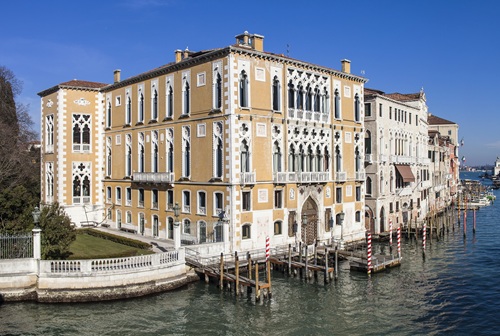
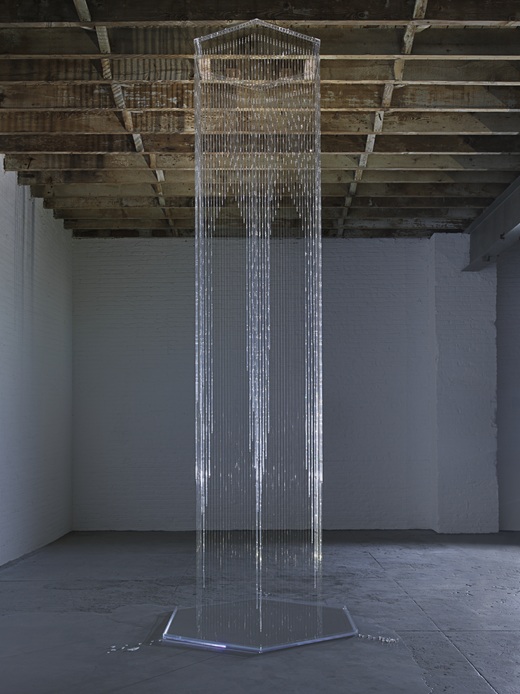
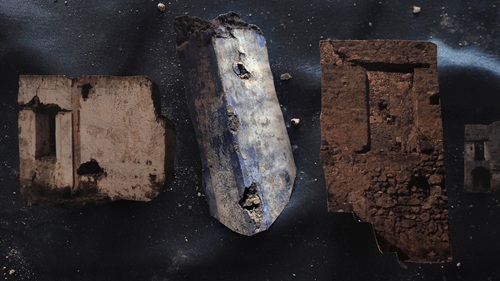
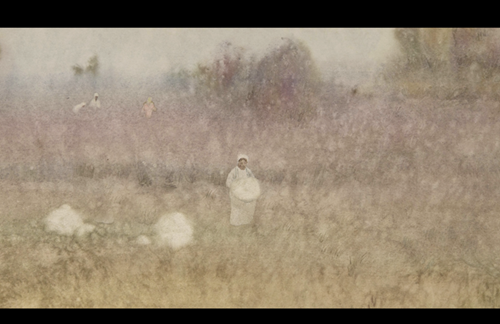
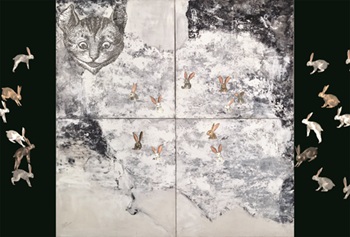
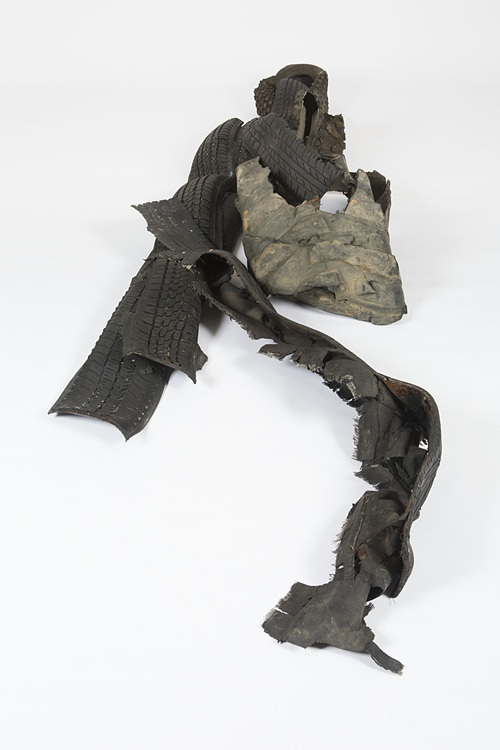
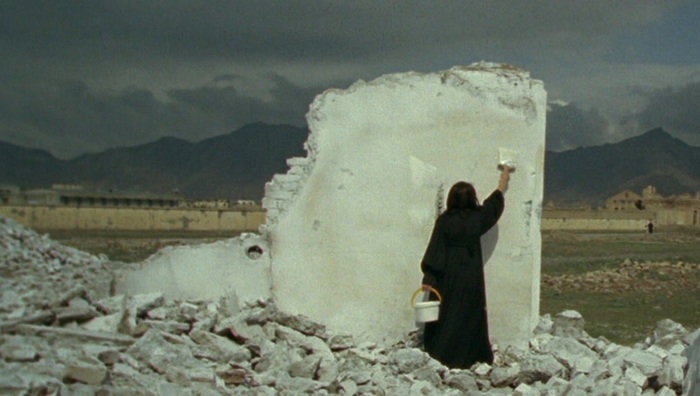
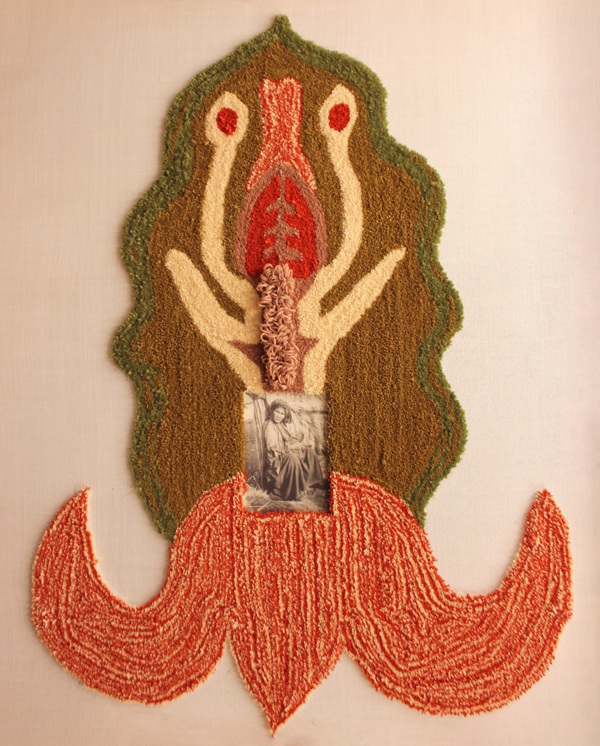
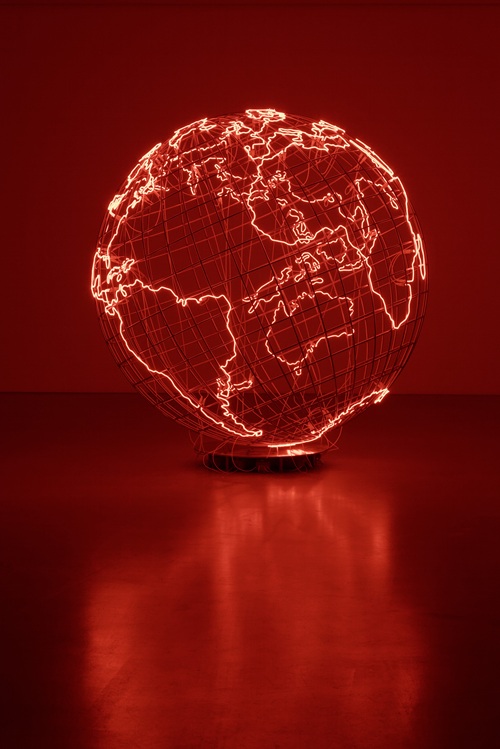
Titled “Turandot: To the Daughters of the East,” the exhibition — which is part of the Venice Biennale’s ‘Collateral Events’ program — will be presented by the Parasol Unit Foundation for Contemporary Art in the historic ACP-Palazzo Franchetti in Venice from May 9 through Oct. 31. It includes video works by Lida Abdul (Afghanistan), Hera Büyüktașcıyan (Turkey), Daria Kim (Uzbekistan), and Tala Madani (Iran); installations by Afruz Amighi (Iran), Saodat Ismailova (Uzbekistan) and Nazira Karima (Tajikistan); sculpture by Huma Bhabha (Pakistan) and Mona Hatoum (Lebanon); painting, video and spoken works by Farideh Lashai (Iran); and textile and sound work by Madina Joldybek (Kazakhstan).
Dr. Ardalan founded Parasol Unit in 2004 in London’s Islington area and curated more than 50 exhibitions over a period of 16 years. Parasol Unit was a space for the discovery and display of artists from around the world, and served to bolster the careers of some of the best-known talents living and working today. They include the Palestinian-born Mona Hatoum, whose solo show at Tate Modern came nearly a decade after her show at Parasol, and the French-Algerian artist Adel Abdessemed, who went on to exhibit at the Pompidou Center in Paris.
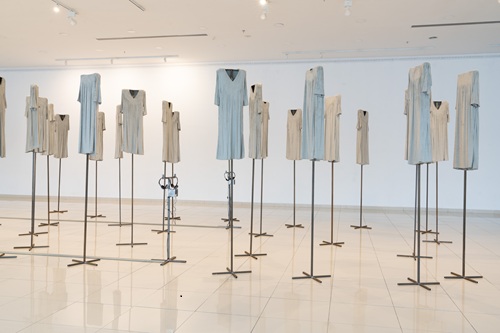
In 2019, to mark Parasol’s 15th anniversary, Dr. Ardalan held a major show of Iranian contemporary art at the Venice Art Biennale. “The Spark Is You: Parasol Unit in Venice” included works by nine artists including Y.Z. Kami and Siah Armajani. The second part of the exhibition was held in London, at Parasol’s headquarters.
Parasol closed its London gallery in July 2020 and repositioned its activities internationally. It is launching this Collateral Event at the Venice Art Biennale following a two-year hiatus.
Dr. Ardalan was previously based in Zurich, where she lectured on art and worked as an art advisor. A Columbia University art history graduate, Dr. Ardalan served as a guest curator at New York’s Whitney Museum of American Art before becoming the first director and curator of the city’s Swiss Institute. She has a Ph.D. in physical chemistry.
Kayhan Life recently spoke with Dr. Ardalan about her upcoming exhibition.
What was the main inspiration behind the creation of your exhibition Turandot: To the Daughters of the East, a Collateral Event that will show during the 61st Venice Biennale?
The main inspiration was to revisit something marvellous which had for a long time been quietly maturing – something that would poetically reveal some of the past connections between the East and West. The idea sprang to life at a time when Central Asian countries were becoming increasingly accessible to visitors. At every step, we are not only learning from them, but also finding more to discover.
This is the third time that you have presented collateral events during the Venice Biennale d’Arte. How have you found the experience, and how does the Turandot exhibition compare to your previous Venice exhibitions?
It is a great honor to have had three Parasol unit exhibitions selected as Collateral Events of the Venice Biennale. Of course, each exhibition has its own history and experience.
In 2019, The Spark Is You – a two-part exhibition shown simultaneously in London and Venice – looked at the art of contemporary Iranian artists through the lens of Persian poetry. This 2026 exhibition explores more of the importance of poetry and literature in Persian culture. There is common ground, as well as an educational angle to East meeting West in the magnificent and historically important city of Venice, which has always mediated between the two cultures.
In 2022, we presented an international group exhibition, “Uncombed, Unforeseen, Unconstrained,” which explored aspects of entropy in today’s world. I am immensely grateful to have been able to curate these incredibly diverse exhibitions in Venice.
You are showcasing the works of eleven major female artists from Central Asia and wider regions of the East. What led you to focus the show on that part of the world?
The story of Turandot, a decisive catalyst for the exhibition, is centred on a part of the world that includes more than the five countries currently known as Central Asia (Kazakhstan, Kyrgyzstan, Tajikistan, Turkmenistan and Uzbekistan). According to the ‘father of Persian poetry’ Ferdowsi (c. 940–1020), the Turan region has always been historically and culturally intertwined with Iran, but over the centuries Turan has at different times also included parts of today’s Afghanistan, Pakistan, Iran, and Turkey.
The only artist from the East who does not come from Central Asia is Mona Hatoum: Her work Hot Spot III, 2009, is an important addition to the exhibition, and remains crucially relevant to the current geopolitical state of the world.
All of this enriches the conversation but also reminds us that in earlier times, countries were not artificially delineated by borders. Today’s five Central Asian countries were only allocated their borders between 1924 and 1936 during the Soviet Union National Territorial Delimitation process. Prior to that, cities along the Silk Road trade routes were each independently important and influential.
How did you come up with the idea of using Puccini’s famed opera ‘Turandot’ as the underlying theme of your exhibition?
The fictional persona of Turandot was an important inspiration for this exhibition. Of course, Puccini’s eponymous opera is so well-known that we cannot think of it without wondering what caught his attention.
The story of Turandot began in the creative imagination of the twelfth-century Persian poet Nezami Ganjavi. In 1197, he published a romantic epic poem called The Haft Paykar (Seven Beauties), part of which describes an encounter between the pre-Islamic King Bahram Gur and one of seven princesses from different climes. The beautiful, intelligent but apparently cold-hearted Nasrin Nush was from a distant land.
During the Enlightenment period in the 18th century, François Pétis de la Croix (1653–1713) translated the tale and chose to write a version of his own in which he changed the name Nasrin Nush to Turandot and made her Chinese.
Further inspiration came from the impressive nomadic region of Turan and its 3,000-year history with neighboring Iran. Even before Puccini’s early-20th-century opera, other European authors — such as Carlo Gozzi, Friedrich Schiller and Johann Wolfgang von Goethe, among others — all staged their own version of Turandot.
The title of the opera is derived from the Persian name Turandokht [daughter of Turan], a common girl’s name in Persia. Historically an integral part of the Persian Empire, Turan was a region northeast of modern-day Iran that included many of the Central Asian republics as well as northern parts of Afghanistan, Pakistan and Turkey. The artists you have selected for your exhibition come from this geographical region. Can you please explain why you wanted to pay tribute to female artists from this region?
Following the collapse of the Soviet Union in 1991, the five countries, Kazakhstan, Kyrgyzstan, Tajikistan, Turkmenistan and Uzbekistan, obtained their independence, but received no support or guidance on how to forge their future. It was a challenging time to reinvent themselves and their countries, but the women, those modern-day Turandots, certainly played a vitally important role.
Many of the ideas behind this exhibition are not about politics but rather about art, poetry, culture and education. I am certain that visitors will grasp the beauty of Turandot’s evolution and the connections between East and West. It is also the case that artists from the region have only recently been receiving the kind of attention that they deserve, and I am happy to have played a small role in that process.
Have you known the selected artists or been familiar with their works for a long time? Is there a common thread?
As always with a group exhibition, there are artists with whose work a curator is already familiar, and other artists who one learns of during the process of research. Some of the artists in the exhibition are well established and I have worked with them in the past, but others are quite young. The selection process makes the exhibition interesting and the conversation exciting. As for a common thread, I hope visitors will discover the strong sense of purpose and deep conviction in the art of modern Turandots.
What message do you hope visitors will take away from this exhibition?
Each visitor will have their own take on the exhibition, and I will be happy if they find their time has been both well spent and enriching. I also hope they will find the artworks interesting and thought-provoking and appreciate making new connections with the history.
In what ways do you hope this exhibition will contribute to the broader conversations in contemporary art today?
The main issue is to understand and be enriched by experiencing how different cultures see the world. For example, a lot is happening in Central Asian countries such as Uzbekistan. They open their country to outsiders, greet art lovers from around the world to their first biennale in Bukhara and are working hard to open new art institutions in order to enter the broader conversation about art, and more. It is all about enrichment, exchanges, and connecting. Hopefully, people will find better ways to live within the same time frame and shared world.
Your London art space Parasol unit closed its doors six years ago and you have since been organising exhibitions and interventions in Europe. How have you found life after Parasol?
“Turandot” is still a Parasol Unit exhibition and much thinking, creativity and hard work have been invested in organizing it. The only difference now is that we do exhibitions only when we feel that a particular conversation is needed.
I was fortunate to lead the foundation for 16 years, but I am sure you will agree that everything has its time. I now work to a different rhythm, spend more time with my family, and adore travelling and discovering the world with my grown-up grandchildren. I am learning every day by seeing the world from a different perspective and in a different time.
Any future plans?
Yes… At the end of September, we will present an exhibition centred on the Swiss artist Heidi Bucher (1926–1993) in Athens.
Parasol Unit championed Bucher’s international career in 2018 and now it is a pleasure for us to continue our exploration of her influences and inspirations. Bucher spent the two summers of 1960 and 1961 on the island of Mykonos, which at that time had a simple island life. The many months that Bucher spent close to the sea and nature affected her thinking and work tremendously.
Parasol Unit is fortunate to be presenting two exhibitions on this occasion. The first one will be small and focused on Bucher’s art influenced by this period in the Cycladic islands. For the second and larger exhibition, we will invite four Greek women artists to enter into dialogue with Bucher’s ideas about the notion of the house, metamorphosis, and of course water or sea.