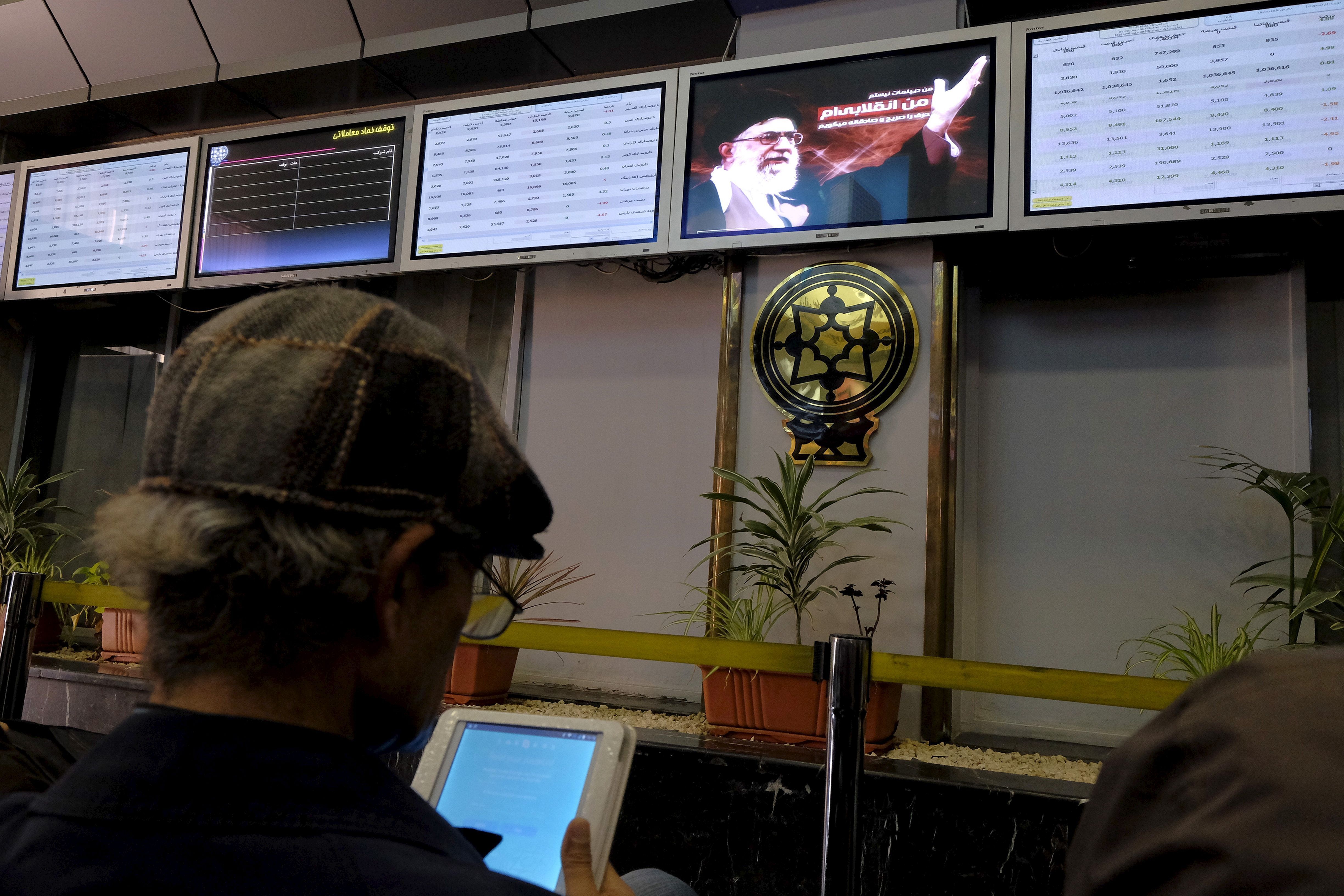
Since the outbreak of war initiated by Israel and the United States against the Islamic Republic of Iran, an underground market has emerged within Iran’s currency exchange sector.
In this market, buyers who purchase U.S. dollars through “check-pool” (a Farsi term for check-cashing transactions), commonly known in Iran as “travel” or “traveler’s checks,” can obtain discounts of up to 25 percent per dollar.
A “check-pool” is reportedly a type of bank check that can be cashed at all bank branches. It is printed and distributed by the Central Bank of the Islamic Republic of Iran as a secure alternative to carrying cash.
Available evidence indicates that this active and far-reaching black market is connected to smuggling networks operating inside the country, many of which are affiliated with state-linked entities.
In recent weeks, the term “travel dollar” has become common in Iran’s foreign exchange market; there, dollars are traded at rates below the open market, with discounts of up to 25 percent.
Over the past 55 days, since the start of the US-Israeli war against the Islamic Republic, exchange rates have not experienced significant fluctuations.
The closure of various markets, the shutdown of global internet access in Iran, and the Iranian New Year (Nowruz) holidays were among the factors that enabled the Central Bank of Iran to deploy its usual tactics — such as imposing fixed rates — to prevent sharp volatility in domestic currency markets.
Iran’s Shattered Economy Means Any Success in War May Be Fleeting
During this period, however, an underground segment of Iran’s currency market has emerged and attracted attention for the scale of its transactions: the “travel dollar.”
The mechanism of this underground market operates as follows: if a buyer purchases dollars in cash, by bank transfer, or with a debit card, they must pay the daily market rate, which in recent weeks has fluctuated mostly between 1,500,000 and 1,560,000 rials, depending on war-related developments.
However, if the buyer can pay with “travel” checks, they can purchase dollars at a significantly lower rate than the open-market price.
Sellers offer several rates for “travel dollars.” The larger the denomination of the “travel” checks provided by the buyer, the greater the discount they receive.
For example, while the dollar exchange rate in Iran’s open market stands at around 1,520,000 rials, some sellers offer “travel dollars” at 1,300,000 or 1,350,000 rials, others at 1,260,000, and still others at 1,250,000 or even 1,160,000 rials.
If the traveler’s checks are in one million toman denominations (10 million rials), the dollar is sold at 1,160,000 rials. If the checks are in 500,000 toman denominations (5,000,000 rials), the price rises to 1,250,000 rials.
If the checks are smaller — in other words, if a higher “volume” of checks is used — the dollar exchange rate increases to around 1,300,000 or 1,350,000 rials, with the final price subject to negotiation between buyer and seller.
In recent days, reports have circulated claiming that “travel dollars” are counterfeit, but the claims have been denied not only by currency dealers but also by buyers on social media.
The trail of the “travel dollar” underground market reportedly leads to government-linked fuel smuggling mafias — groups in which the Islamic Revolutionary Guard Corps (IRGC) is alleged to play a prominent role.
These smuggling networks have been making headlines for years; even Mahmoud Ahmadinejad, the former president of the Islamic Republic (in office from 2005 to 2013), once reportedly referred to them as “smuggler brothers.”
Since the beginning of the war and following the IRGC’s closure of the Strait of Hormuz, global fuel prices have risen, and fuel supply has become a serious concern for some countries.
One country that faced a fuel crisis from the early days of the war was Pakistan – and it has also been one of the primary destinations for smuggled fuel from Iran.
Bloomberg has reported that Pakistan — already struggling with a fragile financial situation and tensions with Afghanistan before the Iran war that started on Feb. 28 — was forced in the early days of the war to adopt austerity measures, including early shop closures, energy rationing, and reduced production capacity.
In Iran, reports of widespread fuel smuggling have been widespread for years. The country’s eastern borders serve as key routes for smuggling fuel into Afghanistan and Pakistan.
Although the Islamic Republic portrays residents of eastern border regions — who, due to rampant unemployment, transport small quantities of fuel in containers by motorcycle or car to Pakistan and Afghanistan, and are known as “fuel carriers” — as the main smugglers, organized fuel smuggling mafias, including those reportedly connected to the IRGC, account for the majority of fuel smuggling out of the country.
Over the past two years, the issue of fuel smuggling by government-linked mafias has also become a tool in internal power struggles.
In early 2025, Gholamhossein Mohseni Ejei, head of Iran’s Judiciary, announced during a political awareness conference for IRGC commanders and staff that a fuel smuggling pipeline from an airport to the sea had been discovered.
Such a pipeline is clearly not the work of a few ordinary citizens driven by unemployment and necessity.
EXCLUSIVE: Tehran Residents Describe Life Under Surveillance, Internet Blackout
At the same time, the head of the judiciary announced the formation of new cases related to fuel smuggling, stating: “We have opened significant cases regarding the origins of fuel smuggling that will cause some to cry out, but we will not pay attention.”
A few days later, in February 2025, Ali Alghasimehr, chief justice of Tehran Province, announced that indictments had been issued in major fuel-smuggling cases and that three of them had been referred to special courts handling economic disruption crimes.
He also stated: “In recent months, in the counties of Rey, Pakdasht, Malard, Eslamshahr, and Robat Karim (all in Tehran Province), major cases have been opened, and several large, organized fuel smuggling networks have been identified.
These networks systematically diverted subsidized fuel from the distribution system, redirected it to other uses, or smuggled it out of the country, and their members have been arrested.”
Mousa Ahmadi, head of the Energy Commission of the Majlis (Iranian Parliament), had previously stated that “a portion of fuel smuggling, amounting to 25 to 27 million liters per day, cannot be unorganized,” adding that “we must determine whose hands are behind this.”
The fate of fuel smuggling cases raised by the judiciary over the past two years remains unclear, yet government-linked smuggling mafias continue to operate at full capacity within the Islamic Republic’s economic structure.
According to currency market participants in Iran, the emergence of the “travel dollar” market is now linked to the financial needs of fuel smuggling networks, which require funds to settle accounts with Iranian counterparts; “travel” checks are easier to transport due to their lower volume.
In other words, what is taking place in the “travel dollar” underground market is not the sale of dollars, but rather the purchase of Iranian “travel” checks using dollars.
It appears that fuel smuggling and other illicit trade are so profitable that they incentivize smuggling networks to acquire “travel” checks—even at the cost of selling dollars below market rates.
The “travel dollar” underground market is now heavily engaged in dollar transactions and the accumulation of “travel” checks, a process that could trigger a crisis given Iran’s fragile monetary condition.