Welcome to the Kayhan Life Week in Review
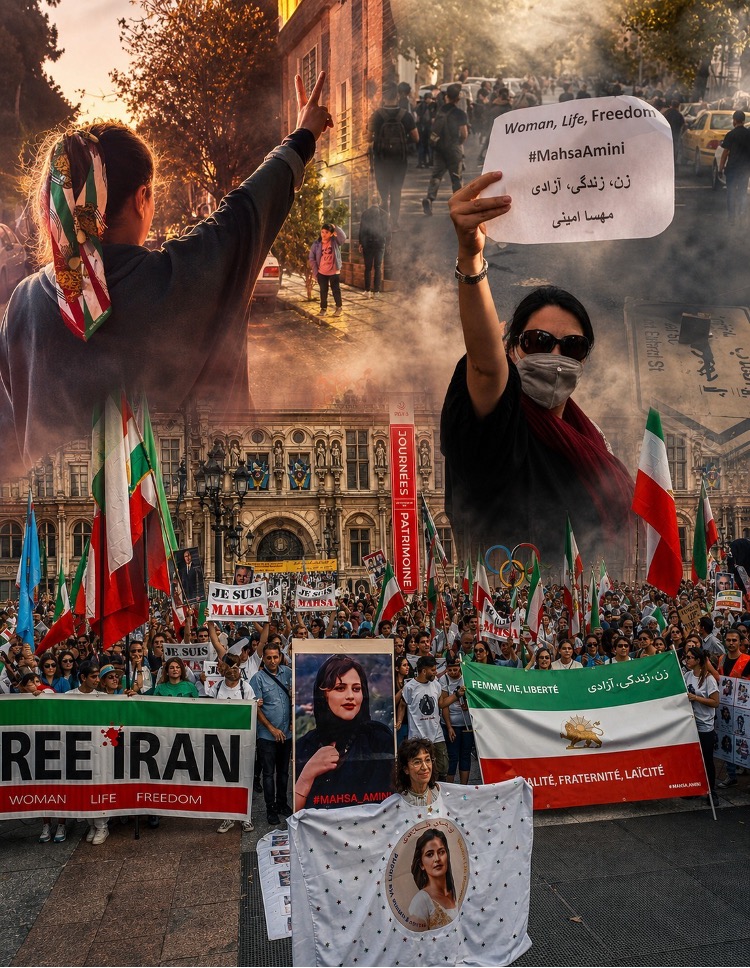
On the fourth anniversary of the Woman, Life, Freedom movement, UN investigators found grounds to believe Iranian authorities had committed crimes against humanity during last year’s deadly crackdown on the anti-regime “Sun and Lion Revolution”. The Persian Gulf conflict expanded to the Red Sea, where Houthi gains threatened oil routes and prompted China to press Tehran to restrain its ally while U.S. officials met the group in Oman. Washington sanctioned Babak Zanjani’s crypto exchange, accusing it of processing Hormuz transit payments and channeling funds to the Revolutionary Guards. Sweden expelled an Iranian embassy official, Western agencies warned of regime-linked spyware targeting critics, and hardship inside Iran drove Afghan families back to Taliban rule as teacher shortages strained schools. A Googoosh documentary and Ali Asgari’s Venice film explored repression and resilience.
📌
The conflict shifted from the Persian Gulf to the Red Sea, where Tehran’s proxies, the Houthis, captured ground and islands overlooking Bab el-Mandeb. It strengthened the group’s ability to threaten shipping and Saudi oil exports, drawing Washington and Beijing into efforts to contain the fallout. Officials and analysts blamed a major Saudi intelligence failure, worsened by divisions among Yemeni allies and limited air support.
📌
Trump played down a Wall Street Journal report that Chinese entities supplied satellite images before an Iranian attack killed three U.S. troops in Jordan in July. He compared Chinese surveillance with American practices. Reuters could not verify the report, which cited U.S. officials who did not allege Beijing’s direct involvement.
📌
As part of Treasury’s “Operation Economic Outcast”, Washington sanctioned BitBank, a cryptocurrency exchange controlled by financier Babak Zanjani, its software developer, and three associates for routing hundreds of millions of dollars to the Revolutionary Guards and transferring payments to the regime’s new maritime authority to evade sanctions.
📌
The sanctions regime’s application in Austria led to the revocation of the visa of nuclear chief Mohammad Eslami, who was set to attend the International Atomic Energy Agency’s conference in Vienna, after Washington opposed an exemption from the reinstated UN sanctions.
📌
The Islamic Republic’s relations with Sweden also deteriorated, with an embassy official ordered to leave, citing activities incompatible with the Vienna Convention on Diplomatic Relations. The expulsion came as Swedish lawmaker Arin Karapet called for closing the Islamic Republic’s embassy and the Imam Ali Islamic Center in Stockholm, in addition to tighter European sanctions. Swedish authorities had previously accused the center of supporting espionage and activities targeting the Iranian diaspora.
📌
Concerns about Tehran’s reach beyond its borders extended to digital surveillance. Britain, the United States and the Netherlands warned that Iranian state-linked actors were using CHOSEN BRICK spyware against journalists, activists and dissidents. The attackers posed as trusted contacts on messaging apps to steal data and access devices. The FBI linked the campaign to the Intelligence Ministry and said it used stolen material to damage targets’ reputations.
📌
Inside Iran, the consequences of repression came under renewed international scrutiny. U.N. investigators found that Iranian authorities committed crimes against humanity in the massacre of anti-government protesters. The mission also said it had reasonable grounds to believe the United States carried out February strikes on a school and sports facility in Iran that constituted war crimes.
📌
Human Rights Watch and the Abdorrahman Boroumand Center reported that the Islamic Republic had executed at least 59 political prisoners in recent months, including teenagers. Twenty-nine had been arrested during the December and January protests. Five people aged 18 or 19 were hanged publicly, the groups said. They described grossly unfair trials and warned that dozens more faced execution.
📌
The state of Iran’s education system came under scrutiny as the teachers’ coordinating council warned that it was nearing collapse, citing a shortage of 100,000 to 130,000 teachers. Financial hardship was driving families from private schools into overcrowded public classrooms, some with 40 students. The squeeze threatened children’s schooling as household budgets deteriorated.
📌
The war’s economic toll is also pushing Afghan families to leave Iran, even at the cost of returning to Taliban rule. Reuters reported annual inflation near 90%, while migration surveys found only 29% of recent returnees had savings left. For women and girls, the journey also meant renewed restrictions on education, employment and movement.
📌
Finally, in cultural news, at Venice, Ali Asgari’s “A Bit of Light” explored the emotional cost of repression through the eyes of a doctor. Lead actor Misagh Zareh described being summoned to court after posting against the death penalty. Asgari said the film’s hope lay in small acts of endurance that let people keep going.
Another portrait of survival arrived with the Apple TV release of “Googoosh: Made of Fire,” on the fourth anniversary of Woman, Life, Freedom. Niloufar Taghizadeh’s documentary followed the singer’s rise, her enforced silence after the 1979 revolution and her return to the international stage in 2000.
Kayhan Life’s Curated News:
IIran: Architects of crimes against humanity to suppress protests must face international justice to deter further massacres, Amnesty International
Kayhan Life’s Social Media Picks: