From Negotiations to War—and Back Again
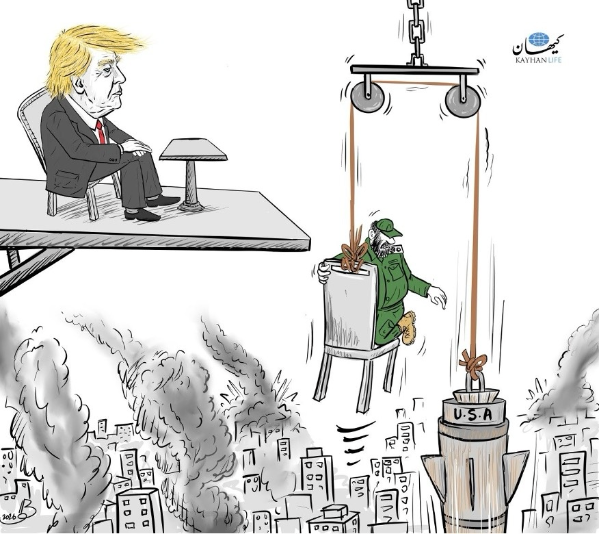
By Behnam Mohammadi
Over the past year, relations between Washington and the Islamic Republic have resembled a grim geopolitical seesaw: talks giving way to war, and war leading back to talks. Will the latest round end at the negotiating table?
When, if ever, will this dizzyingly vicious cycle of negotiating in preparation for war, and war to force negotiations, finally come to an end?
Welcome to the Kayhan Life Week in Review
The United States and the Islamic Republic moved back toward open war this week. The U.S. expanded its strikes against Iranian military capabilities to force open the Strait of Hormuz, as well as preparing the grounds for a return to all-out war. Tehran struck U.S. bases and civilian locations in the Persian Gulf and Jordan. It also boosted its threat to global energy routes by ordering Houthi allies to disrupt shipping in the Red Sea, as the international coalition against the Islamic Republic began to take shape. In Britain, a new espionage case was linked to Tehran. Inside Iran, young protesters were executed, and French diplomats were detained.
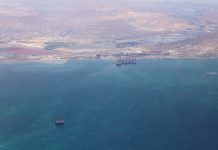
►U.S. forces struck targets across southern Iran and extended it to Iranian cities, including Tehran. President Trump vowed that every American death would be avenged “many times over” and threatened attacks on energy plants, bridges and the nuclear-linked Pickaxe Mountain site, as well as the possible seizure of Kharg Island. The Islamic Republic answered with attacks on U.S. sites in Bahrain, Kuwait and Jordan, while a tanker was hit in the Strait of Hormuz. Its drone attacks on CIA facilities have prompted U.S. intelligence analysts to investigate whether Russia assisted by providing targeting information or advanced drone technology.
US Military Completes 12th Straight Night of Strikes on Iran
EXCLUSIVE—Iran Strikes on CIA Facilities Prompt Questions About Possible Russian Role
Iranian Forces Target Bahrain and Kuwait After US Hits Iran’s South
Islamic Republic Hits Persian Gulf States and Jordan After Seventh Night of US Strikes
►The United States reported 4 service members were killed and 100 injured since fighting resumed after the breakdown of the ceasefire. The U.S. toll since February 28 is 18 dead and more than 450 wounded.
Financially, the war has cost Washington more than $37.5 billion, while Iran’s losses, according to the Islamic Republic, were estimated at $270 billion by April 14. The U.S. House, meanwhile, narrowly approved a $1.15 trillion defense bill supporting continued operations against the Islamic Republic and expanded military cooperation with Israel.
After Deadly Weekend for US Troops, Trump Vows Revenge Against Iran
US House Passes $1 Trillion Defense Bill Despite Iran, Israel Concerns
►The Islamic Republic ordered its Yemeni proxies, the Houthis, to prepare to close the Bab el-Mandeb Strait if the United States attacked its power network. The European Union’s naval force Aspides warned that ships with links to Israel, the United States or Saudi Arabia are at a higher risk of being attacked by Yemen’s Iran-aligned Houthi militia and are advised to avoid voyages through the Red Sea and Gulf of Aden.
EXCLUSIVE—Iran Tells Houthis to Close Red Sea Gateway if US Hits Power Network, Sources Say
Houthis Claim Attacks on Saudi Tankers in Red Sea, Raising Risk of New Chokepoint in Iran War
►Pakistan warned that Houthi attacks on Saudi Arabia could draw it into the U.S.–Islamic Republic conflict. Islamabad, bound to Riyadh by a mutual-defense pact and with troops near the Saudi-Yemeni border, described attacks on the kingdom as a red line. With Hormuz already disrupted, a campaign against Red Sea shipping threatens the Middle East’s two principal energy routes at once.
►International pressure on the Islamic Republic further intensified this week, as governments expanded military cooperation and reinforced regional defenses. The new British Prime Minister approved the use of British military bases by the United States, and the Bulgarian government said it will seek parliamentary approval to station up to eight U.S. tanker aircraft at an air base in the Balkan country. Israel prepared to receive dozens of additional U.S. aerial-refueling aircraft as Washington adjusted its regional force posture.
UK PM Burnham Approves Use of British Bases for Some US Strikes on Iran
UK Says Armed Forces Ready to Defend Country After Iran Warning Over US Bombers
Iran Warns Bulgaria Against Aiding US Military Operations After Move to Station US Aircraft
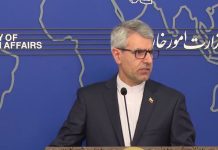
►Two French embassy officials in Tehran were detained, interrogated and physically intimidated for several hours by Iranian security services.
France Warns of Consequences After Islamic Republic Security Services Detain Embassy Staff
►A British-Iranian man appeared in a London court accused of offering assistance to the Islamic Republic’s intelligence service. Prosecutors said Vahid Aberi contacted regime-linked figures and later wrote to the Iranian Consulate offering his help.
UK Police Charge Man Over Iran-Linked Spying Offenses
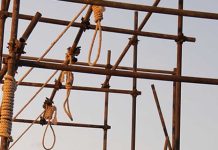
►The Islamic Republic executed Erfan, 18, and Gol Mohammad, 23, after convicting them of killing four police officers during January’s unrest in Isfahan. A source said their initial Revolutionary Court ignored Erfan’s account of torture in a hearing that lasted about 10 minutes. The executions showed that even as war expanded beyond Iran’s borders, the regime’s machinery of punishment continued at home.
Updates from Kayhan Life’s Social Media:
At Least 124 Iranian Athletes Were Killed During the January 2026 Protests
Tehran Ablaze After U.S. Strikes; CENTCOM Reports Troop Deaths in Jordan
The Future of Iran: A Conversation on Freedom
Kayhan Life’s Curated News:
Iran’s covert networks in southeastern Europe, Strategic Comment, International Institute for Strategic Studies
Authorities Escalate Crackdown on Iranian Students Amid Post-War Repression, Center for Human Rights in Iran
70+ January Protesters Awaiting the Gallows in Isfahan Prison; At Least 26 at Imminent Risk of Execution, Iran Human Rights (IHRNGO)
Treat of the Week
Gheimeh Kadoo

From all of us at Kayhan Life, we wish you a peaceful weekend.