
Tehran’s Delay Tactics Run Out of Time
The Islamic Republic has once again run out of rope on its most practiced diplomatic strategy: pretending to negotiate while doing nothing. On Friday, the U.N. Security Council declined to adopt a draft resolution that would have permanently lifted sanctions on the theocratic state. Instead, Tehran and key European powers were given a brief reprieve: eight more days to reach some kind of agreement on a delay before sanctions snap back by September 27.
The reprieve is slim comfort to the clerics. Britain, France, and Germany — no longer willing to play along with Tehran’s endless stalling — triggered the “snapback” process in August, accusing the regime of defying the 2015 nuclear deal. Their message is blunt: inspectors must be allowed access, or the full weight of U.N. sanctions will be imposed.
Even European leaders, often cast as patient mediators, are losing faith. French President Emmanuel Macron, pressed by Israeli television on whether sanctions were inevitable, answered with remarkable candor: “Yes, I think so.”
Tehran accused Europeans of having a “political bias” and of “misusing” the Joint Comprehensive Plan of Action. Ironically, on Thursday, Tehran abruptly withdrew its own resolution at the IAEA, a measure that would have prohibited attacks on nuclear facilities. Co-sponsored with Russia and China, the motion fizzled after only four out of fifteen nations backed it.
Behind closed doors, the clerics asked for “a few more months” of talks to consider their options, offering little beyond recycled assurances that inspectors might one day, perhaps, be granted access. In essence, the regime demanded upfront concessions while promising nothing concrete in return — a scam perfected since 1979.
The Islamic Republic continues to rattle its favorite saber, threatening to withdraw from the Nuclear Non-Proliferation Treaty — a bluff it has made countless times but never acted upon. To actually leave the NPT would be tantamount to diplomatic suicide, the geopolitical version of hara-kiri, stripping away the last shred of legitimacy the clerical state clings to.
Meanwhile, ordinary Iranians bear the cost. Sanctions mean spiraling prices, dwindling energy supplies, and supermarket shelves stripped of necessities. Daily life grows harder as the regime waves the banner of “resistance” — a hollow slogan masking its own survival tactics. The Iranian people foot the bill while the ruling elite sharpen their rhetoric.
The Islamic Republic has built an entire foreign policy around stalling and blame-shifting. But with the Security Council rejecting its bid for permanent sanctions relief and time running out, the regime may finally discover that its most reliable ally — delay itself — has expired.
Welcome to the Kayhan Life Week in Review
Emmanuel Macron has done what most European leaders only dare whisper: he declared the return of U.N. sanctions against the Islamic Republic all but inevitable. “Yes, I think so,” the French president told Israel’s Channel 12 — a blunt assessment that instantly stripped the clerical regime of its favorite illusion, that endless stalling could still work.
The Islamic Republic is once again staring down the barrel of renewed sanctions, which the mullahs once boasted they had outmaneuvered forever. European leaders warned this week that the regime had failed to take the “credible, comprehensive and necessary” steps required to avoid the so-called “snapback” mechanism.
Behind the scenes, the clerics had pleaded for more time — a few extra months in exchange for vague declarations. European diplomats rejected the offer, noting that Tehran wanted everything up front while offering nothing but recycled promises. It was, in short, the same scam the regime has perfected since 1979.
The Security Council is expected to vote next week, with sanctions likely reimposed by Sept. 27. In response, the Islamic Republic has once again rattled its favorite saber, threatening to withdraw from the Nuclear Non-Proliferation Treaty — a bluff it has made countless times but never acted upon. To actually leave the NPT would be tantamount to diplomatic suicide, the geopolitical version of hara-kiri, stripping away the last shred of legitimacy the clerical state clings to.
For ordinary Iranians, soaring prices, dwindling energy supplies, empty pharmacies, and daily hardship loom. Once again, the Islamic Republic waves the banner of “defiance,” while the Iranian people foot the bill.
Welcome to the Kayhan Life Week in Review
The Islamic Republic faced mounting pressure this week — from Western powers threatening renewed sanctions, from Israel tightening military and financial strikes, and from the United Nations, where both its allies and adversaries signaled unease with its influence. Inside the country, meanwhile, the clerical leadership escalated repression, even as Iranian culture and diaspora voices offered reminders of a society far more diverse and dynamic than its rulers.
One of those voices was recognized in New York. Nazanin Boniadi, the British-Iranian actress and human rights activist, received the 2025 Samuel Untermyer Award at the annual Mehregan sunset soiree in Yonkers on Sept. 14, the eve of the third anniversary of the murder of Mahsa Jina Amini, the 22-year-old who died in the custody of Tehran’s morality police in 2022. Amini’s name, as Boniadi reminded the gathering, “became the spark of the Woman, Life, Freedom uprising.” In a ceremony at Untermyer Gardens, Yonkers mayor Mike Spano presented Boniadi with a proclamation declaring Sept. 14 “Nazanin Boniadi Day” in the city.
On the diplomatic front, Britain, France, and Germany — the so-called E3 — warned that the regime risked triggering a “snapback” of international sanctions. Such a move would once again choke off the theocratic state’s vital oil and gas revenues. Their warning followed months of fruitless diplomacy over the nuclear program, a dispute that has defined relations since the 2015 Joint Comprehensive Plan of Action, or JCPOA. That accord, brokered with China, Russia, and Germany, with the European Union as coordinator, offered sanctions relief in exchange for strict limits on uranium enrichment.
The United States, which walked away from the deal in 2018 under President Donald J. Trump, chose to act unilaterally. Washington announced new sanctions on four Tehran-backed militias accused of attacking American and coalition positions in Iraq. Additional measures targeted financiers of the Islamic Republic’s military networks, including entities in Hong Kong and the United Arab Emirates.
In France, the outgoing foreign minister Jean-Noël Barrot demanded the “immediate” and “unconditional” release of three French citizens held in Iran — a reminder that Tehran’s practice of detaining foreigners referred to as “hostage diplomacy” remains a source of acute tension.
While pressure mounted abroad, the regime tightened its grip at home. On the third anniversary of Mahsa Jina Amini’s death, authorities barred her family from holding a memorial service. The restrictions underscored the clerical state’s continuing fear that her name, along with the slogan “Woman, Life, Freedom,” could again mobilize mass protests.
The crackdown extended into classrooms: according to the Center for Human Rights in Iran, at least 45 teachers and union members have been interrogated, arrested, or sentenced since June, as a new school year begins. By targeting educators, one of the few professional groups capable of mobilizing nationally, the Islamic Republic appeared intent on cutting off potential dissent at its roots.
Repression also took its most brutal form. Officials announced the hanging of Babak Shahbazi, accused of spying for Israel. Rights activists said he had likely been tortured into confessing. At least 10 people have been executed on espionage charges since June, when a brief but violent conflict erupted between Israel and the theocratic state.
Israel responded by announcing the seizure of 187 cryptocurrency wallets linked to the Revolutionary Guards, saying blockchain analysis had tied the accounts to covert operatives. At the same time, Israeli leaders warned that military escalation was not off the table.
At the United Nations, the General Assembly overwhelmingly backed a resolution endorsing a two-state solution for Israel and Palestine. The text condemned Hamas, demanding its disarmament, while also criticizing Israel for airstrikes in Gaza that it said had produced a “devastating humanitarian catastrophe.”
At the same time, controversy erupted over Tehran’s nomination of Afsaneh Nadipour, its former ambassador to Denmark, for a seat on the Human Rights Council’s advisory committee. Danish officials had accused her of trying to coerce Iranian women in divorce cases into religiously mediated settlements that would have stripped them of custody. The nomination revived criticism of the U.N. system’s willingness to seat officials from governments accused of systemic abuses.
Yet beyond the swirl of sanctions, diplomacy, and repression, Iranian society continued to generate recognition. Two architecture firms were honored with the prestigious Aga Khan Award for Architecture: ZAV Architects for its Majara Residence and Community Redevelopment project on Hormoz Island, and KA Architecture Studio for the Jahad Metro Plaza in Tehran.
The week also brought the somber news that Bijan Behzadi, the restaurateur who redefined Persian dining, passed away after a prolonged illness. In 2011, he founded Kateh in Little Venice, the first Iranian restaurant to earn a Michelin Guide Bib Gourmand and later named one of London’s ten best restaurants by OpenTable. Mr. Behzadi leaves a legacy of creativity and lasting influence on London’s culinary landscape.
TOP STORIES
- ANALYSIS: Islamic Republic Faces Imminent Return of International Sanctions
- Nazanin Boniadi Receives Untermyer Award in Yonkers, New York
- UN Sanctions on Iran to Be Reimposed, France’s Macron Says
-
US Designates Four Iran-Aligned Militias as Terrorist Organizations
-
US Sanctions Target Financing of Iran’s Military, Treasury Says
-
Israel Orders Seizure of 187 Crypto Wallets It Links to Iran’s Revolutionary Guards
-
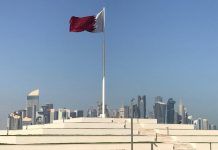
Israel Threatens Hamas ‘Wherever They Are’ as Qatar Hosts Summit
-
UN Overwhelmingly Endorses Two-State Solution Declaration That Condemns Hamas
-
Iranian Ex-Ambassador Nominated to UN Human Rights Committee Amid Protests
-
Aga Khan Award for Architecture Recognizes Two Iranian Architecture Practices
- Bijan Behzadi, Restaurateur Who Transformed Persian Dining, Passes Away
Kayhan Life’s Curated News
-
Iran Blocks Family Memorial For Mahsa Amini On Third Anniversary Of Her Death
-
France Demands Unconditional Release of its Nationals Held in Iran
Updates from Kayhan Life’s Social Media
Treat of the Week
The Famous Broccoli Recipe That Has Garnered Millions of Views