By Ahmad Rafat
Europe has issued a final warning to Iran, urging the Islamic Republic to take immediate action to prevent the reactivation of the “snapback” mechanism and the reimposition of international sanctions that were lifted in October 2015 under the Joint Comprehensive Plan of Action (JCPOA), commonly known as the Iran nuclear deal.
The “snapback” mechanism, embedded in the 2015 agreement and formalized through United Nations Security Council Resolution 2231, allows for the swift reinstatement of international sanctions if Iran is found to be in violation of its nuclear obligations.
Iran now has until Sept. 27 to meet three key demands from the European signatories of the JCPOA — France, the United Kingdom, and Germany (E3).
These demands are as follows:
- Reach an agreement with the International Atomic Energy Agency (IAEA) to resume inspections of Iran’s nuclear sites, both declared and undeclared.
- Provide complete transparency regarding the locations where enriched uranium is stored.
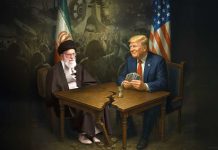
- Return to negotiations with the United States over Iran’s nuclear activities.
On Sept. 17, Kaja Kallas, the EU’s High Representative for Foreign Affairs, warned that “this window is closing fast.”
In recent days, Kallas and officials from the E3 have held talks with Abbas Araghchi, Iran’s Foreign Minister, though the specifics of those discussions remain undisclosed.
A European diplomat involved in the negotiations told Kayhan Life: “The Islamic Republic is focused solely on buying time and shows no genuine intention of revising its nuclear or military programs.”
The diplomat added: “Tehran hopes that a Russian proposal — since Russia is one of the five permanent members of the UN Security Council — could delay the activation of the ‘snapback’ mechanism by another six months.”
“The urgency stems from the fact that the ‘snapback’ mechanism allows for the reimposition of international sanctions without the possibility of a veto, even by Russia or China,” the diplomat explained.
On Sept. 9, Araghchi and IAEA Director General Rafael Grossi signed an agreement in Cairo to resume inspections of Iran’s nuclear sites. Upon returning, Grossi announced that Tehran had agreed to grant the IAEA full access.
However, Araghchi later contradicted this statement, clarifying that the deal did not currently allow access, and that inspection details and timelines would be determined in future negotiations.
In recent days, Araghchi has repeatedly warned that triggering the “snapback” mechanism would have “dangerous consequences,” threatening to immediately nullify the Cairo agreement in response to any perceived hostile action.
He also warned that Iran might withdraw from the Nuclear Non-Proliferation Treaty (NPT), with hardline MPs already submitting ten proposals to the Majlis (Iranian Parliament) to this effect.
Some Iranian lawmakers have even threatened to close the Strait of Hormuz — a vital global oil route — though such a move, while not unprecedented, is widely seen as unlikely due to the risk of igniting a regional conflict.
Western pressure on Iran extends beyond the “snapback” mechanism.
The G7’s Rapid Reaction Mechanism (RRM) recently issued a strongly worded statement condemning Iran’s destabilizing activities abroad.
Additionally, Germany and the UK have issued public warnings urging their citizens to leave Iran immediately, while other European nations have done so privately.
These warnings are clearly tied to the looming threat of renewed international sanctions under the “snapback” provision.
If these sanctions are reinstated, the Islamic Republic may not only swiftly withdraw from the NPT — a move that, as some Iranian analysts argue, would confirm longstanding suspicions that Tehran is pursuing nuclear weapons — but might also resume hostage-taking of European citizens as leverage in future negotiations.
Western governments are increasingly concerned about this possibility. Recent intelligence reports from the E3, and the Netherlands suggest that Iran could even reactivate dormant terrorist cells in Europe.
Inside Iran, however, many seek to downplay the implications of renewed international sanctions — originally grounded in six UN Security Council resolutions passed before the 2015 nuclear deal.
Among them is Saeed Laylaz, an economist aligned with reformist circles, who recently warned that the return of sanctions would simply diminish Europe’s role in Iran’s economy.
He emphasized that this shift would further tie Iran to China, which already purchases nearly 90 percent of Iranian oil through non-dollar, non-euro transactions, thereby reducing the sanctions’ economic impact.
Laylaz argues that any new sanctions would primarily have a psychological effect.
However, the psychological toll inside Iran should not be underestimated, particularly in terms of deepening public hopelessness about the future. It would also be a mistake to dismiss the material consequences of renewed sanctions on a fragile economy already isolated from global markets.
Unlike the largely unilateral U.S. sanctions imposed after Washington’s 2018 withdrawal from the JCPOA — enforced mainly through dollar-linked institutions — UN Security Council sanctions would be binding on all member states.
These sanctions were approved under Chapter 7 of the UN Charter, which classifies the Islamic Republic as a threat to global peace and security.
It is also important to remember that the U.S., British, and Spanish-led attack on Iraq and Saddam Hussein’s regime was internationally and legally justified precisely because Iraq was under the provisions of Article 7.