
By Kayhan Life Staff
As the Islamic Republic battles for its survival by tightening control over the country’s streets, Israel has started to target security forces stationed at checkpoints in major cities — striking at the very heart of the regime’s power structure.
Israeli drones and Unmanned Aerial Vehicles (UAVs) have targeted the checkpoints of the Islamic Revolutionary Guard Corps (IRGC), Basij militia, and Law Enforcement Forces across several cities, including Tehran (to the north), Karaj (north), Isfahan (central), and Shiraz (central).
Fars News Agency, which is affiliated with the IRGC, reported that more than 14 individuals had been killed or wounded in the attacks. According to unofficial sources, the death toll is believed to be higher.
Unverified video footage showing the aftermath of the drone strikes at various checkpoints has surfaced online. The Israeli military also released similar footage on its social media platforms, including ‘X.’
According to the Israeli military’s official report, “the air force, guided by the Deputy Military Intelligence, targeted the checkpoints and Basij militia forces deployed at these locations, resulting in casualties.”
A post on ‘X’ from the Israeli Defense Forces (IDF) and shared by Kayhan London said:
- “The air force targeted Basij units and forces that had recently been stationed in Tehran.
- In recent days, the Israeli army discovered that Basij forces had set up checkpoints at multiple locations across the city.
- After confirming these deployments, the Air Force, under the direction of Deputy Military Intelligence, struck and eliminated the checkpoints and the Basij forces stationed at them over the last 24 hours.
- The Basij units are part of Iran’s security apparatus and have been responsible for conducting terrorist activities and operations over the years.
- These strikes are part of a broader effort to target Iran’s nuclear infrastructure and critical military assets connected to its terrorist operations.
- The Israeli military will continue to target the systems and active elements of the Iranian terrorist regime, wherever they may operate.”
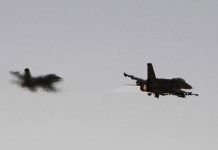
The post included footage of aerial bombings conducted during the operation.
Israel’s military also stated that these attacks were part of a phased operation aimed at intensifying strikes against the core infrastructure and key elements of what it described as the “terrorist regime of Iran.”
The mention of “core layers of the regime’s main infrastructure” suggests that Israel is fully aware of the direct connection between the security forces positioned on Iran’s streets and the survival of the regime itself.
Just hours after the attacks on the checkpoints, Mohammad-Bagher Ghalibaf, the Speaker of the Iranian Parliament (Majlis), urged the regime’s supporters on ‘X’ to take to the streets and demonstrate their support for the armed forces.
His message read:
“Dear people of Iran, for whom I would sacrifice my life a thousand times over, your presence on the streets has bewildered and enraged the enemy. This humble soldier has three requests of you: Street, street, street. Your children in the armed forces have put their lives on the line to defend Iran; now, stand by them and solidify their backs by holding the streets.”
Kayhan London reposted Ghalibaf’s message, along with a response from a reader who stated: “This tweet is a clear example of using civilians as human shields, meaning the deliberate placement of non-combatants near military targets to prevent attacks. This tactic is considered a war crime under Article 51 of the (1977) Additional Protocol to the Geneva Conventions.”
In Tehran, according to government reports, the checkpoints in District 14 (Mahallati Highway), District 15 (near Hashemabad gas station), District 16 (Fadaiyan Islam Street), and District 1 (at the end of Army Boulevard) were among those directly targeted.
However, it soon became apparent that more checkpoints had been struck.
Reports from citizens and observers indicated a noticeable reduction in the number of checkpoints in the 24 hours that followed. Many locals reported that the number of security posts had diminished, while some checkpoints were relocated to areas with higher foot traffic, effectively turning pedestrians into human shields.