By Nazanine Nouri
Millions of Iranians and people of Iranian descent around the world are preparing to celebrate the ancient Persian festival of Shab e Yalda, the longest and darkest night of the year — or winter solstice.
It is a deeply important and meaningful festival for Iranians. Such is its significance that the festival was inscribed on UNESCO’s Intangible Cultural Heritage List in 2022. It is also celebrated each year in Afghanistan, Tajikistan, Uzbekistan, Turkmenistan, Azerbaijan and Armenia.
Yalda takes place on the eve of December 21st, the first day of winter. It has been a time of celebration since ancient times: festivities begin after sunset on the last day of fall (Sunday, December 20th / 30th of Azar) and continue until dawn the next day (Monday, December 21st / 1st of Dey).
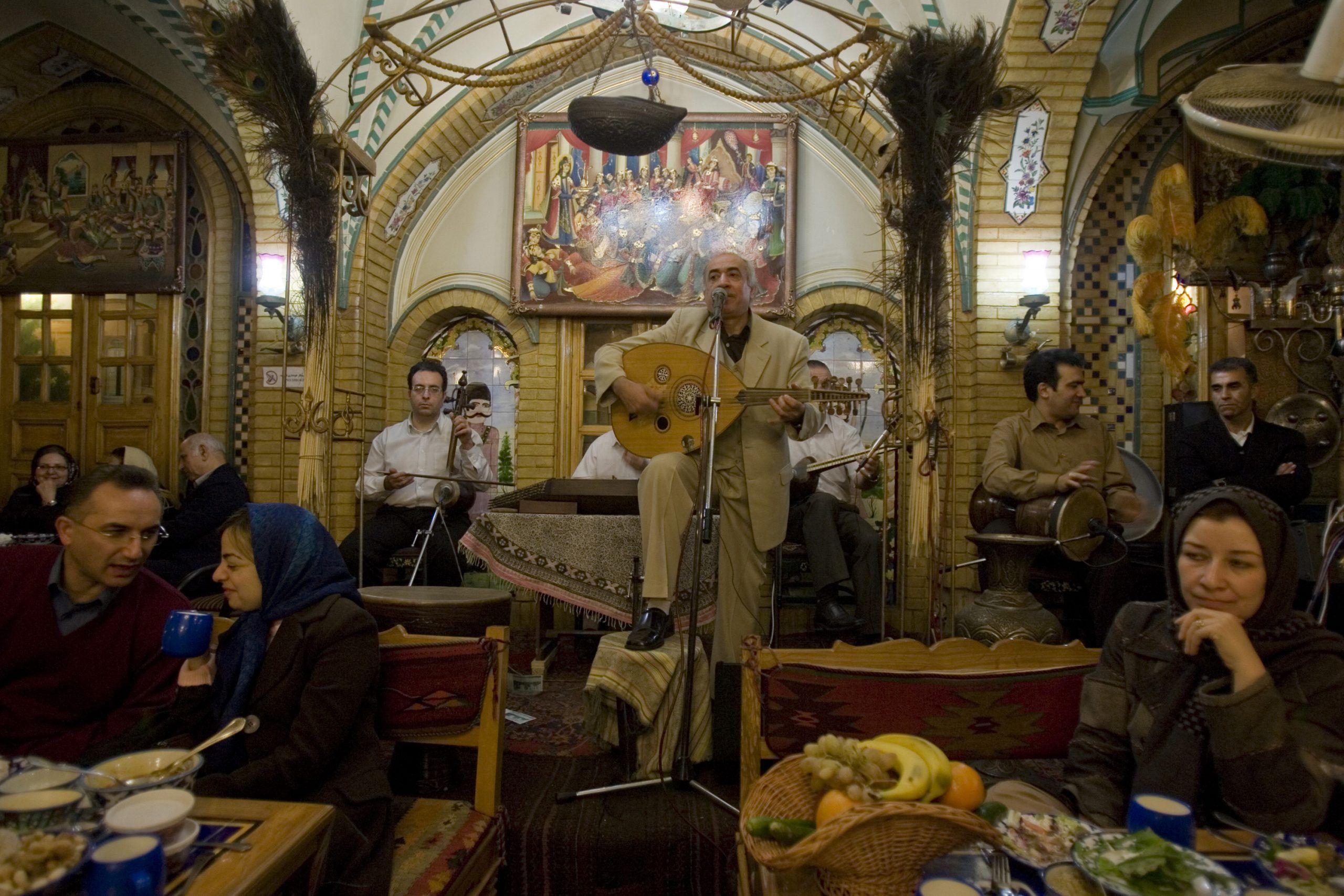
This year, the Farhang Foundation in Los Angeles will be marking the moment on December 20 with a musical program featuring the Voices Unveiled ensemble (with vocalists Maliheh Moradi and Mina Deris) and the composer Ehsan Matoori. Poetry and storytelling will then follow, performed by Gordafarid, in a program that will be presented in Persian.
Although the religious significance of this ancient festival was lost with the Islamic conquest of Iran, Shab-e Yalda is still celebrated widely, and the custom of staying up late in the company of friends and family has been preserved to the present day.
When UNESCO added Yalda to its Intangible Cultural Heritage List in 2022, it gave the following description of the festival:
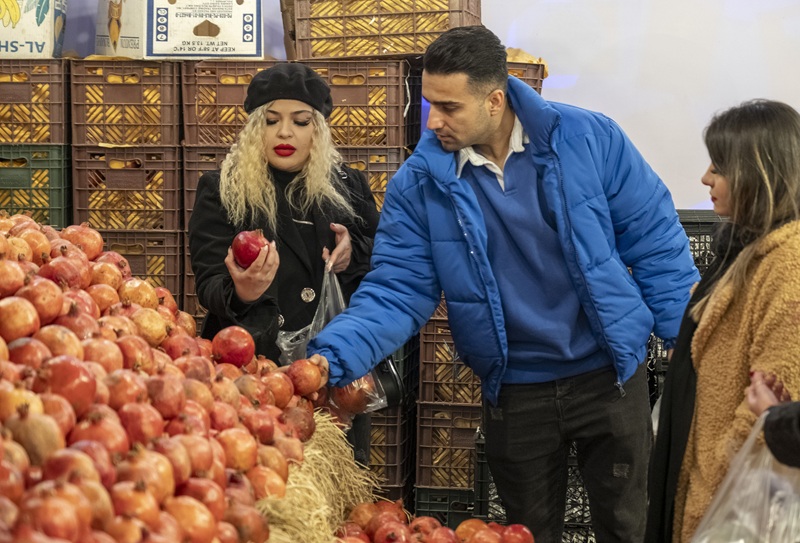
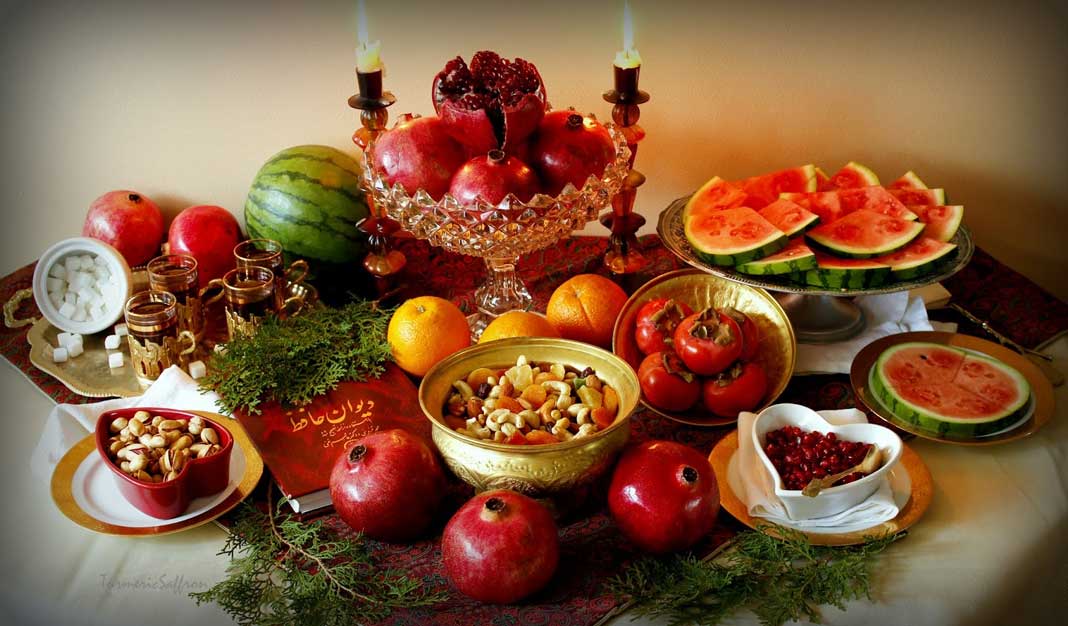
“Yaldā/Chella refers to a traditional celebration of the sun and the warmth of life. Practiced in Iran and Afghanistan, the event takes place on the last night of autumn, when families gather at the houses of elders and sit around a table adorned with a series of symbolic objects and foods: a lamp to symbolize light, water to represent cleanliness, and red fruits such as pomegranates, watermelons, beetroots, jujube and grapes to symbolize warmth. Broth, sweets, dried fruits and nuts that are used specifically for the occasion are also set on the table and consumed during the gathering. Activities range from reciting poetry and storytelling to playing games and music and giving gifts to new in-laws, brides and children. The event celebrates cultural identity, nature, respect for women, friendship, hospitality, cultural diversity and peaceful coexistence.”
In past celebrations of Shab e Yalda, Iranians would sit around a korsi [a brazier containing hot coals placed under a low table covered with overhanging blankets on all sides], placing the blankets over their laps to keep warm.
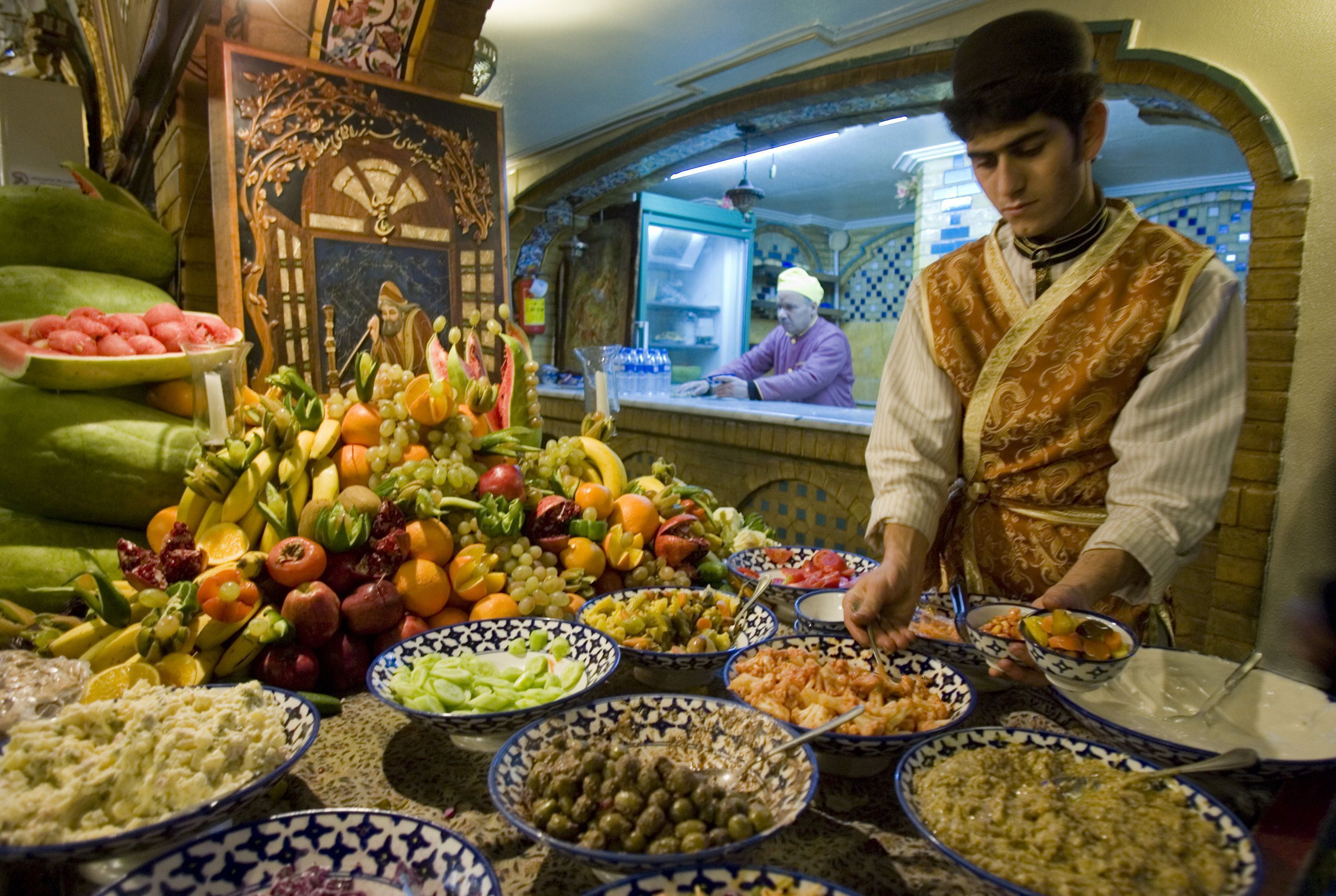
Today, they gather around tables set with lit candles, watermelons, pomegranate, persimmons, dried fruit and nuts (figs, white mulberries, raisins, dates, hazelnuts and pistachios) and enjoy a fine dinner, typically fesenjan: a chicken stew cooked in pomegranate molasses and ground walnuts.
Kayhan Life Celebrates Yalda with Song, Performance, and Poetry
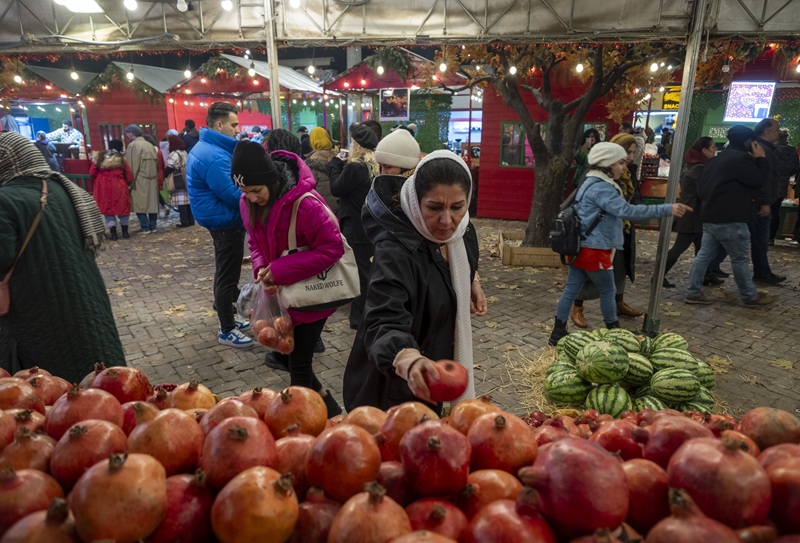
The assortment of fruits all have a common denominator — the color red, which has represented the color of dawn and light since ancient times. Watermelons are especially kept from the summer months for this occasion, as it is believed that eating watermelons will ensure good health and well-being. In the old days, they were buried under branches and leaves in a cold place to keep them fresh for this special occasion.
Pomegranates symbolized the cycle of life – the rebirth and revival of generations. Their red outer skin represented the crimson hues of dawn; their bright red seeds, the glow of life.
A favorite after-dinner ritual on Shab-e Yalda until today is Fal-e-Hafez or divination using the Divan [Collected Poems] of Hafez, the most prevalent form of fortune telling in Iran. (Hafez is the most popular of Persian poets, who, according to Encyclopedia Iranica, “represents the zenith of Persian lyric poetry.” A copy of the Divan of Hafez is found in most Iranian households.)
Asking Hafez for guidance in their life, family and friends, each think of a specific question and open the Divan to a random page. The poem on that page is read out loud, usually by an elder, and is interpreted as an indication of that person’s fortune for the year to come.
Yalda is a Syriac word that means birth and, in the pre-Zoroastrian, polytheistic religion of Mithraism, the god of the sun was born on the longest night of the year. It is not clear when and how the Syriac term entered the Persian language; it is claimed that it was introduced by early Christian refugees who had fled religious persecution in Rome and settled in the Sassanid Empire.
In pre-Zoroastrian Iran, Shab-e Yalda or Zayeshmehr was a time to commemorate the birth of Mithra, the god of the sun, justice, contract and war. It symbolized the triumph of Light and Goodness over the powers of Darkness and Evil.
Mithra remained a potent symbol of worship among Zoroastrians until the later Achaemenid period. After that, the sun god continued to be venerated in the border region between the Greco-Roman and the Iranian world — the Kingdoms of Armenia and Commagene (now southeastern Turkey).
In the Roman Empire, Mithra was honored during the 2nd and 3rd centuries CE as the patron of loyalty to the emperor. In 274 AD the Romans began celebrating the rebirth of the Unconquered Sun, the Sol Invictus, established by Emperor Aurelian on December 25th. The holiday marked the return of longer days after the winter solstice, and the birthday of Mithra, whose cult was growing popular among Roman soldiers.
Mithraism received the full support of the emperors until Constantine the Great, the first Roman emperor to embrace Christianity, after which it rapidly declined. In 336 AD, December 25th was chosen by the church in Rome to formally celebrate Christmas, weakening established pagan celebrations.
In ancient Persia, the longest and darkest night of the year was a particularly inauspicious time, and Shab-e Yalda rituals were originally intended to protect people from evil during that long night, when the forces of Ahriman [evil] were at their peak.
People would stay awake until dawn, lest misfortune should befall them, gathering in the safety of family and friends, with the warmth of their loved ones helping eliminate the coldness of winter. They would feast, tell stories and recite poetry, lighting fires at sundown and burning them all night long to keep evil away.
The morning after Shab-e Yalda was a day of celebration known as Khorram-ruz or Khur-ruz [the day of the sun] as the arrival of longer days and shorter nights marked the victory of the sun over darkness and of goodness over evil.
The holiday also became known as Shab-e Chelleh, as it signaled the arrival of Chelleh Bozorg, the initial 40-day winter period from which the word chelleh [forty] derives, which begins on the first day of winter, December 21 / 1st of Dey and ends on January 30 / 11th of Bahman. (There are all together three chellehs, one in the summer and two in the winter. The winter ones are more important than the summer one and are associated with special festivities and customs.)
Chelleh Bozorg [Great Chelleh] is followed / overlapped by Chelleh Kouchak [Small Chelleh] which begins on February 1st / 10th of Bahman and ends on February 20th / 30th of Bahman (20 days + 20 nights = 40.)
UNESCO (United Nations Educational, Social and Cultural Organization) set up the Representative List of the Intangible Cultural Heritage of Humanity in 2009 to raise awareness of the importance of cultural practices and expressions, and to recognize the traditions and know-how of communities it identifies as repositories of cultural diversity.
COMMENTARY: How Christmas, Mithraism and Yalda Night Are Closely Linked