By Kayhan Life Staff
The U.S. and Israeli attacks on Iran come at an extremely challenging time for the Iranian healthcare system.
Days before the Feb. 28 outbreak of hostilities, Homayoun Sameyah, the chair of the Health and Medical Commission of Iran’s Parliament (the Majlis), warned that in the event of war, the country’s pharmaceutical reserves would last no longer than two months.
Under existing laws, he said, the Ministry of Health and Medical Education (MOHME) was required to maintain a strategic stockpile of medicines sufficient to last at least six months. Yet in recent months, drug prices have soared dramatically, leading to an alarming shortage of medication across the country.
According to Sameyah, the price of a drug which previously cost the equivalent of $2.50 (based on an exchange rate of 1.657 million rials per U.S. dollar) — has surged to $60 in the space of a few months.
Over the last two years, the price of medication and medical equipment in Iran has increased exponentially.
At the beginning of winter, the administration of President Massoud Pezeshkian placed the elimination of the preferential exchange rate on its policy agenda. Previously, a preferential rate of 285,000 rials per U.S. dollar was applied to imports of medicines, medical equipment, and raw materials for domestic pharmaceutical production.
With the removal of the preferential rate, importers must now obtain foreign currency from the commercial market at rates close to the open-market rate. Consequently, the cost of both imported and domestically produced medicines has increased manifold.
For low-income households, the relentless rise in medicine costs and the persistence of shortages amount to a significant emergency.
Insurance coverage for medication remains insufficient, and drugs now cost two to six times what they did only a few months ago. Many drugs now cost the equivalent of an entire monthly wage for an average worker — or even multiples of that amount.
Consequently, numerous patients suffering from chronic or rare diseases have been forced to discontinue treatment because they cannot afford their prescribed drugs. Others have resorted to halving their prescribed dose to allow their limited supplies to last.
Hadi Ahmadi, spokesperson and board member of the Iranian Pharmacists Association, recently warned in media interviews that shortages are likely to intensify if current trends continue. He noted that some medications have experienced price increases of 200 to 300 percent.
According to Ahmadi, between 150 and 200 types of medications are in short supply nationwide.
In certain cases, patients are now required to pay more than 60 to 70 percent of their medical expenses out of pocket, placing them under acute financial strain. The situation is even more dire for individuals suffering from special or complex diseases.
The Iranian Labor News Agency (ILNA) reports that escalating prices have placed extraordinary pressure on the public. Even necessities have effectively become luxury items for many Iranians.
From the staggering cost of food to the mounting prices and shortages of medicines and medical treatments that directly threaten patients’ lives, the current circumstances are widely regarded as both undeniable and indefensible.
A heart disease patient told ILNA about the difficulties surrounding a routinely administered injection. Until July 2024, the injection cost approximately $8. After insurance approval, however, it became available only at designated pharmacies.
Conditions started worsening as of last summer, after the 12-day conflict between Iran and Israel in June 2025.
Pharmacies now routinely provide fewer injections under insurance coverage than physicians prescribe, forcing patients to purchase the remainder at open-market prices. Out of four prescribed injections, only one or two may be covered by insurance, and patients must buy the others at the market rate. Meanwhile, the uninsured price of the medication has surged to $72.
A patient with pulmonary lupus reported steep cost increases, particularly after the elimination of the preferential rial-dollar exchange rate. She explained that whereas she previously paid about $72 per month for her medications, she was now facing payments of $150 per month.
In addition, the original brand-name drug is no longer available, compelling her to purchase Indian or domestically produced alternatives that cause adverse side effects and physical discomfort.
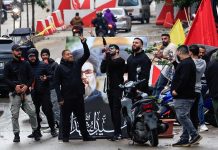
Iran Conflict Widens to Lebanon, Kuwait Mistakenly Shoots Down US Jets
She said a portable oxygen device, on which she constantly depends, cost $205 five years ago, but is now worth $3,547. Although the patient health insurance coverage, the insurer requires her to pay the full amount upfront, then submit documentation for reimbursement of only $453. She cannot afford such a substantial out-of-pocket expense.
Beyond the oxygen device, she requires additional equipment, including a BiPAP machine (Bilevel Positive Airway Pressure, a noninvasive ventilation therapy that assists breathing) and an air purifier for her home. Altogether, the cost of essential respiratory support equipment exceeds $6,033 — and for patients such as she, is necessary for survival.
Although the Central Bank of the Islamic Republic of Iran has announced that foreign currency is available for purchasing pharmaceutical raw materials, significant challenges persist in transferring those funds.
The Ministry of Petroleum likewise faces difficulties in securing and transferring foreign currency — whether at preferential or open-market rates — for the importation of medicines.
In response to widespread public criticism over the elimination of the preferential exchange rate for essential goods, the government maintained that the preferential rate for medicines had not been removed and would continue into the coming year.
However, on Feb. 22, Dr. Hassan Hassan-Nattaj, another member of the Health and Medical Commission, disputed this assertion. According to the semi-official Mehr News Agency, he noted that the price of medicines and medical equipment had soared.
Hassan-Nattaj cited the example of a medication previously priced at approximately $2.50 which had risen twenty-fourfold, and argued that this stark escalation revealed a significant gap between official rhetoric and actual policy implementation.
He explained that when the 285,000-rial exchange rate was not effectively allocated to the pharmaceutical sector, price increases became inevitable.
Hossein Abdoli, another member of the Health and Medical Committee of the Parliament, also addressed the shortage crisis and the soaring prices of vital medicines for patients with special diseases. He stated that many families must devote a substantial portion of their monthly income to securing essential treatments.
Abdoli sharply criticized the severe challenges confronting patients with diabetes, thalassemia, cancer, organ transplants, heart disease, and pulmonary disorders. Those individuals require continuous medication at specific intervals; any shortage or price increase can interrupt treatment and impose immense pressure on their families.
He identified the Ministry of Health’s performance as a principal factor behind rising drug prices. He said support measures must be substantive and targeted rather than merely symbolic.
“Only through concrete and coordinated action among the Ministry of Health, health insurance providers, and Parliament can the crisis surrounding essential medicines be addressed and the health and treatment security of patients be ensured,” He argued.