By Kayhan Life Staff
Prince Reza Pahlavi called for stronger European action against the Islamic Republic and concrete support for Iranians seeking democratic change on a Nov. 6 visit to Belgium’s Royal Military Academy, after days of meetings with European lawmakers and Belgian officials.
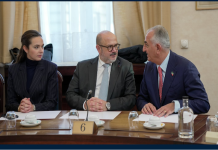
Hosted by Belgian Defense and Foreign Trade Minister Theo Francken, the Nov. 6 event included a meeting with Belgium’s defense chief and senior military commanders, an address to officers and generals, and a question-and-answer session, according to a press release issued by Pahlavi’s office.
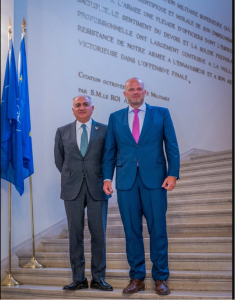
In his speech at the military academy, Pahlavi argued that the Islamic Republic’s support for Russia’s invasion of Ukraine, its nuclear and missile ambitions and its activities on European soil made Iran’s political future a direct concern for European security.
“Standing with the Iranian people is not an act of charity: It is Europe’s national security necessity,” he said.
He described the regime’s continuing repression as a sign of vulnerability, and accused European governments of failing to recognize the scale of public opposition to the regime.
“Europe has been slow to accept that this regime is weak, divided, and will fall. In January, millions of Iranians from every province and every walk of life rose up. More than 40,000 of them were slaughtered in two nights,” Pahlavi said.
“Since then, the regime has learned to kill without making headlines, hanging prisoners one or two at a time, some publicly from cranes. More than 70 political prisoners have been executed since January, and more than 100 protesters face execution today. That is not the conduct of a confident state. It is a wounded animal lashing out and seeing what it can get away with,” he said.
The EU has condemned the killing of thousands of protesters in the January crackdown led by the Islamic Republic, and its subsequent communications blackout across the country.
Pahlavi urged European governments to combine greater diplomatic and financial pressure on the regime with assistance that enables Iranians to communicate, organize and determine their political future. He urged European lawmakers to fund technologies that preserve internet access during government-imposed shutdowns, publicly advocate for political prisoners facing execution and help facilitate defections from the regime’s security forces.
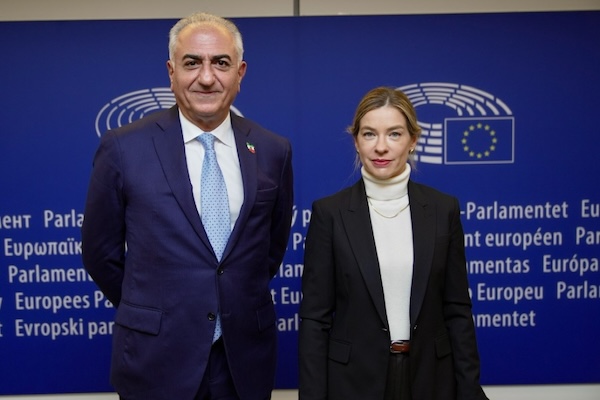
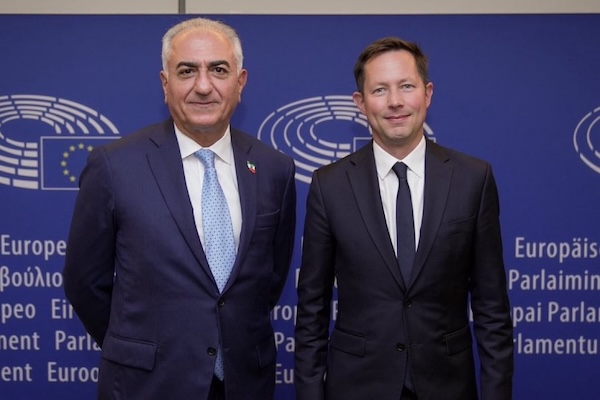
Pahlavi is the most prominent opposition figure against the clerical regime that has been in power in Iran since the 1979 Revolution. He advocates a secular democracy, and emphasizes that Iranians should choose their future form of government through a democratic process.
In his Brussels address, the Prince asked European governments to adopt measures such as those they have used against Russia — including tracing assets held through relatives and intermediaries, freezing regime-linked wealth, closing front companies and disrupting networks involved in sanctions evasion and intimidation.
“What Iranians need from Europe is not sympathy. It is for Europe to stop throwing a life raft to a dying regime,” he said.
He also recommended action against intelligence operatives working under diplomatic cover, and individuals facilitating illicit financial activity on the regime’s behalf.
The EU formally added the Islamic Revolutionary Guard Corps to its terrorist list on Feb. 19. The designation freezes the organization’s assets within the EU and prohibits EU operators from making funds available to it.
The military academy appearance followed meetings at the European Parliament and Belgium’s Parliament from Nov. 3-5.
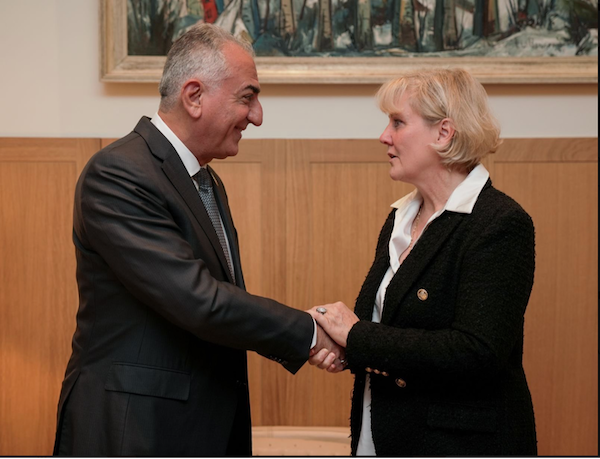
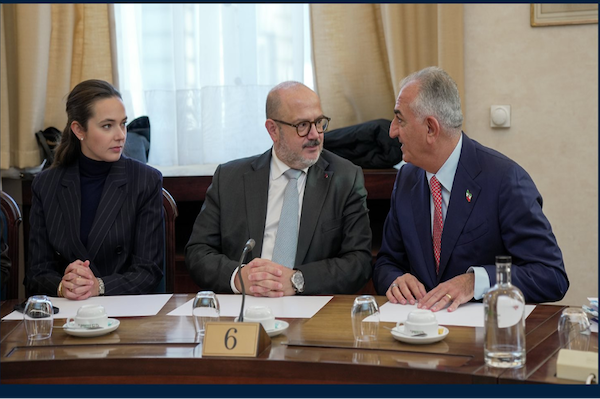
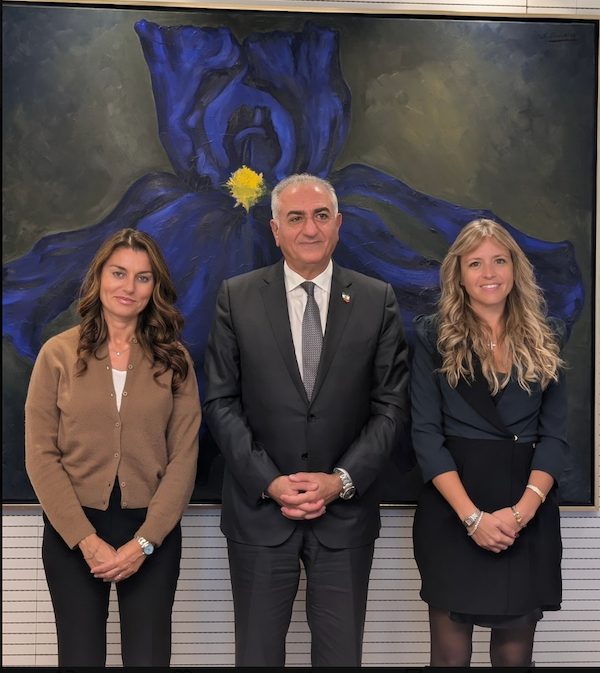
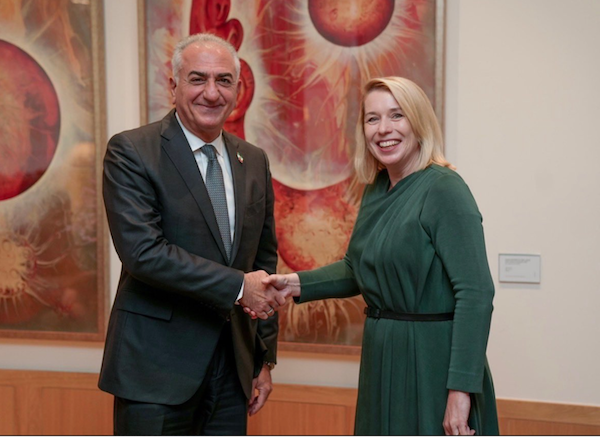
On Nov. 5, the leader of Belgium’s Reformist Movement, Georges-Louis Bouchez, hosted Pahlavi at the Belgian Parliament alongside Belgian Interior and Security Minister Bernard Quintin, Energy Minister Mathieu Bihet, Small Business Minister Eléonore Simonet and lawmakers. They discussed threats to European security and measures that Belgium could take to support the Iranian people.
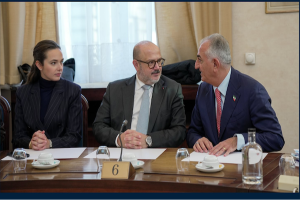
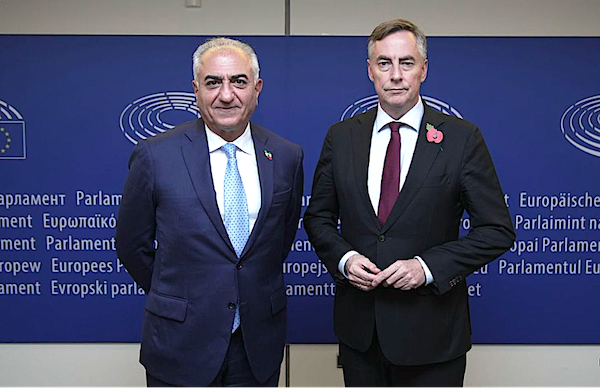
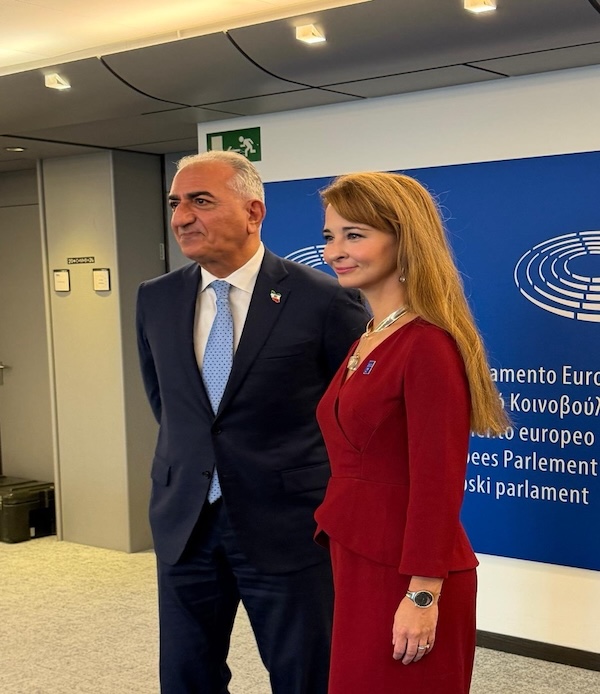
And on Nov. 4, at the European Parliament, Pahlavi met David McAllister, the German lawmaker who chairs its Foreign Affairs Committee, to discuss further sanctions and support for internet connectivity.
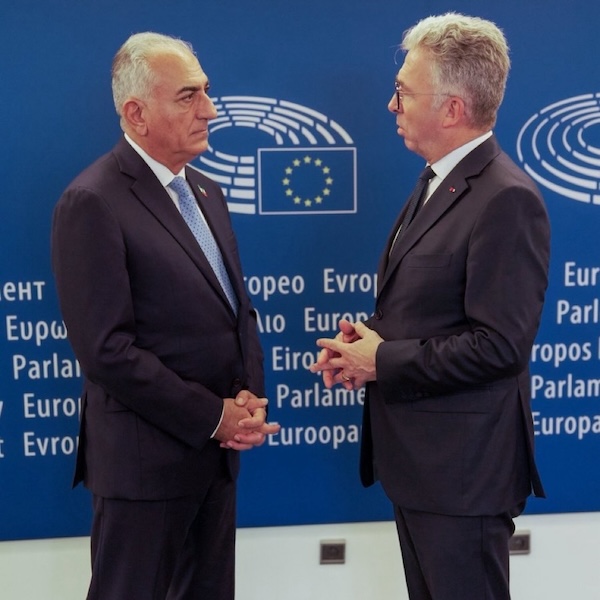
He held a joint news conference with François-Xavier Bellamy, Vice Chair of the center-right European People’s Party group. Participants included Danial Eyvazi, identified by Pahlavi’s office as a survivor of January’s crackdown; Sara Sadeghi Mohseni and Arsalan Khoubi-Pour, whose brothers were killed. Their presence brought survivors’ and bereaved families’ accounts into his appeal for European action.
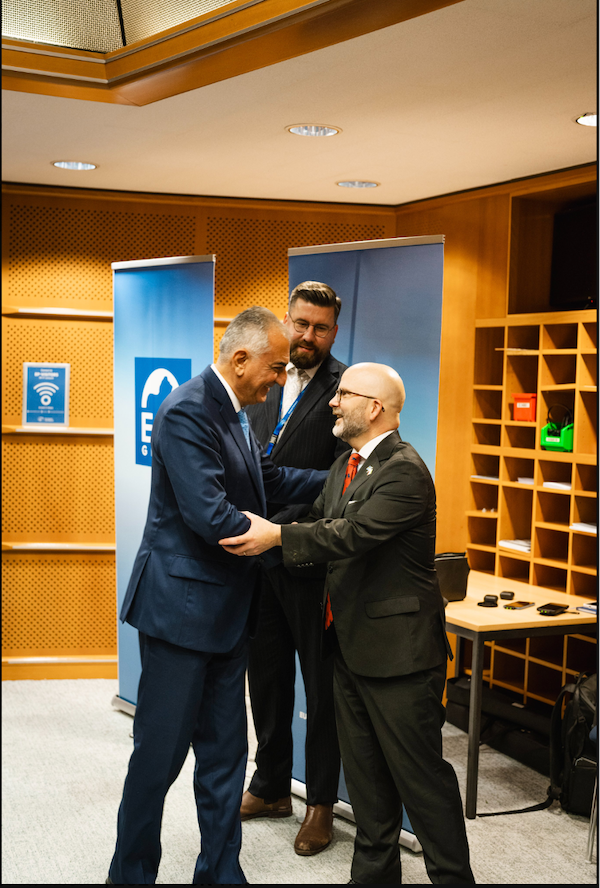
Earlier engagements included a meeting with Christophe Gomart, Vice Chair of the European Parliament’s Security and Defense Committee, and an event co-hosted by Finnish lawmaker Sebastian Tynkkynen and Sweden’s Charlie Weimers.
In an Oct. 12 joint statement, European governments and their allies condemned activities attributed to Tehran ranging from lethal plotting and arson to sabotage and cyberattacks. They cited attacks targeting Jewish communities, Iranian journalists and U.S. interests.
Pahlavi is scheduled to travel to Frankfurt on Nov. 7 to accept the Friedrich Naumann Foundation’s Freedom Prize in trust for the Iranian people. The award honors their struggle for freedom and democracy and will remain in his possession until it can be presented to freely elected representatives of Iran.