
Days before the end of the temporary ceasefire between the U.S. and Iran, everyday life for 90 million Iranians remains tense and challenging. Fifty days into the Internet blackout, the lives, businesses, and educational activities have been severely disrupted. Meanwhile, surging prices and widespread medicine shortages have inflicted serious hardship on vulnerable communities.
Several residents of Tehran and other major cities shared their perspectives with Kayhan Life on the U.S. and Israeli attacks and the temporary ceasefire. Their identities have been concealed with pseudonyms.
Fereydoun, who lives near Vanak Square — a mixed residential and commercial district in northern Tehran — described the situation: “Beneath the surface, the city is restless. My internet keeps cutting in and out. At night, about twenty cars roam the streets, each with two people — a driver and someone holding an (Islamic Republic) flag at the front.”
“A blue van fitted with loudspeakers blasts slogans until around one in the morning, driving up and down the streets,” he said. “They do not care whether there is a hospital nearby or whether a patient — an older adult or a small child — is awakened; they are causing a disturbance. Most of them are women.”
Fereydoun shared a video message from the management of his residential complex, which he said “warned residents not to chant slogans or take similar actions from windows or balconies because security forces are constantly near the complex.”
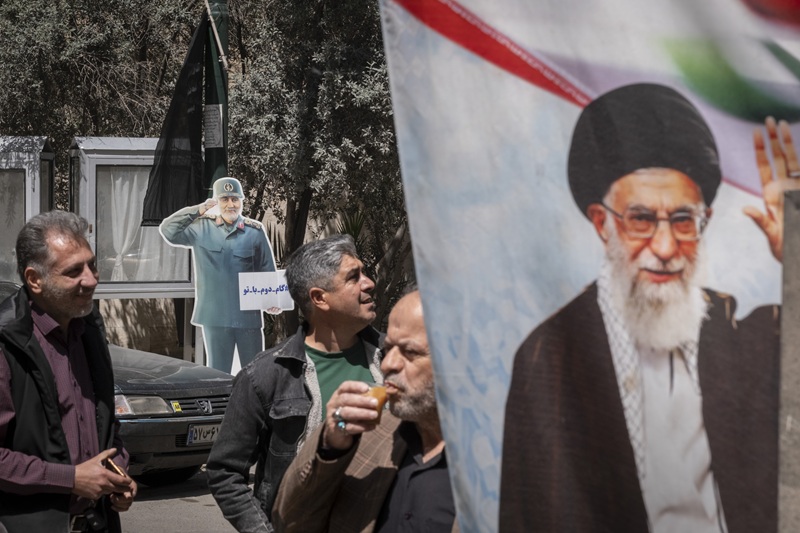


“On the day that (Iran Supreme Leader Ayatollah Ali) Khamenei passed away, one of these officers stormed the complex and brutally beat a resident for celebrating and chanting slogans. The reality of our complex is that informants surround it. They have raided our complex twice already,” Fereydoun added.
Motahareh, a resident of Sattar Khan Street (in Tehran’s District 2), said: “I have paid one million tomans (nearly $6.5) per gigabyte of internet. Shopkeepers are hiding goods to sell at higher prices to selected customers. Everyone is taking advantage of the situation. People are preparing for even tougher days ahead.”
She noted: “The air in Tehran is excellent and clean, and the nights are full of stars. Among my friends, only one person traveled north; everyone else stayed in Tehran. In our apartment building, everyone stayed home, and no one went out onto the streets. Of course, no one is happy about the negotiations or the ceasefire. Everyone is worried about the secret dealings between the U.S., Israel, and the regime.”

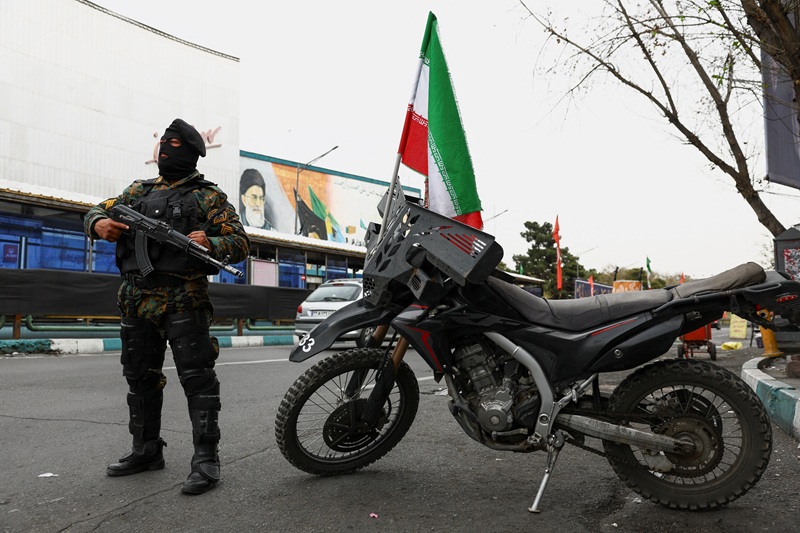
Fereydoun added: “The regime’s thugs earn two million tomans (approximately $13) per night for shouting in the streets. Every day, they also send SMS messages about artists performing in such-and-such locations. Apparently, they also hand out free food. Plus, phones are tapped, so we all try not to say anything sensitive over the phone. It is worse than North Korea.”
“Please tell Iranians abroad to contact their city representatives as much as possible and email them. Remind them daily what they are doing to the people trapped inside Iran. The leftists are actively whitewashing this regime, while the regime posts pictures of a few cafes and restaurants to make life seem normal. They use every trick they can, but nothing here is normal,” Fereydoun pleaded.

He went on: “By the way, a relative of mine who works as a currency exchange provider, whom I had visited several times to transfer money, told me a few days ago that various people repeatedly came to his office asking if he could transfer large sums to Europe. He refused. Just before the end of Nowruz (the Iranian New Year, starting March 21), all of his bank accounts were blocked without warning.
“A few days later, someone came to his office and told one of his employees, ‘I came to see if you are okay,’ then laughed and left. Only then did my relative realize who was behind the freezing of his accounts,” Fereydoun explained.
Amir, a journalist in Tehran, confirmed that multiple currency exchanger providers have faced similar account blocks, with several accounts in Tehran frozen by the Central Bank of the Islamic Republic. He noted that on April 11, when he visited Ferdowsi Street (Tehran’s central hub for currency trading), most exchange offices were closed, with only a few remaining open.
Institutions and individuals affiliated with the Islamic Republic, especially the Islamic Revolutionary Guard Corps (IRGC), have long sought ways to bypass sanctions, launder money, fund operations, and smuggle goods. Following the UAE’s recent crackdown on IRGC-linked financial networks and facing a financial dead end, the UAE has increasingly relied on domestic money exchangers as its last channel for moving currency abroad.
Iran’s Shattered Economy Means Any Success in War May Be Fleeting
Motahareh said: “On Saturday, April 11, I went to the Rio coffee shop at the Istanbul intersection [a historic and busy junction in central Tehran] to buy coffee. I noticed the entire wall of the British Embassy was covered in graffiti, and regime patrols were everywhere.”
“Most currency exchanges were closed, and people’s phones are still being monitored. That is why I never take my phone out. On state television, clerics are shown among thugs, offering to perform temporary marriages [sigheh] for men for free. Corruption runs rampant among government officials,” she said.
Fereydoun noted: “Banks operate until one in the morning but face frequent disruptions in the ‘national internet,’ or sometimes have no internet at all. Companies are partially open, but employees often do not come to work, taking leave under various excuses. Shops, grocery stores, coffee shops, and salons have customers, but other businesses, such as clothing stores, home appliance shops, industrial tool suppliers, and luxury goods stores, remain empty. Gold sellers have customers but do not buy gold items themselves, and if they do, it is at extremely low prices. Everyone is exploiting the situation.”
“The Tala Pastry shop near my daughter’s home is one of the city’s most expensive,” said Fereydoun. “Before the war, it had many customers. Yesterday, my daughter and I went there to buy pastries and saw that one of their employees had been let go. This old, famous pastry shop now bakes less because it has fewer customers.”
Motahareh noted: “The national internet and domestic Iranian messaging and social media applications like Shad, Rubika, and Baleh are frequently cut off. However, parents are happy their children are home and not attending school — they feel more secure with their kids at home.”
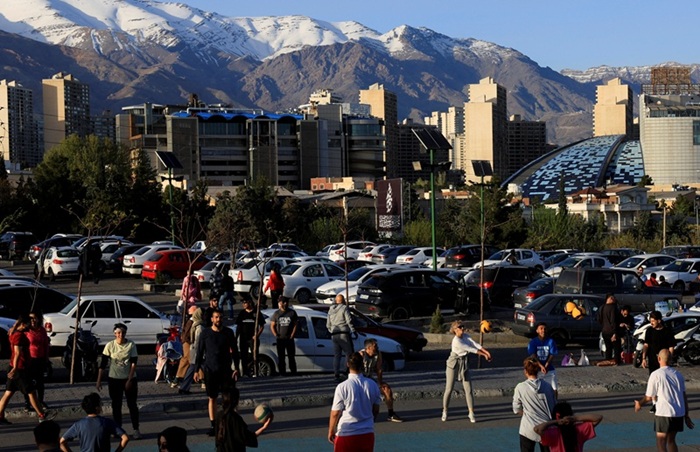
Amir said: “Last night, I asked a shopkeeper about the ceasefire. He said most people wanted the war to continue, though he personally opposed it. From the people I spoke with in Tehran and in the northern province of Alborz, most are pro-war. However, life in Tehran continues, and the city does not feel like a war zone. Most people I know returned after the Nowruz holidays.”
“I do not have a white SIM card. I was offered one, but I declined. I do not know how many journalists have one, but two gigabytes sell for 1.2 million tomans (nearly $8), and ten gigabytes cost 5.5 million tomans (approximately $35.5),” Amir explained.
Alireza, a resident of Tehran’s Pirouzi neighborhood — a major residential and commercial area in East Tehran — also shared his views. “Everyone is left uncertain,” he said. “Prices are high, unemployment is rampant, and fraud is increasing.”
“Right now, people are more upset about the ceasefire because they fear the Islamic Republic will remain in power and impose the same or even harsher repression,” he added. “Many are distressed. For example, my sister and mother have been asking since the ceasefire was announced: ‘What happened?’ ‘Why did they leave?’”