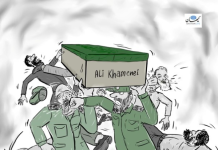
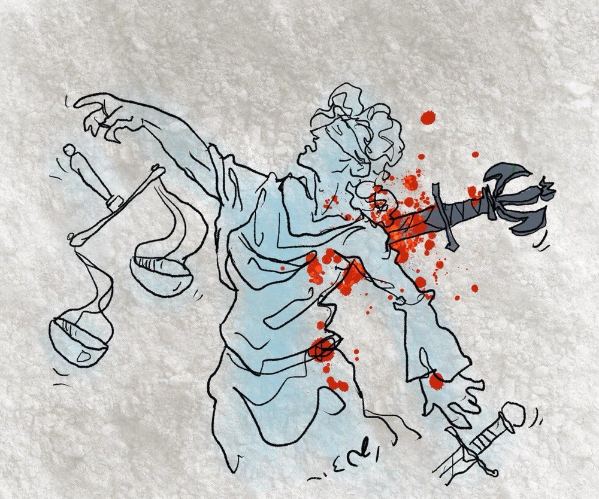
 Artist: Ahmad Barakizadeh
A Fatal Warning for Iran’s Defenders of Justice
The death of Khosrow Ali-Kordi, a prominent Iranian lawyer, has renewed scrutiny of what human rights activists describe as a pattern of state-sponsored killings.
Mr. Ali-Kordi, who had repeatedly reported threats from Iranian security agencies, was found dead in his office last week. Officials said he died of cardiac arrest. But witnesses challenged that explanation.They reported blood and visible injuries on his body and the presence of unidentified visitors shortly before his death.
Officials also restricted access to evidence. Witnesses said security forces removed more than a dozen surveillance cameras from the building where Mr. Ali-Kordi worked and from nearby streets. Family members were reportedly threatened, and his brother, Javad Ali Kordi, was summoned to the Revolutionary Court in Mashhad.
Shortly before his death, Ali-Kordi had warned the United Nations fact-finding mission on Iran that he faced serious risks because of his work representing political detainees and government critics. His death coincides with the 27th anniversary of Iran’s so-called “chain murders,” a series of assassinations of intellectuals and dissidents in the late 1990s widely attributed to intelligence operatives.
Occurring on the eve of International Human Rights Day, Mr. Ali-Kordi’s death has become a symbol of what critics call entrenched impunity in the Islamic Republic.
His seventh-day memorial ceremony in Mashhad turned into a massive protest against the Islamic Republic. Mourners chanted slogans including “Reza, Reza Pahlavi — this is the nation’s call”, “Long live the Shah”, “Woman Life Freedom”, and “Long Live Iran.”
Security forces blocked the mosque entrance, dispersed the gathering, and made several arrests, including Mr. Ali-Kordi’s brother, Javad Ali-Kordi. Those detained also included the Nobel Peace Prize laureate Narges Mohammadi and several other activists, according to rights groups.
Welcome to the Kayhan Life Week in Review
Iran spent another week grappling with internal crises, including the suspicious death of a prominent lawyer, a plummeting currency, labor unrest in the South Pars energy sector, and mounting environmental and public-health crises. At the same time, regional distancing, nuclear-related tensions, and the U.S. seizure of a tanker tied to Iranian oil deepened Tehran’s international isolation.
► Prominent opposition figures at home and among the diaspora condemned the suspicious death of prominent Mashhad defense lawyer Khosrow Alikordi. He was known for representing families of slain protesters, which had long put him in the crosshairs of the security apparatus.
► Amid growing criticism over Alikordi’s death, Iran also faced economic turmoil. The currency slipped to its lowest level in history on Monday, nearing 1,250,000 rials per U.S. dollar in the over-the-counter market. The Iranian rial stood at around 55,000 to the U.S. dollar in 2018. At the time of the 1979 Islamic Revolution, the U.S. dollar was equivalent to about 70 rials.
► Meanwhile, economic hardship is fueling growing labor unrest. Thousands of South Pars contract workers and their families rallied in one of Iran’s largest oil-sector demonstrations in recent history. Their protest, driven by months of unmet government promises on wages and conditions, directly linked the unrest to economic grievances.
► Amid economic and social strains, environmental stress is growing. Officials issued their starkest warnings. New data indicate that Iran is nearing widespread desertification due to decades of over-extraction, poor agricultural management, and drought.
► The environmental crisis is having immediate public health effects. This week, a wave of influenza, exacerbated by severe air pollution from the crisis, led to the closure of schools and government offices across several provinces.
► As domestic crises multiply, the Islamic Republic’s diplomatic standing with its former allies continues to erode. Lebanon’s foreign minister rebuffed Foreign Minister Abbas Araghchi’s invitation to Tehran and instead proposed talks in a neutral third country.
► Developments in Syria also underscored Tehran’s diplomatic troubles. The post-Assad leadership marked its first anniversary by further distancing itself from Tehran, solidifying a geopolitical realignment toward the United States and Gulf states.
► Meanwhile, new reporting suggests the Islamic Republic has quietly rebuilt military nuclear infrastructure damaged during last year’s 12-day war, reportedly receiving Russian assistance.
► At the same time, Foreign Minister Abbas Araghchi disputed international assessments of minimal radiation risk at bombed sites—even as Tehran continues to bar IAEA inspectors from the sites.
► Finally, the United States seized a Venezuelan tanker previously sanctioned for carrying Iranian oil, and this move quickly inflamed tensions with both Caracas and Tehran.
Kayhan Life’s Curated News Picks
- The Atlantic: They Killed My Source: A man claiming to be an Iranian intelligence officer promised me he would reveal his country’s secrets. Then he disappeared.
- BBC Verify: From Iran to China to Venezuela – how tanker seized by US hid true location
- Centre for Human Rights in Iran: Over 80 Iranian Lawyers Demand Transparency in Suspicious Death of Human Rights Lawyer Khosro Alikordi
Updates from Kayhan Life’s Social Media
- Defining Courage: Trailblazing Voices for Change – A Conversation with Princess Noor Pahlavi and Montana Tucker hosted by Lisa Daftari
- Kish Marathon Highlights Growing Defiance of Iran’s Dress Code by Women Runners
- Final Farewell to Khosrow Alikordi as Mourners Echo Royalist Chants
- Detained in Iran: Great Neck, NY Man Imprisoned over 13-Year-Old Trip to Israel
- Pop Icon Googoosh Discusses Her Memoir, “Googoosh: A Sinful Voice”
- Jafar Panahi’s “IT WAS JUST AN ACCIDENT” Nominated for Multiple Awards, Including BEST PICTURE at Golden Globes 2026
Treat of the Week
Persian Shish Andaz
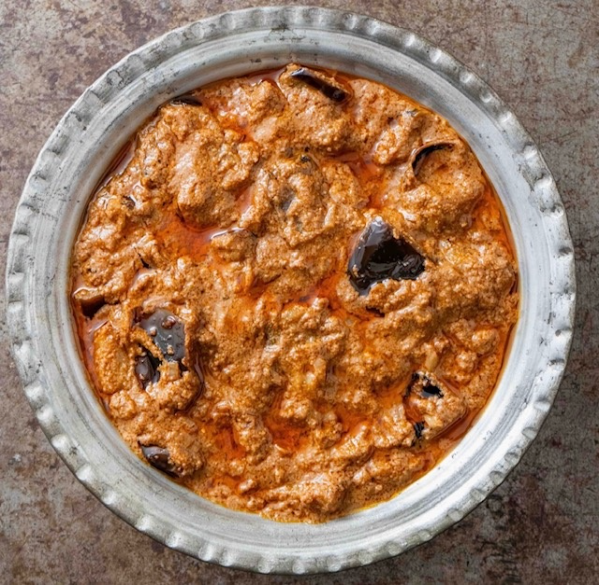
The Kayhan Life Team wishes you a good weekend.