Late to Shanghai: Tehran’s Look East Doctrine in Action
The Shanghai Cooperation Organization summit kicked off on August 31, with 20 leaders smiling for the cameras. Missing from the all-important family photo, however, was Masoud Pezeshkian, president of the Islamic Republic—absent apparently because the regime’s nemesis, alcohol, was on the menu.
Mr Pezeshkian’s public relations guru maintained that the story was simple: the flight was late and the summit hadn’t technically begun. Unofficially, sources whispered that Pezeshkian timed his arrival with surgical precision. That way, he could skip the banquet without being photographed near a glass of alcohol.
The theocratic state has perfected this art of absence. In bilateral visits, hosts quietly remove the alcohol from the table. But at multilateral banquets, there is no negotiation.
The next day, Pezeshkian was relegated to the second row of the photo op, behind luminaries like North Korea’s Kim Jong-un. For a leader keen to prove his international gravitas, it was unflattering.
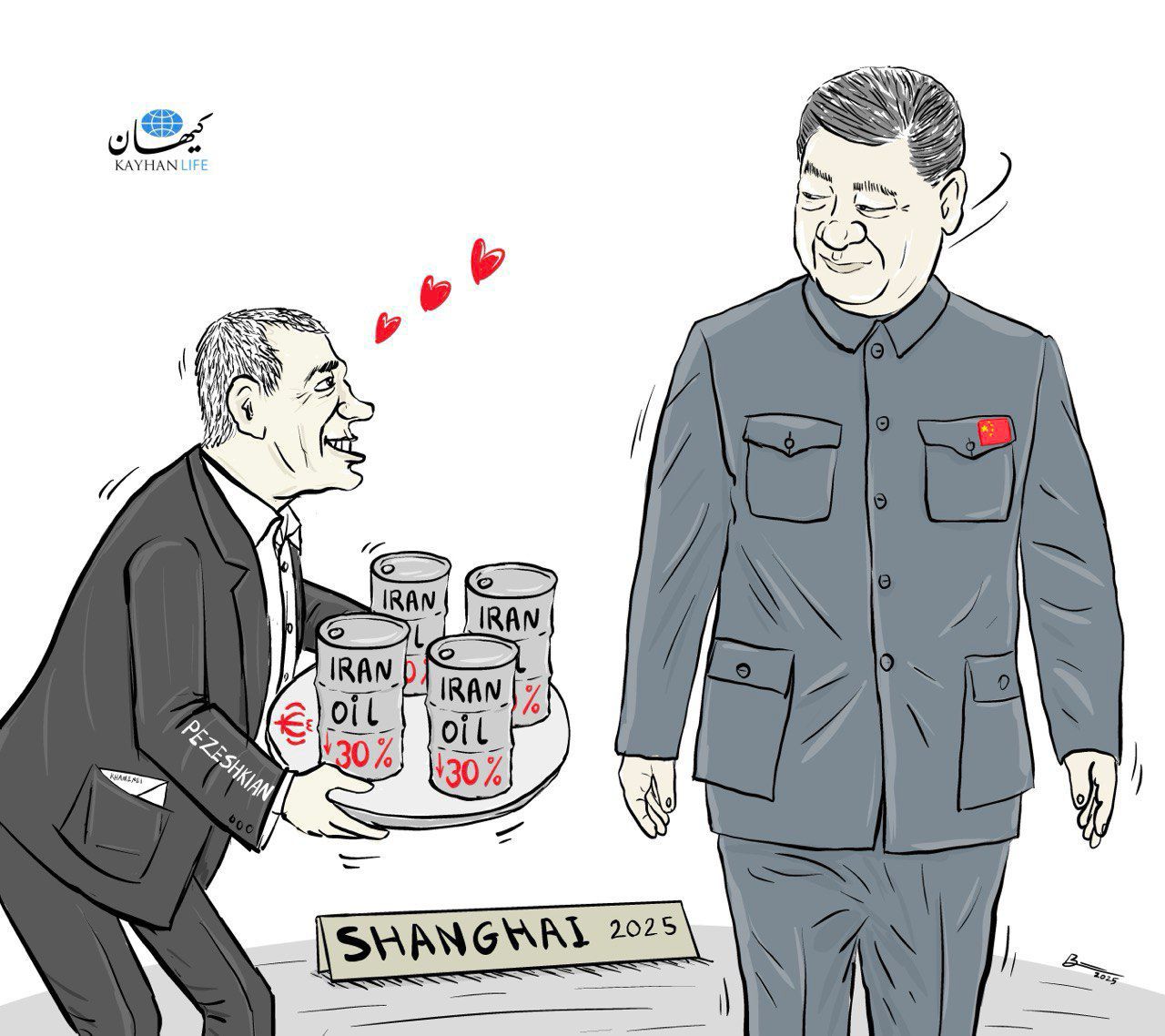
Back in Tehran, Ayatollah Ali Khamenei tried to salvage dignity with a tweet about the “25-year strategic cooperation agreement” with Beijing. “Together, our ancient civilizations will transform the world,” he declared. The message was dutifully reposted in Chinese. In reality, Beijing has treated the Islamic Republic less like an “ancient civilization” and more like a bargain-basement gas station: fill up the tank on the cheap and drive away.
That $400 billion of promised Chinese investment? It has vanished into the same black hole as Iran’s economic reforms. Between 2018 and 2022, China invested 37 times more in Saudi Arabia and 31 times more in the UAE than in the Islamic Republic. Beijing may respect Iranian poetry, but when it comes to money, it prefers Riyadh’s balance sheets.
Customs data tell the story: Chinese exports to Iran are up 52%, while imports from Iran are down 41%. Translation: Beijing sells Tehran cheap electronics, plastic toys, and construction equipment—and buys less and less of its oil. Russia, once Iran’s comrade in sanctions, is already outcompeting Tehran in China’s energy market.
Still, the Islamic Republic clings to its “look East” doctrine like a gambler at a rigged roulette table. Khamenei and his inner circle insist that joining BRICS or SCO will somehow offset sanctions. The reality is simpler: Beijing loves Iran’s oil discounts, but has no interest in underwriting the costs of the theocratic state’s defiance.
Ordinary Iranians, of course, see this for what it is. They know the difference between their country—Iran, with its culture, history, and people—and the Islamic Republic, brutal but inept with a knack for turning diplomacy into self-inflicted pratfalls.
Welcome to the Kayhan Life Week in Review
Iran this week faced mounting international and domestic pressures, from the threat of renewed sanctions and fresh U.S. penalties, to economic hardship at home and widening crackdowns on dissent. At the same time, regional tensions flared as Israel struck in Yemen, while Iranian artists and cultural figures made headlines abroad.
The central question preoccupying policymakers was whether Britain, France, and Germany — the so-called E3 — would move ahead with the “snapback” mechanism that allows sanctions to be reimposed under the 2015 nuclear deal, formally known as the Joint Comprehensive Plan of Action. Analysts say the mechanism, which was triggered by the E3 this week, could revive punitive measures as early as next month.
The United Nations and the E3 urged Tehran to restore access for the International Atomic Energy Agency (IAEA), whose inspectors were barred from Iran’s nuclear sites in July amid disputes over the program’s scope. Tehran, for its part, insisted it could weather any restrictions on its oil sector, boasting that it had successfully circumvented sanctions in the past.
China and Russia, both signatories to the 2015 deal, rejected the E3’s move as “legally and procedurally flawed” in a letter to the U.N. Security Council. Washington, meanwhile, pressed forward with its own measures, sanctioning shipping companies and vessels it said were disguising Iranian oil exports as Iraqi crude.
The regional landscape was no less turbulent. In Yemen, Israel launched an airstrike on the capital, Sanaa, killing Ahmad Ghaleb al-Rahwi, the Houthis’ president, along with several ministers, according to the Houthi Supreme Political Council. The Houthis, who control much of the country, remain one of Tehran’s closest regional allies.
Inside Iran, the government continued to tighten its grip. Authorities said they had arrested eight people accused of spying for Israel’s Mossad, following a 12-day confrontation with Israel that included attacks on Iranian nuclear sites and the assassinations of senior military figures and scientists. The arrests underscored the sense of vulnerability within the regime’s security establishment.
Journalists, too, came under heightened pressure. Reports surfaced of Iranian authorities threatening reporters abroad — including in Australia — and harassing their families still inside the country. Rights advocates say such tactics reflect a longstanding strategy: using both physical intimidation and online abuse to stifle independent reporting.
Compounding the regime’s troubles in Iran were a rise in food prices and the growing concern that the country’s agricultural sector was at risk of collapse. Experts said that the agricultural crisis had arisen due to ongoing drought, poor policies by the Ministry of Agriculture, and a sharp increase in production costs. This, in turn, has affected the price of food, which rose by more than 51 percent from the previous year, with basic goods such as bread and cereals experiencing the greatest price hikes.
On a cultural note, the previously sold-out show “My English Persian Kitchen” returned to London’s Soho Theatre, much to the delight of Iranians in London. The play, based on a true story, explores the subjects of domestic violence and the process of leaving one’s homeland to start a new life, and uses the art of Persian cooking to transport the audience through one woman’s extraordinary journey.
And in Venice, filmmaker Mohammad Rasoulof served as a juror at the International Film Festival. While no Iranian films made the main competition, Ali Asgari’s The Divine Comedy was nominated in the “Orizzonti” (Horizons) section.
TOP STORIES
-
ANALYSIS: Will Global Sanctions Be Reimposed on Islamic Republic of Iran?
-
EXCLUSIVE-UN nuclear chief presses Iran to strike deal on inspections soon
-
UK, France and Germany Urge Islamic Republic to Agree Deal to Delay UN Sanctions
-
China, Russia Join Islamic Republic in Rejecting European Move to Restore Sanctions on Tehran
-
US Imposes Sanctions on Network for Transporting Iranian Oil
-
Prime Minister of Yemen’s Houthi-Run Government Killed in Israeli Strike
-
Islamic Republic Says Eight Arrested for Suspected Links to Israel’s Mossad Spy Agency
-
Islamic Republic Is Threatening Reporters in Australia, Broadcaster Says
-
In Iran, Food Prices Are Up 50% From 2024; Farming Sector Faces Collapse
-
Iranian Cooking, Live on Stage: ‘My English Persian Kitchen’ Returns to London Theater
-
At Venice Film Festival, Filmmaker Rasoulof Is On Main Competition Jury
Kayhan Life’s Curated News
-
Israel Targeted Top Iranian Leaders by Tracing their Bodyguards’ Phones
-
Concern After British Couple Detained in Iran ‘Suddenly Whisked’ to Courtroom
-
Iran’s Rial Currency Falls to Near-Record Lows on Euro ‘Snapback’ Sanctions Threat
Updates from Kayhan Life’s Social Media
Treat of the Week
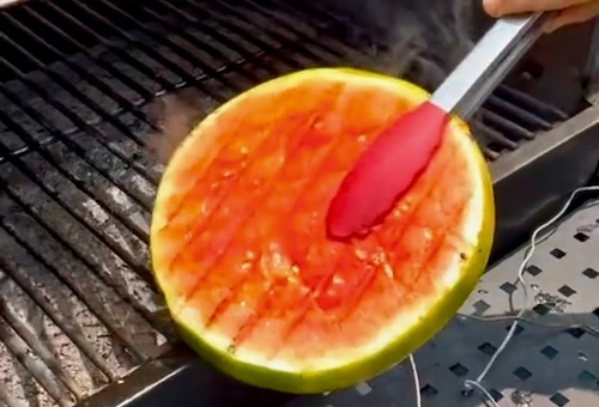
Grilled Watermelon with Honey & Flaky Salt