By Navid Mohebbi
[Navid Mohebbi is a Washington-based Iran analyst and democracy advocate, focusing on domestic and foreign policy issues. The opinions expressed as his own.]
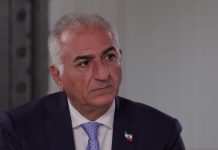
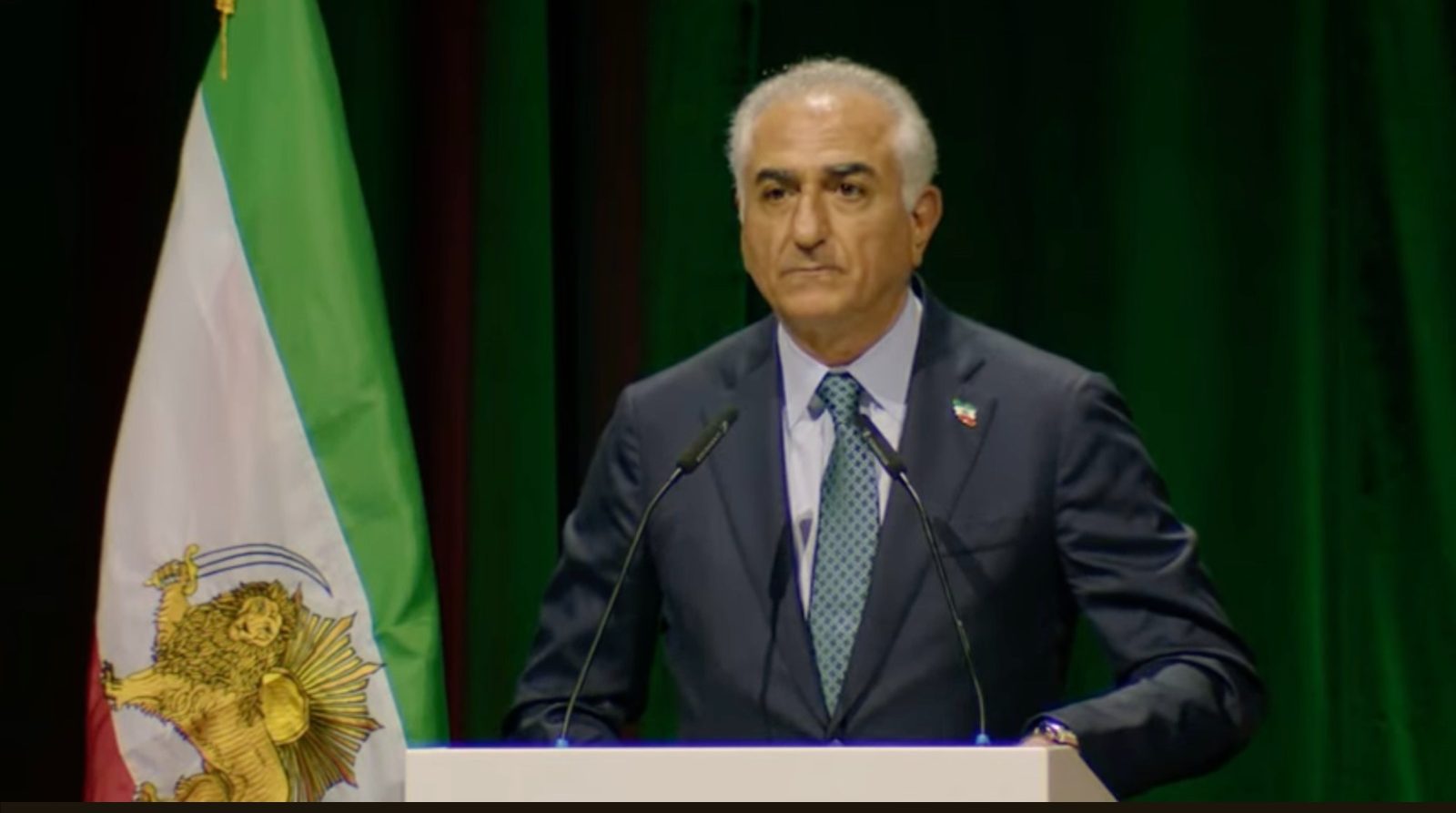
Last weekend, I spent nearly 12 hours watching the livestream of the “National Cooperation for Saving Iran” convention in Munich, hosted by Crown Prince Reza Pahlavi. What I witnessed was not just a political event, but a demonstration of maturity, readiness, and emotional depth rarely seen in the modern history of Iran’s opposition.
Many have long viewed the Crown Prince, son of the late Shah, as a symbolic figure whose name carries historical weight, but whose political role is subject to debate. That perception no longer holds. What unfolded in Munich was proof that Reza Pahlavi has undergone a profound transformation into a pragmatic, visionary leader, surrounded by a capable and disciplined team.

The event was flawlessly organized. From logistics to security, timing to messaging, everything ran like clockwork. This was the product of an upgraded political operation, one that has clearly invested in talent, planning, and digital infrastructure. As an example, Reza Pahlavi’s team has launched a secure QR code-based defection platform that has already attracted close to 50,000 expressions of interest from inside Iran, including military and civil servants who are seeking to defect at the right time.
But what truly set Munich apart was its emotional charge.
The mothers were there—women like Esmat Vatanparast, who lost eleven members of her family to execution by the regime in the 1980s. Their presence was not staged or symbolic; it was genuine. When ‘Mother Esmat’ stood up and called on the audience to rise for “Mother Iran,” tears filled the room. The mood was raw, human, real. You could feel it even through a screen.
Then came the most powerful moment of all: video messages from political prisoners inside Iran’s jails, smuggled out against all odds, offering support for the united movement around Crown Prince Reza Pahlavi’s leadership. These men and women are under the direct control of a brutal regime, and yet they chose this moment to speak. If that’s not legitimacy, then what is?
Over 500 Iranians from across the political, ethnic, linguistic, and gender orientations gathered in one hall, not as tokens, but as equals. Kurdish and Baluch activists spoke boldly about the discrimination that their communities have faced. An LGBTQ+ speaker reminded the audience: “There will be no free Iran without our freedom too.” Others spoke in regional languages, Kurdish, Azeri, Baluchi, as a powerful affirmation that loyalty to Iran’s territorial integrity and shared future can coexist with cultural plurality. This was not the politics of erasure or assimilation—it was unity through dignity.
Of course, the Islamic Republic did not remain silent. Within hours, a coordinated campaign was unleashed on Persian-language platforms, designed to undermine the Munich gathering. False narratives, character assassinations, and organized trolling, hallmarks of the regime’s vast propaganda machine, flooded the web. It was an indication of how seriously they took the gathering. Their attacks had little impact. The response from Iranians across the diaspora, and more importantly, inside the country, was overwhelmingly positive. Thousands tuned in. Hundreds shared testimonials. Many said what I personally felt: “Every moment was filled with both tears and hope..”
Prince Reza Pahlavi’s message was clear: his goal is not to rule Iran. He seeks to bring about a functional transition.
He laid out a phased framework that includes the formation of a Temporary Executive Team and a National Uprising Council, bodies designed to provide emergency governance and legislative authority until elections can be held. He invited legal scholars to critique it. He urged political parties to unite around it. He asked ordinary citizens to lend their skills to it.
This is not exile nostalgia. It’s not social media theater. It’s governance in exile preparing for transition.
And the West must pay attention.
For years, governments have complained that the Iranian opposition lacks coordination, lacks credibility, lacks a plan. That is no longer the case. Munich showed that there is now a serious, disciplined, and broad-based movement capable of offering an Iranian-led alternative to regime collapse.
To ignore this moment would be a strategic mistake of the highest order. Reza Pahlavi has demonstrated that he can unite people without demanding loyalty, offer leadership without seeking power, and inspire hope without making empty promises.
Naturally, in a pluralistic society such as Iran’s, there will never be a time when everyone agrees with him. But as he explains, this is about the coalition of the willing. He advances his campaign with persistence and clarity.
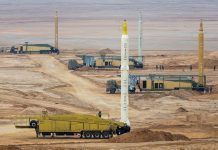
Now that the world has grown weary of the regime’s nuclear blackmail, missile threats, and 46 years of exported terrorism, the political, diplomatic, financial, and intelligence support for Reza Pahlavi’s campaign offers a compelling alternative to the Iranian crisis. What matters is not necessarily public endorsement, but meaningful engagement: cooperative efforts that can take shape quietly and pragmatically.
Because the window is open. And it will not remain open forever.