As Drought Tightens Grip, Islamic Republic Stages Rain Ritual
By Kayhan Life / London Staff
Iran’s deepening water crisis is approaching structural limits, and lawmakers are now sounding the alarm with new candor.
Rahmadal Bamari, a member of parliament’s Agriculture, Water and Natural Resources Committee, blamed the country’s collapsing ecosystem on unchecked groundwater extraction and the failure to modernize irrigation, which have exacerbated the effects of decades of drought. If current trends continue, he said, Iran is heading for widespread desertification—threatening forests, rangelands, and aquifers that sustain human and animal life.
A new analysis by the World Weather Attribution (WWA) group reinforces that grim outlook. Researchers found that human-driven climate change in Iran, Iraq, and Syria has increased the likelihood and severity of regional drought by more than tenfold. The current emergency, they argue, is the acute expression of a long-term water deficit fueled by high evaporation, water-intensive agriculture, and unsustainable withdrawals.
Local data paint an equally stark picture. Tehran Regional Water Company reports that drinking-water reserves across the capital’s five major dams have dropped to 170 million cubic meters — half of last year’s levels. Deputy director Rama Habibi said Tehran has now endured five straight drought years, the worst such stretch in six decades, with rainfall down 96 percent from last year and nearly 98 percent below historical averages.
But shrinking surface water is only part of the crisis. Groundwater depletion is accelerating, aquifers are running chronic deficits, and land subsidence—caused by collapsing water tables—is now widespread across Iran’s plains and cities. The country ranks among the world’s top three for total area affected by subsidence.
90% of Iran’s water is consumed by agriculture. But the fragile ecosystems have been further destabilized by mismanaged land use, overgrazing, unregulated farmland expansion, and widespread soil erosion. Wetlands are drying, threatening biodiversity and intensifying dust pollution nationwide.
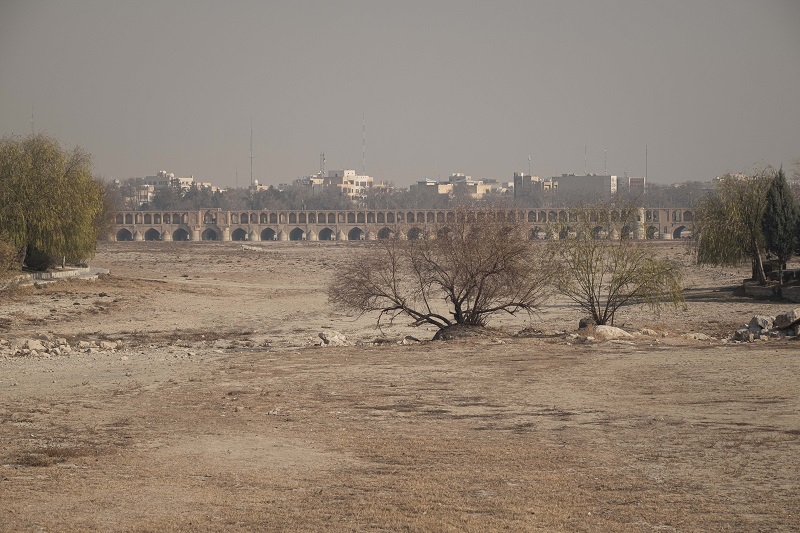
The strain is now reaching Iran’s drinking-water security. In Isfahan, the provincial water-utility chief, Nasser Akbari, warned that the Zayandeh Rud dam—lifeline for 95 cities across four provinces—is operating at barely 8 percent capacity. Rainfall is down 69 percent from previous years, and for the first time in decades, the region has entered winter under severe water stress.
Even Iran’s traditionally lush northern provinces are sliding into drought. At a World Soil Day event, Hadi Kiadeliri, deputy head of the Environmental Protection Organization, said that ancient glaciers have vanished, perennial rivers have become seasonal streams, and springs are drying up early. Northern Iran, he cautioned, is five to ten years away from experiencing the same conditions now overwhelming the central plateau.
“We are witnessing unprecedented dryness,” he said, pointing to the wildfire-damaged Elit region as an early warning signal.
Across agencies and institutions, the message is converging: Iran’s water crisis is no longer a future threat. It is unfolding now—expanding, accelerating, and demanding decisions the country can no longer postpone.