By Ahmed Elimam, Eman Abouhassira and Andrew Mills
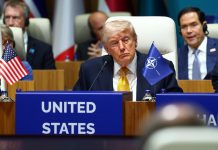
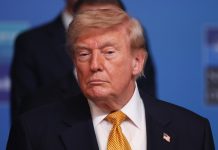
DUBAI, July 10 (Reuters) – U.S. President Donald Trump said on Friday that Iran had asked to continue talks and the U.S. had agreed, but that the June ceasefire was “over”.
His reference to negotiations came on a day of relative calm at the end of a week of renewed conflict, when three Qatari and Saudi commercial tankers came under fire, prompting the U.S. to hit Iranian sites, and Iran to respond with strikes on U.S. military sites in [Persian] Gulf states. No attacks were reported on Friday.
“The Islamic Republic of Iran has asked us to continue ‘talks.’ We have agreed to do so, but the United States has stated to them, in no uncertain terms, that the Cease Fire is OVER!” he wrote in a post on Truth Social.
Countries Must Reject Islamic Republic Efforts to Control Hormuz, UN Agency Document Says
IRAN READY FOR ‘ALL-OUT DEFENCE’, SAYS NEGOTIATOR
Iran did not immediately respond to Trump’s post, but its top negotiator, Mohammad Baqer Qalibaf, said in comments posted on his Telegram account the war would never end with Tehran’s surrender.
The Islamic Republic was ready for “all-out defence” if the U.S. betrayed a memorandum of understanding secured last month, he added.
That interim deal between both countries was meant to pave the way to the end of a conflict now in its fifth month that has killed thousands, throttled worldwide energy supplies and raised fears of a wider global economic downturn.
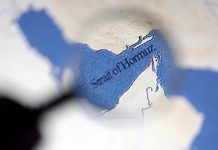
Qatari negotiators were meeting officials in Iran on Friday to seek to de-escalate tensions and discuss navigation through the Strait of Hormuz, a source with knowledge of the situation told Reuters.
Daily tanker traffic through the waterway appeared to have slowed on Friday, after attacks this week raised concerns about global oil supplies and shipping.
The Qatari talks aim to address the implementation of the U.S.-Iran memorandum of understanding and the issues that triggered the recent escalation, including disputes over navigation in the strait, the source said.
New Attacks on Iran Were Absolutely Necessary, NATO Chief Says
Past talks have been announced with few signs of concrete progress. “We see reports that the discussions are ongoing, and we hope that they are,” U.N. spokesperson Stephane Dujarric said in New York.
Oil prices eased on Friday but remained on track for weekly gains of 5% after the hostilities. U.S. Treasuries edged lower on concerns the trend of rising energy prices could add to inflationary pressures.
GLOBAL OIL SUPPLY UP BUT STILL BELOW PRE-WAR LEVELS
The Strait of Hormuz handled about a fifth of global oil and liquefied natural gas shipments before the war. Tehran has since largely taken control of the waterway, forcing a stalemate in its confrontation with the world’s most powerful military.
Under the interim deal, the U.S. ended its naval blockade of Iranian ports, and Iran agreed to ensure safe passage of commercial vessels.
However, this week Washington accused Iranian forces of attacking three tankers in the area and struck military sites in Iran in response. While Iran has not claimed responsibility for those attacks, analysts say Tehran uses such actions to gain leverage in negotiations.
Iran then attacked U.S. military sites in [Persian] Gulf states on Thursday.
The U.N. shipping agency’s governing council condemned efforts by Iran to impose sovereignty over the Strait of Hormuz and Tehran’s “unilateral decision” to create a body to control traffic through it.
Prior to this week’s attacks, daily tanker traffic had risen to its highest since the war began, averaging 40 ships transiting the strait. That was still far off the pre-conflict average of 125 to 140 daily sailings.
Trump and Israeli Prime Minister Benjamin Netanyahu said when they launched the war that their aims were to end Iran‘s nuclear activities, alongside other objectives.
Tammy Bruce, the deputy U.S. ambassador to the U.N., raised that issue once more on Friday and again mentioned talks, telling a Security Council meeting: “The door to diplomacy remains open, and is our preferred path to resolve concerns related to Iran‘s nuclear program.”
Iran, which has regularly denied accusations it is working on a nuclear bomb, has so far retained its stockpile of near-weapons-grade enriched uranium, and its ability to threaten neighbours with missiles and drones.
CONDOLENCE CEREMONY FOR KHAMENEI
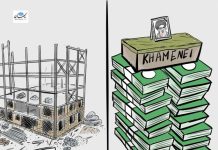
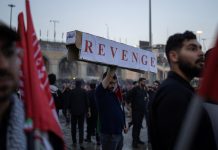
Iran on Thursday buried its slain Supreme Leader Ayatollah Ali Khamenei at the country’s holiest shrine in Mashhad, capping a week of funeral processions and rallies.
Khamenei was killed in an airstrike on the first day of the war on February 28. A condolence ceremony will be held on Friday after sunset prayers on behalf of Supreme Leader Mojtaba Khamenei for his father in the city of Qom, his office announced. Mojtaba Khamenei, who was injured in the strike that killed his father, has still not appeared in public.
The whereabouts of Mojtaba Khamenei have been a mystery to Iranians and the rest of the world alike, leaving people to guess at his plans for Iran at a turbulent time in the Islamic Republic’s 47-year history.
(Additional reporting by Jonathan Saul; writing by Alexandra Hudson and Andrew Heavens; editing by Philippa Fletche, Andrew Heavens and Sanjeev Miglani)