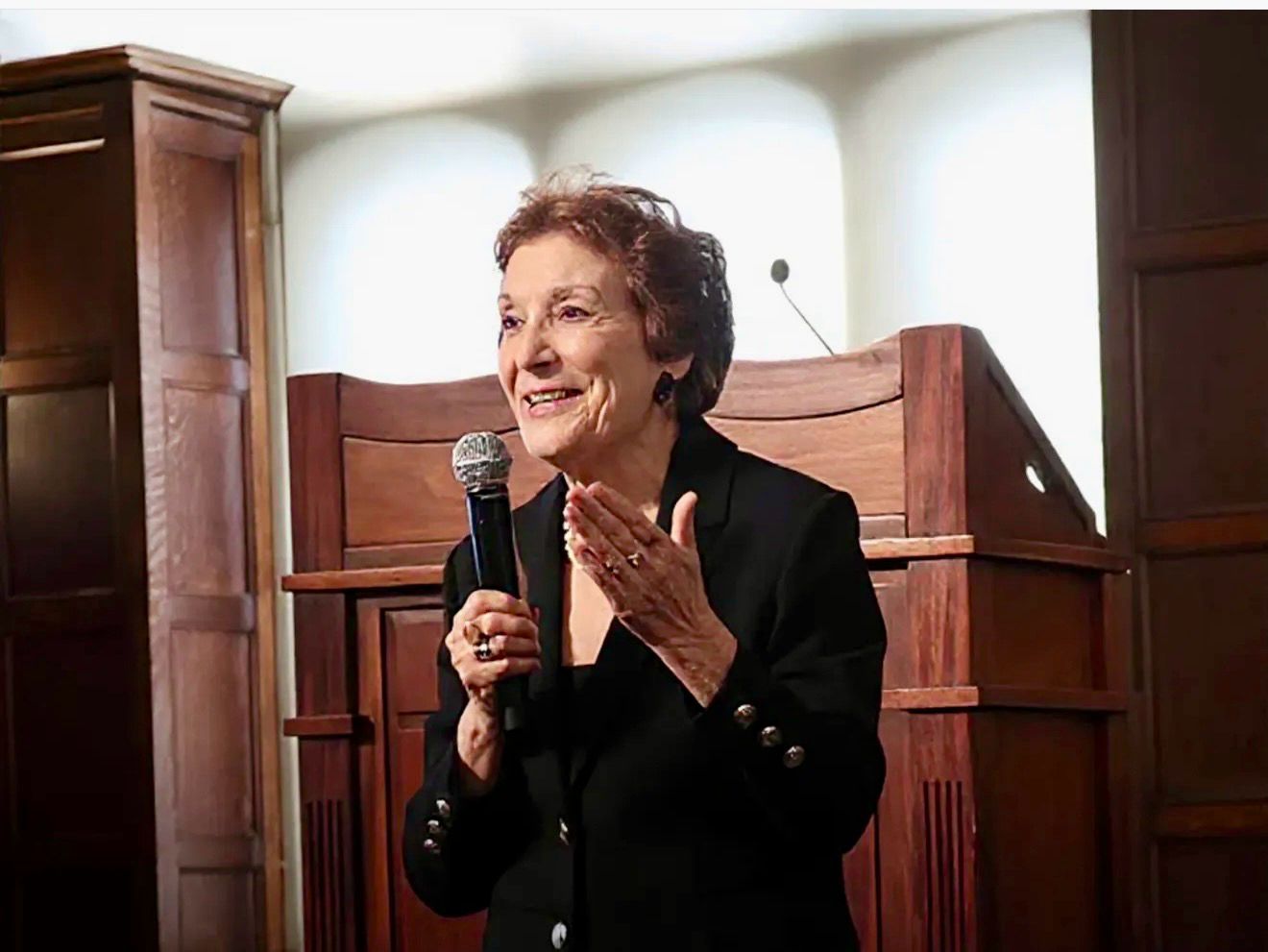
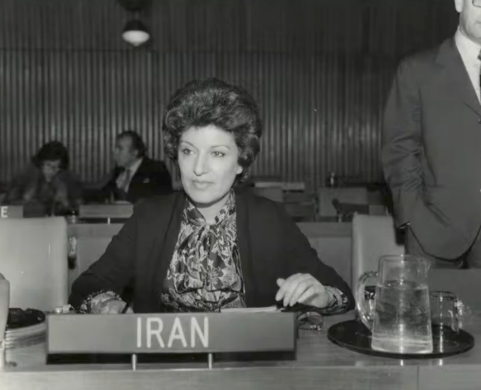
Georgetown University honored the legacy of Iran’s first and only Minister for Women’s Affairs, Mahnaz Afkhami, in a symposium on Nov. 4. Afkhami, who spoke at the symposium, held the position from 1975 to 1978.
Ambassador Melanne Verveer, the United States’ first Ambassador for Global Women’s Issues under President Barack Obama, who previously served as an advisor to President Bill Clinton and as chief of staff to First Lady Hillary Clinton, opened the symposium.
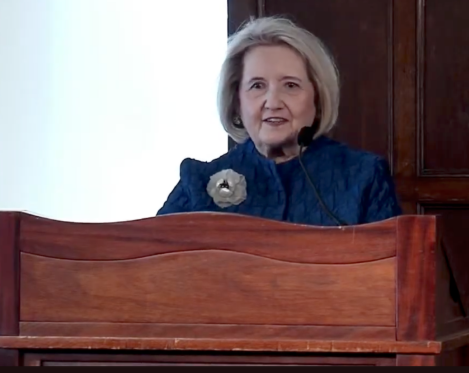
“Nearly one in four countries has reported reversals in women’s progress, with rulers nullifying laws to protect women against violence and contracting women’s civic space,” Verveer told the participants at the symposium. The event was co-sponsored by the Georgetown Institute for Women, Peace and Security (GIWPS), of which Verveer is executive director, and by the Georgetown University Library.
“Mahnaz, ever the visionary and the activist for impact, wants us to focus on a needed new architecture for human rights, for politics, for activism, and the global women’s movement that these times demand,” said Verveer.
Citing Afkhami, Verveer said, “the conditions women have in common outrank and outvalue any that set them apart.” She praised her for building transnational women’s networks in exile (such as the Sisterhood Is Global Institute and the Women’s Learning Partnership), and for emphasizing that women’s leadership did not mean a war of the sexes. “It was not men versus women,” she said. “It was benefiting women and men and promoting a model of participatory leadership that could transform politics.”
Afkhami herself reflected on her early years in pre-revolutionary Iran.
“I was lucky to come of age when there was both progress and a belief in modernity,” she recalled. “The government supported education abroad, and that made it easier to bring women’s issues into the public discourse—not as gender debates, but as essential to building a modern state.”
Becoming Minister for Women’s Affairs in 1975 placed her among the few women globally to hold such a post, she said. “There was no blueprint,” she recalled. “So we went across Iran, speaking with women in factories, schools, and villages to learn what they needed.
That grassroots consultation shaped policies that stand out to this day. “Our laws provided childcare at workplaces, part-time work options, and professional training for women,” Afkhami said. “Even now, those remain rare.”
Economic empowerment, she emphasized, was central. “You have to be able to support yourself and your family. Without that, everything else is secondary.”
Other prominent speakers at the symposium spoke of the legacy of Afkhami and her impact on women’s rights in Iran and beyond.

Dr. Habiba Sarabi, Afghanistan’s first female governor, recounted how Afkhami’s training manuals “opened my eyes.”
The best-selling Iranian-born author and academic Azar Nafisi recalled how the Foundation for Iranian Studies (FIS), founded by Afkhami in 1981, preserved Iranian women’s stories at a time when their history was being erased.
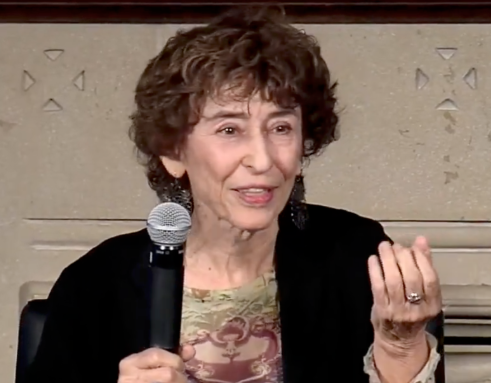
“Every time I left Iran, my mother would tell me: ‘Tell them how we are treated.’ Authoritarians confiscate your history and identity,” she recalled. “The Foundation went the opposite direction—it reclaimed what the regime tried to erase, without becoming like it.”
“Truth is the enemy of totalitarianism and autocracy,” she added.
In a pre-recorded video conversation with Afkhami from London, CNN Anchor Christiane Amanpour described Afkhami as “a rare bird—an Iranian feminist from more than 50 years ago,” and said she was curious to know what had shaped Afkhami’s work.
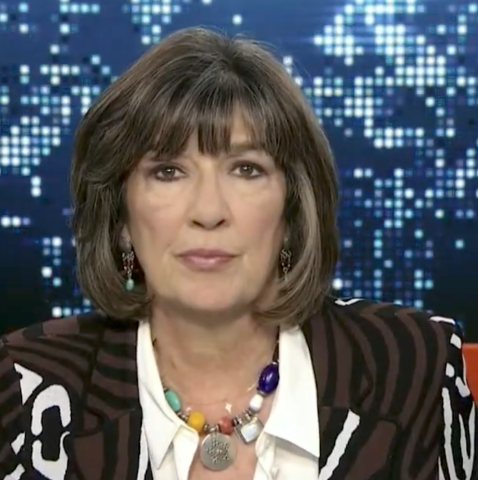
She asked Afkhami to cite her proudest achievement. “I learned early that progress comes from listening. Patriarchy dictates from the top down; feminism learns from the ground up,” Afkhami replied.
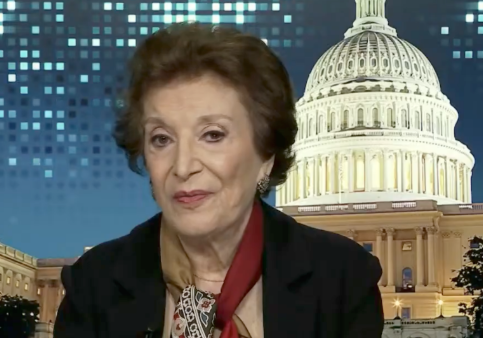
Nadereh Chamlou, a former senior advisor at the World Bank, noted that Iran’s economic expansion in the 1970s relied heavily on women’s participation. “Reforms were essential for growth,” she said. “The economy itself demanded women’s inclusion.”
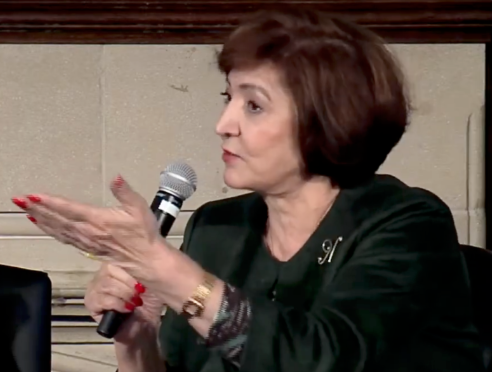
Chamlou spoke of the connection between economic agency and political power. “Economic independence is the foundation of political power,” she said. “In the MENA region, progress is visible—especially in the UAE, where women now hold senior leadership roles.”
Sanam Naraghi Anderlini MBE, an Iranian–British–American peacebuilder, reflected on how legal reforms in Iran before the Islamic Revolution profoundly affected people’s everyday lives.
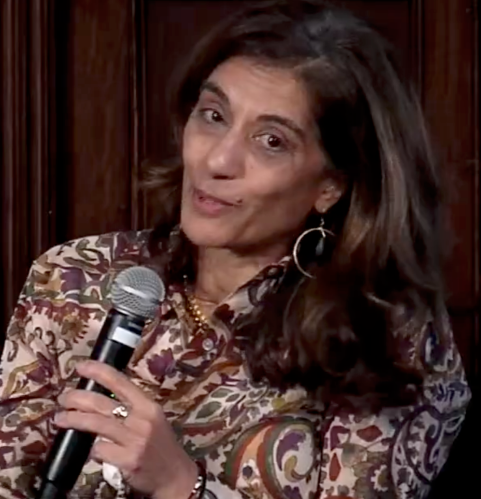
During a 2015 visit to Tehran, Naraghi said, she spoke with her widowed cousin, who had, at one point, been legally prevented from acting as her children’s guardian. When Iran reformed its family law, her cousin was able to act as her children’s executor — a change that prevented her brother-in-law from controlling the family’s future.
Dr. Shahla Haeri, Professor of Anthropology at Boston University, emphasized the continuity of Iran’s feminist movement. “The ‘Woman, Life, Freedom’ movement did not emerge overnight,” she said. “It stands on generations of organizing. Today’s young women—and men—recognize that patriarchy oppresses everyone.”
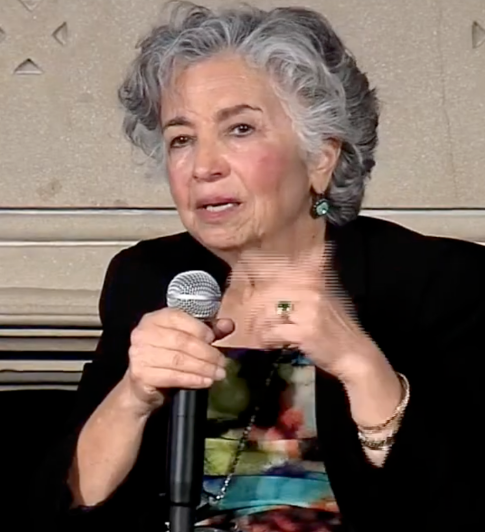
Haeri pointed out that there was a follow-up verse to ‘Woman, Life, Freedom’ and that was ‘Men, Homeland, Progress.’
“Men have realized that patriarchy is not as oppressive of women: It’s just as oppressive of many men. So they support their sisters, their mother, wives, and friends, other women,” she said.
Speakers at the symposium noted that Afkhami’s achievements were part of a broader ecosystem of reform in pre-revolutionary Iran, one in which Princess Ashraf Pahlavi, the Shah’s twin sister, played a crucial role.
Afkhami recalled that while the Shah was not personally driving the women’s agenda, “his sister Princess Ashraf spent her whole life working on women’s issues, and was committed to international work and to Iranian women.”
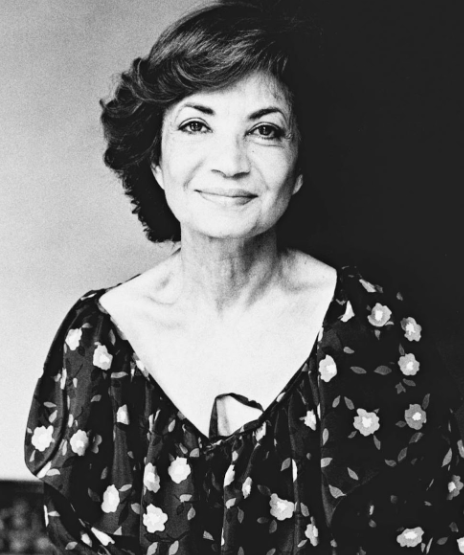
In May 2025, Mahnaz Afkhami donated her personal archives, as well as those of her late husband — the former cabinet minister and respected academic Dr. Gholam Reza Afkhami–– to Georgetown University, along with the archives and library of the Foundation for Iranian Studies, Sisterhood Is Global, and the Women’s Learning Partnership.
Her collection of archives includes a key document: Princess Ashraf’s declaration on International Women’s Year in 1975, in which she signaled Iran’s determination to advance the status of women. To demonstrate that commitment, the Princess championed the creation of a Minister of State for Women’s Affairs—a new cabinet-level position which was established that same year, and to which Afkhami was the first and only appointee.
For decades, the Princess was actively involved at the United Nations, helping place women’s rights on the global agenda and ensuring that Iranian women were visible in international forums—from the early human rights conferences to the first UN World Conference on Women in Mexico City in 1975.
Through her patronage, the Women’s Organization of Iran expanded its network of centers, literacy and legal aid programs, and family law reforms, including the groundbreaking Family Protection Law. While activists and lawyers drafted the legislation and ran programs on the ground, Princess Ashraf provided important political backing at the highest levels of the state.
Describing the Afkhami Collection as “a cornerstone for the study of global feminist thought,” Professor Madhavi Sunder of Georgetown University Law School noted that it included 146.2 cubic feet of manuscript materials, 6,250 books on history, interviews with Iranian figures, periodicals in Persian and English (including the complete publications of the Foundation for Iranian Studies), two influential Iranian Studies journals Iran Nameh and Iran Shenassi, an archive of Persian music, art and photography, and memorabilia from Iran’s royal family.
She said the figures represented in the archive were “philosophers of a new enlightenment,” female reformers from non-Western and often developing countries who had fundamentally reshaped concepts of law, religion, and human rights from the perspective of everyday women.
In a video message from Brazil, Kumi Naidoo, former Director of Greenpeace and now President of the Fossil Fuel Non-Proliferation Treaty Initiative, said that the symposium was not just about honoring history, but about building the architecture for the future.

“The world we seek is not merely about equality between women and men,” said Naidoo. “It’s about reimagining the entire architecture of human relationships.”
Watch the Symposium