
Kayhan Life and Kayhan London Staff
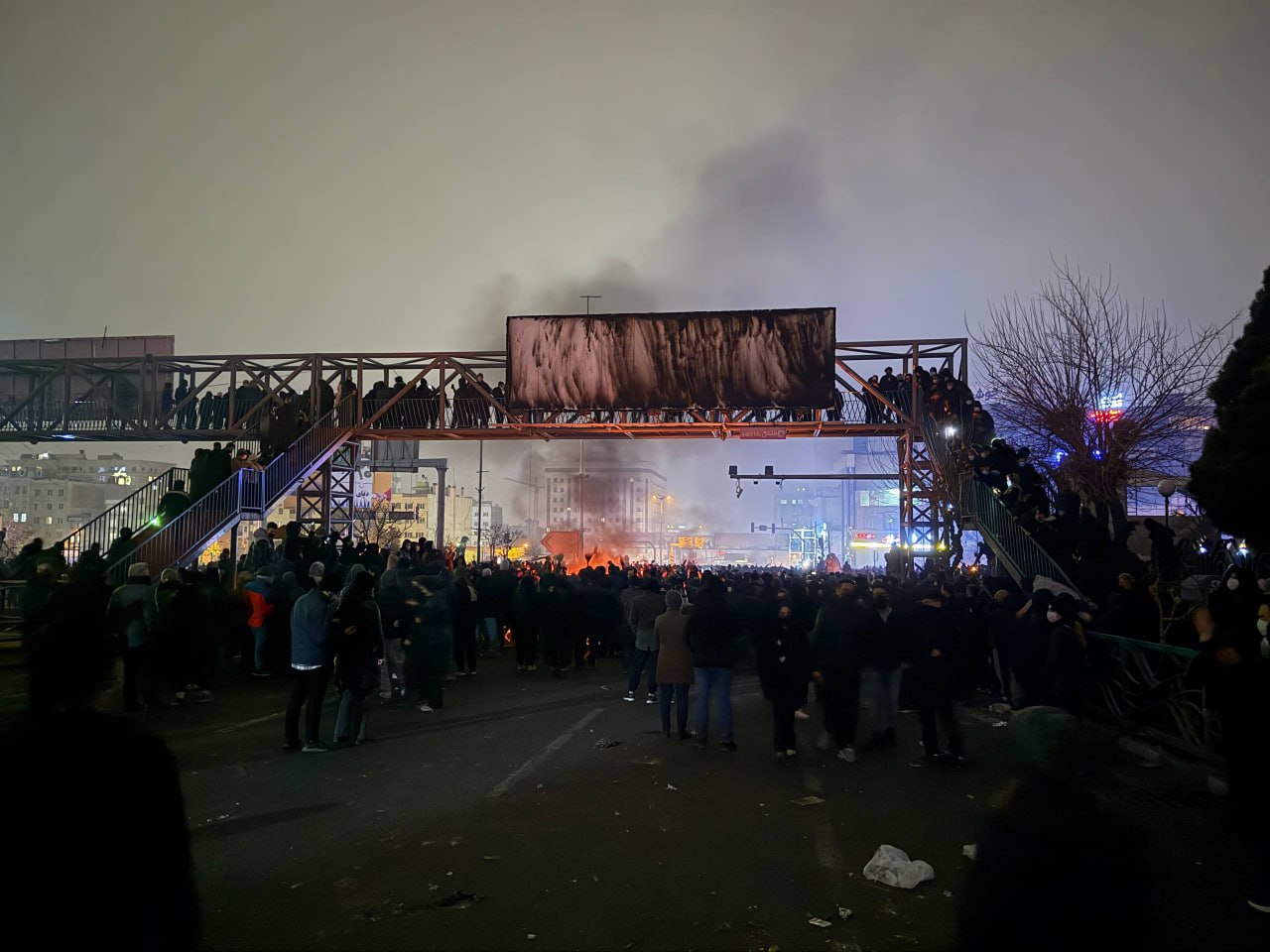
As Iran entered a fourth day of a nationwide internet blackout, evidence from different parts of the country pointed to a far deadlier crackdown on protesters than authorities have acknowledged. There were also unverifiable reports of sweeping arrests because of severe restrictions on communications.
The U.S.-based Human Rights News Agency said it had confirmed the deaths of at least 490 protesters and 48 members of the security forces, with more than 10,600 people arrested nationwide. The organization cautioned that the actual toll was likely to be significantly higher, given the near-total shutdown of the internet and mobile networks that has sharply limited independent reporting.
Before the communications blackout took hold, short videos circulated on social media appearing to show rows of bodies laid out in morgues or industrial warehouse-like facilities in several cities. Rights groups and lawyers said the blackout coincided with an escalation in the use of lethal force, alongside official threats of expedited executions for detainees accused of involvement in the protests.
NetBlocks, a global internet-monitoring organization, said early on Jan. 11 that Iran’s nationwide outage had exceeded 72 hours, calling the level of censorship at such a critical moment “a direct threat to the safety and well-being of Iranian citizens.”
Iran Cuts Internet Nationwide as People Across the Country Voice Support for the Shah
Iranian authorities have repeatedly used internet shutdowns in recent years to suppress unrest, a tactic that was once again enforced starting on the evening of Jan. 8 as demonstrations spread across the country.
Senior officials have publicly endorsed a toughened response. The leader of the Islamic Republic, Ali Khamenei, labeled the protesters “rioters” and said they must be put “in their place.” The national police chief, Ahmadreza Radan, said enforcement measures had been “upgraded,” citing closer coordination among security agencies and what he described as significant arrests of protest organizers.
The head of Iran’s judiciary, Gholamhossein Mohseni Ejei, warned that those accused of fomenting unrest would face “maximum punishment” without leniency. Tehran’s prosecutor said armed protesters would be charged with ‘moharebeh’ — waging war against God — an offense that carries the death penalty.
Iranian courts have used such charges in previous protest waves to impose rapid death sentences following closed and summary trials. A network of Iranian lawyers known as Yek Kalameh warned that similar practices were again placing detainees at imminent risk of execution and urged international intervention to prevent what it described as extrajudicial killings.
Eyewitnesses cited by Iran International, a London-based Persian-language broadcaster, said hundreds of bodies were being held near the Kahrizak morgue south of Tehran. Two people searching for missing relatives said they had seen more than 400 corpses at the site.
Millions Rally Across Iran After New Protest Calls by Prince Reza Pahlavi
Time magazine reported on Jan. 10 that roughly 200 protesters had been killed in Tehran alone during demonstrations on Jan. 8, citing a physician who said that at least 217 people had died in six hospitals in the capital, most from live gunfire. According to Time, authorities removed bodies from hospitals the following day, and many of the victims were young.
The German newspaper Die Welt, citing similar evidence, reported that members of the Islamic Revolutionary Guard Corps had opened sustained fire on crowds in Tehran. While the newspaper noted that the internet blackout and the lack of official transparency made independent verification difficult, it said the use of live ammunition against protesters appeared certain.
The United Nations Independent International Fact-Finding Mission on Iran said on Jan. 10 that it had received credible reports indicating that security forces were ordered to confront protesters “decisively” and without restraint. The mission noted that by Jan. 7, more than 40 people, including at least five children, had been killed in several provinces, including Qom, Yasuj, Kermanshah, Ilam, and Lorestan.
Press freedom organizations have also sounded alarms. Reporters Without Borders said journalists inside Iran had been effectively cut off from the outside world, and that intelligence agents had threatened at least six media workers during the previous 12 days of unrest.
Some reports suggest that Iran has reinforced its security response with allied foreign militias.
Fox News, citing informed sources, reported that about 850 fighters linked to Hezbollah in Lebanon, Iraqi militias, and the Quds Force had entered Iran to assist in suppressing protests. The U.S. State Department’s Persian-language account on X (formerly Twitter) said on Jan. 10 that Iran had spent billions of dollars supporting proxy forces abroad and warned that using those same forces against Iranian citizens would amount to “another profound betrayal of the Iranian people.”
Citizen journalists also reported hearing Arabic or Afghan accents among armed units confronting demonstrators in parts of Tehran.
According to HRANA, as of late on the 14th day of protest, 574 protest locations had been identified in 185 cities across all 31 provinces of the country.
The unrest began on Jan. 7 with a strike by Tehran’s bazaar merchants over the devaluation of the currency and economic instability, and rapidly expanded. Authorities initially relied on arrests and crowd dispersal, but shifted to far more lethal tactics after massive nationwide turnouts on Jan. 8, when crowds in some areas were estimated at more than 100,000 people along a single street. The internet blackout followed, sharply constraining the flow of images and testimony beyond Iran’s borders.