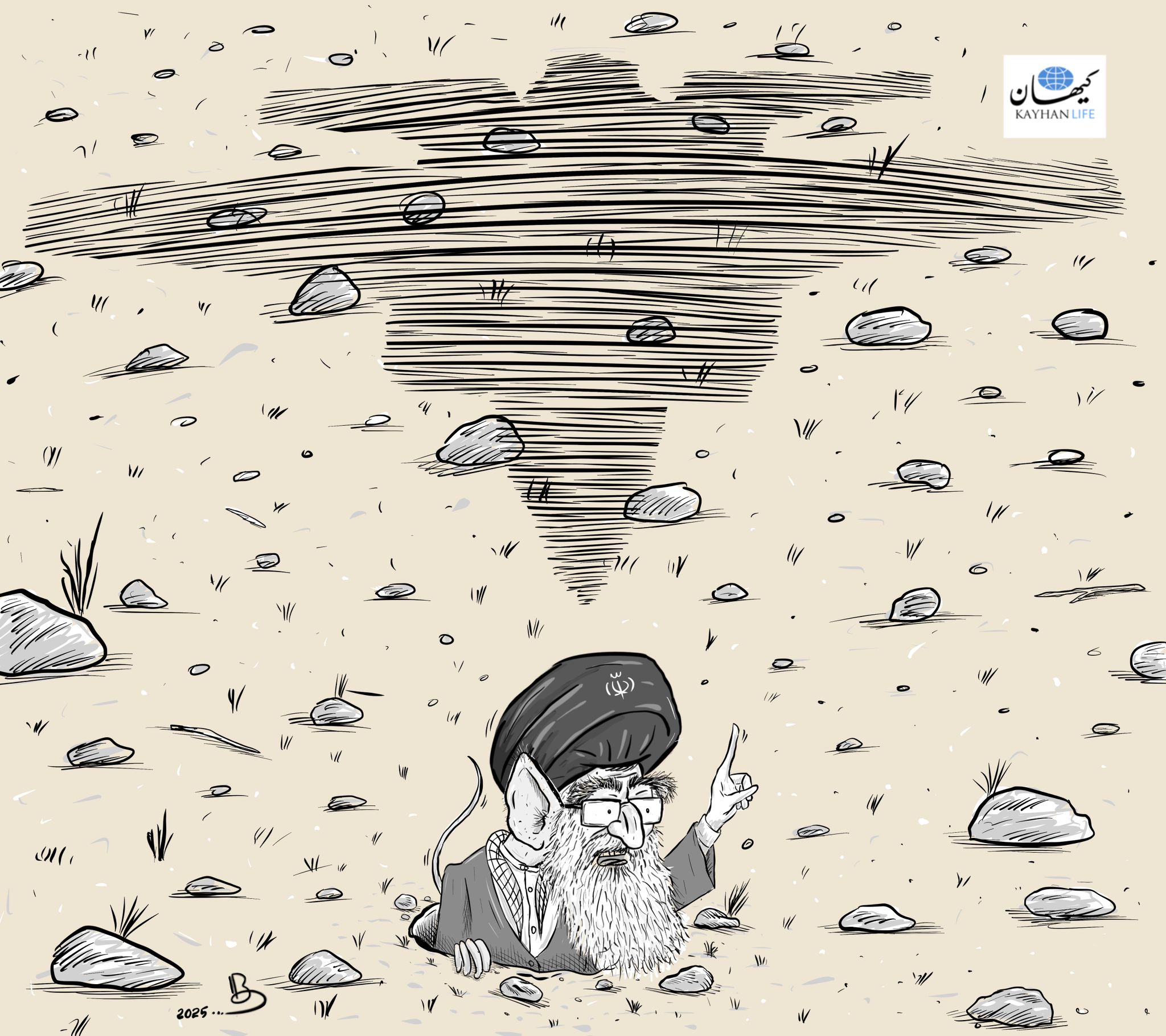
Artist: Behnam Mohammadi
By Kayhan Life Staff
The Islamic Republic is navigating one of its most precarious periods in more than four decades.
Diplomatic paralysis, economic pressure, and deep public resentment are threatening not only the clerical state’s military posture but also its internal cohesion.
Six months after the twelve-day war with Israel, the Iranian regime has not only refused direct talks with the United States, but it has also barred international inspectors from accessing nuclear facilities damaged at Natanz, Fordow, and Isfahan, and refused to explain the fate of more than 400 kilograms of uranium enriched to 60 percent, a level close to weapons grade.
What’s more, in the face of international warnings that its actions are accelerating toward confrontation, Tehran has also continued missile tests and support for regional proxy forces.
This is in line with Mr. Khamenei’s acerbic rhetoric that Iran’s nuclear program is none of Washington’s business. The moves have heightened concerns in the United States, Europe, and the region that the nuclear standoff is nearing a breaking point.
Inside Iran, the crisis is even more acute. The currency has fallen to record lows, gasoline prices have risen, and inflation has surged. For many Iranian families, the struggle to afford necessities has deepened anger and raised the prospect of renewed unrest.
With talks frozen and diplomacy stalled, the nuclear file is effectively deadlocked. The shadow of war lingers over the supreme leader, who insists that a compromise would risk the end of his regime.