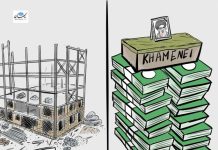
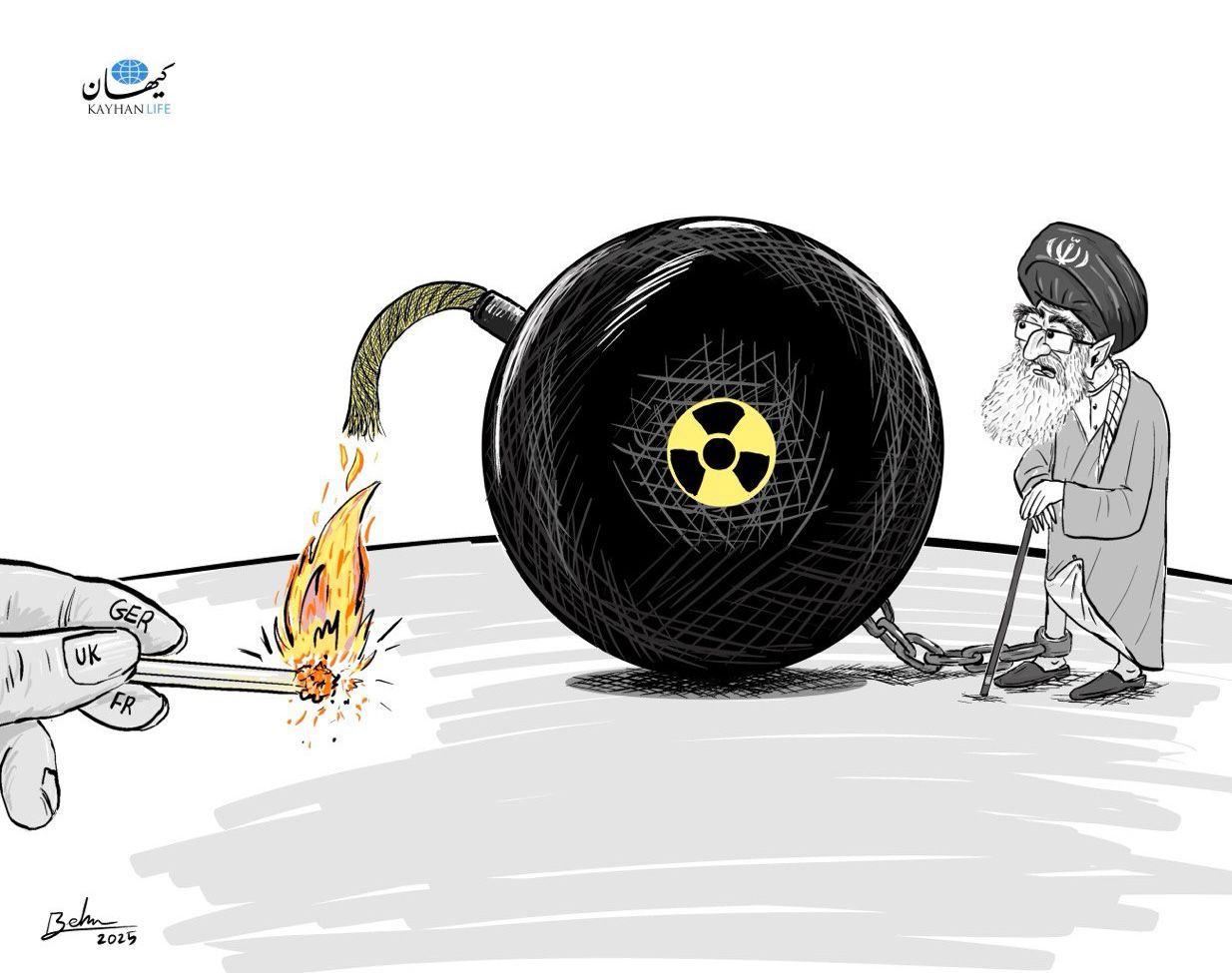
Artist: Behnam Mohammadi
By: Kayhan Life Staff
The diplomatic clock is ticking, and in Tehran, it is sounding more like a doomsday gong. At the center of the stage: Supreme Leader Ayatollah Ali Khamenei, clinging to defiance as Europe sharpens its red pen. Britain, France, and Germany—once the cautious chorus of the Iran deal—are now drawing lines in diplomatic concrete. Unless Tehran performs a convincing act of nuclear contrition, the snapback mechanism will slam into gear by the end of August, bringing back U.N. sanctions with all the force of a long-delayed reckoning.
French Foreign Minister Jean-Yves Le Drian confirmed the coordinated European move this week, signaling a pivotal shift in tone from months of patient diplomacy to looming confrontation. The “snapback” of sanctions, empowered under Chapter VII of the U.N. Charter, would be automatic, binding, and immune to veto—effectively sidelining China and Russia, Tehran’s traditional defenders on the Security Council.
The reimposed sanctions would strike at the heart of Iran’s economy and military capacity, targeting arms sales, financial networks, and nuclear-related technology. For Khamenei’s regime, the implications are dire: not only would vital economic lifelines be severed, but the Supreme Leader’s carefully cultivated image of strategic resilience could suffer a severe blow.
Once triggered, the snapback mechanism allows for just 30 days of final negotiations. European diplomats are maneuvering to act before October, when Russia is set to assume the rotating presidency of the U.N. Security Council—an event that could muddle enforcement or delay coordination.
While Iran’s leadership publicly dismisses the threat, signs of alarm are evident. Foreign Minister Abbas Araqchi, in a pointed interview with Le Monde, likened renewed sanctions to “a military attack.” The regime’s hardliners are attempting to project confidence, with Kayhan newspaper—edited by Khamenei loyalist Hossein Shariatmadari—deriding the European position as “worthless paper.”
But European capitals appear unmoved. Officials insist the Joint Comprehensive Plan of Action (JCPOA) remains intact under international law, despite the U.S. withdrawal in 2018. The move to activate the snapback clause reflects growing frustration with Tehran’s accelerating nuclear activities and persistent stalling at the negotiating table.
For Khamenei, it’s not just sanctions—it’s survival theater. A veto-proof U.N. snapback could snip the last thread in the Supreme Leader’s tightly spun myth of control.