By Kayhan Life Staff
Statistics indicate that consumption of essential, nutritious foods in Iran has sharply declined amid rising inflation and the erosion of household purchasing power. As a result, a significant portion of the population is now grappling with malnutrition and food insecurity.
According to a detailed report by the monthly economic and social publication Saraneh, the average Iranian household consumed about 95 kilograms of red meat per year in 1992.
Iranian Nurses Stage First National Strike in History; Fall Below Poverty Line
Over the next 22 years, this figure had fallen to just 41 kilograms, a 57 percent decrease by 2014. During this time, red meat gradually shifted from a typical daily food to something consumed weekly or even monthly.
Between 2014 and 2023, red meat consumption dropped by another 22 percent, decreasing from 41 kilograms to 32 kilograms. This decline coincided with severe currency devaluations and soaring inflation, which dealt a final blow to household purchasing power and drove prices to unprecedented levels.
The most recent figures show that in the past two years (2023–2025) alone, per capita meat consumption has fallen further. Current data indicate that Iranians now consume only about 5–6 kilograms of red meat and around 32 kilograms of poultry per person annually.
As Saraneh notes, red meat — once a symbol of middle-class prosperity — has now become a sign of deepening economic inequality, a product that many families can only afford by meticulously budgeting and cutting back on other basic needs.
ANALYSIS: Iranian Workers Are Driven Into Poverty by Mass Layoffs, Low Pay
The sharp rise in prices — from just tens of thousands of tomans per kilo in past decades (roughly $0.80) to over a million tomans today (about $9) — has directly led to a 67 percent drop in consumption. The cause-and-effect relationship is clear and undeniable.
These numbers extend far beyond economics; they serve as a severe warning for food security and public health. As households replace animal protein with cheaper, lower-quality substitutes, the long-term health of future generations may be at risk.
Publishing the data, Saraneh wrote: “These figures are neither exaggerated nor in need of complex interpretation. They reflect a simple reality visible every day in shopping baskets and at checkout counters — lighter dinner tables and deeper divides.”
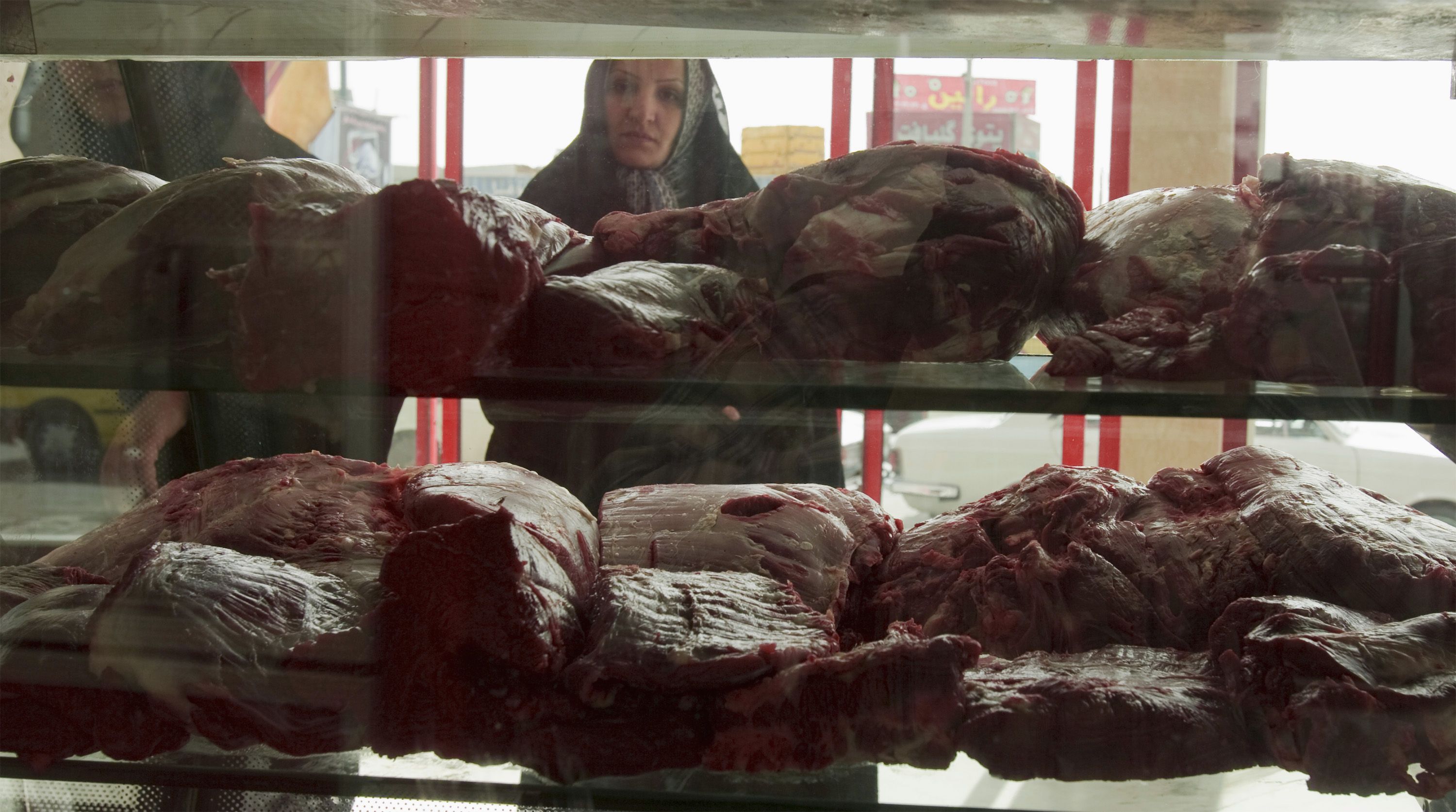
Reporting from Tehran, Eghtesad24 described a scene inside a major supermarket downtown: “Shelves neatly stocked with fresh meat and poultry, yet few shoppers gathered around. A middle-aged woman stood before the display, a basket in hand containing just one pack of chicken and one of red meat.”
Asked about her shopping habits after the recent price hikes, she explained: “Of course, it has affected us. Until seven or eight months ago, I used to buy meat and chicken twice a month. Now it is once a month — and that is just for the two of us. Imagine a family of four!”
When asked if higher prices have changed what they eat, she replied: “Nothing can really replace meat. If I buy a few pieces of chicken, they only last for one meal.”
She added: “For now, we are barely managing our groceries, but at these prices, it is not unlikely that chicken and meat will disappear completely from the tables of people like us — the so-called middle class.”
A store employee confirmed the decline in sales and noted a troubling trend: “Theft has gone up, especially in the meat, poultry, and dairy sections at the back of the store. There are only a few of us working here — we cannot both help customers and watch everything.”
Data from the Statistical Center of Iran (SCI) indicates that food inflation has consistently outpaced overall inflation. In October, the country’s overall inflation rate stood at 48.6 percent, while food prices surged by more than 64 percent.
According to the Tehran-based newspaper Donya-ye Eghtesad, the recent sharp increase in food prices, coupled with stagnant wages, has forced many households — particularly in the latter half of the year — to allocate a growing portion of their income to food. With high-calorie foods becoming increasingly expensive, lower-calorie alternatives are expected to replace them by year’s end.
Experts cited in the report warned that soaring prices of staple goods such as rice, bread, and legumes will have devastating effects on low-income families, exacerbating food poverty nationwide.
The report also described “calorie poverty” as one of Iran’s significant social challenges, given its lasting impact on public health and productivity.
Key drivers of food inflation include rising liquidity, currency instability, and higher production costs, while reduced rainfall and drought have further tightened agricultural supplies and pushed up prices.
The Research Center of the Majlis (Iran’s parliament) has previously noted that the average calorie intake among Iranians has fallen below the minimum daily requirement of 2,100 calories.
Meanwhile, the Ministry of Health and Medical Education (MOHME) recently reported that about one-third of deaths in Iran are linked to nutrition-related conditions, including malnutrition and deficiencies in nutrients such as calcium, iron, and omega-3 fatty acids.
Economist Hossein Raghfar has long described food inflation as one of Iran’s most pressing structural issues.
“Beyond its impact on the labor force, it has a profound effect on the physical development of young people,” he said. “We have witnessed times when stunted growth and bone deformities were common, particularly among students in disadvantaged regions.”
He warned that unchecked inflation poses “a terrifying threat to the future health of society,” adding that its consequences extend to both physical and mental well-being.
“Those who advocate for price increases must take these outcomes into account,” he said. “Yet, in a system where centers of power and wealth hold such sway, it is their interests that dominate — not those of the people.”