For Iranians, the month of March marks the arrival of spring and the celebration of the Persian New Year, Nowruz. Yet this year, countless Iranian families are mourning the Islamic Republic’s brutal crackdown on nationwide protests in January, which left between 12,000 and 30,000 dead.
As the United States and Israel continue their joint military operations against the Islamic Republic, Iranian citizens are enduring an ongoing internet blackout.
What do people living inside Iran think about the military intervention by the U.S. and Israel? What are their hopes for the future of Iran after the fall of the Islamic Republic? And how do they plan to celebrate Nowruz, given the security concerns, wartime conditions, and continued internet shutdown, especially when many middle-class families are struggling with 60 percent inflation, the severe devaluation of the national currency, and widespread poverty?
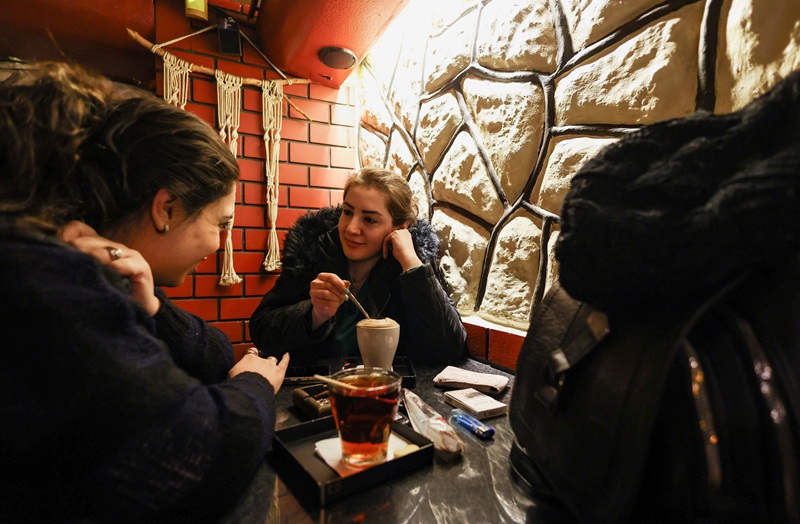
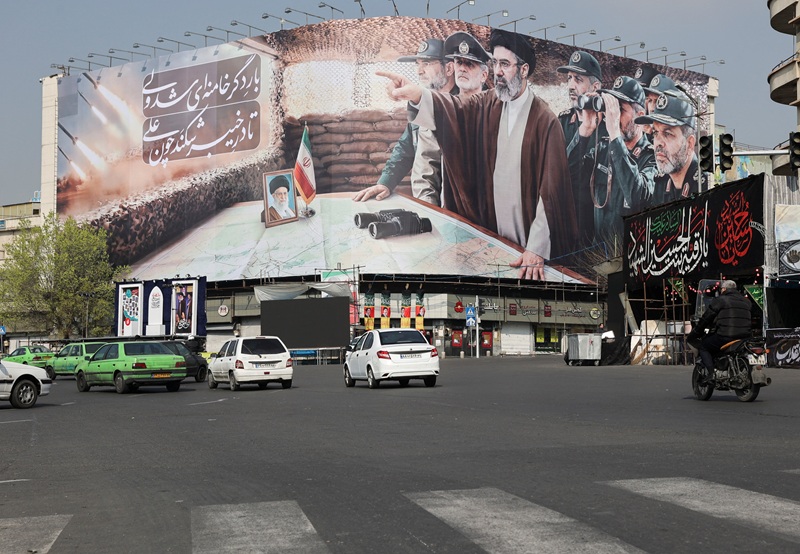

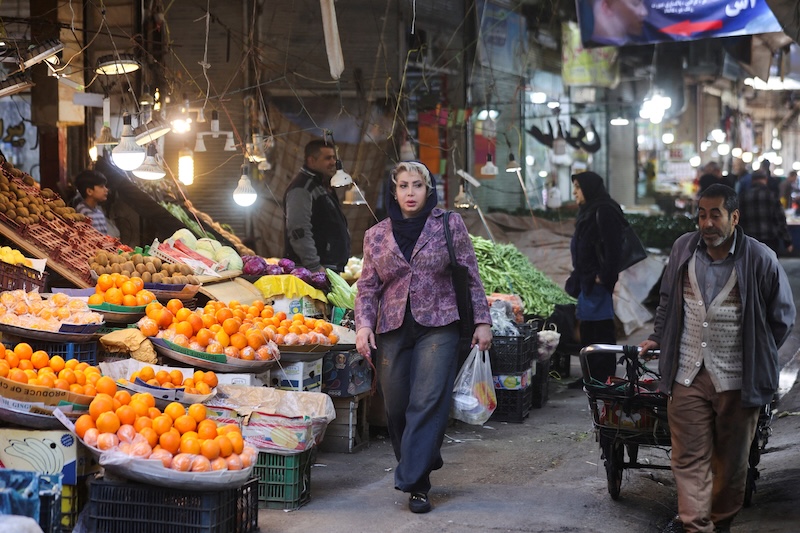
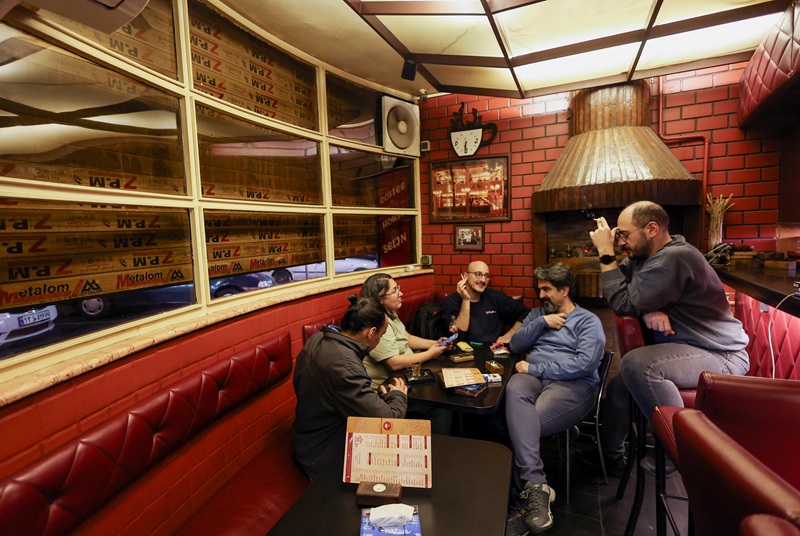
Kayhan Life spoke with Tehran residents for this report.
Marjan, a resident of Sattar Khan (District 2 of Tehran), has formed a group with friends and colleagues to provide food and sanitary supplies to disadvantaged families.
After managing to reconnect to the internet in a heavily restricted environment, she shared her frustration: “The authorities are cutting off the internet. It’s almost 10 PM, and I just managed to reconnect. The restrictions are so severe that even this connection is unstable. For example, emails don’t work at all.”
Reflecting on the origins of her activism, she explained: “This all started when I told a group of investors in Tehran that I opposed the war. During the 12-day war (in June 2025), I prayed it would end quickly. I shared how, as a child, I had been traumatized by war to the point that I couldn’t speak for years, developing a stutter. The Iran-Iraq War (1980–88) affected me deeply, and I still see it as a legitimate defense of our land.”
Marjan paused and continued, her voice heavy with emotion: “I will never forget the horrors the soldiers endured. If I could go back in time and be the same age as I am now, I would volunteer to cook for the soldiers behind the front lines, despite my fear of war.”
“But after the killings of Iranians in December 2025, something changed in me. Deep down, I realized that these military forces and plainclothes agents are devoid of humanity,” she declared.
She went on: “For years, I convinced myself that they, too, were human — that we only needed to persuade them to join us because we shared a common core, that we were all Iranian. But I’ve come to the painful realization that I was wrong. Not all of us are Iranian. They are descendants of the Mongols and Arabs who survived the fall of the Sassanid Empire (224 AD to 651 AD).”
Marjan recounted a conversation with a wealthy regime critic who had been skeptical about the likelihood of war.
She said: “One of my friends, who believed the war was destructive, thought it wouldn’t happen — at least not for another year. I asked him, ‘What if it does?’ He responded, ‘I’ll give you one billion tomans (about $6,000).’ I joked, ‘I’ve gotten used to having nothing, but if war happens, you can give this money to someone who really needs it.'”
She continued: “A week later, when the war broke out, he called me into his office and handed me 500 million tomans (around $3,000), saying, ‘I trust you.'”
Marjan shared how the funds were used: “He knew from the start that he would lose the bet. He told me to buy whatever we needed and provided us with a warehouse. Within two or three days, we purchased what we could.”
“The food packages weren’t very substantial — each family received only one or two kilos of frozen meat. We bought it fresh, froze it, and didn’t slice it. We included a few bars of soap, some paper soap, a couple of cartons of dry bread, and some beans and lentils, though the quantities varied.”
She added, “Later, my friend added another 700 million tomans (roughly $4,000) to buy more food. In the new packages, we included pasta and canned tuna, though the earlier ones didn’t have those. We didn’t include rice, but we added two kilos of flour. The problem is that these supplies won’t last through the entire war.”
Marjan explained that they also received additional donations, such as baby formula, diapers, and jars of baby food.
“Just a few days ago, another person donated 300 million tomans (about $1,800). We included diapers alongside baby clothes, hoping it would help mothers if the water supply were cut off,” she said.
She described the reality for families with young children: “These packages are for families with newborns or children under six. We also give two large boxes of ‘Mother Biscuits’ to families with children under 12. Unfortunately, our resources are limited.”
Marjan also spoke about the dire conditions for children living on the outskirts of Tehran: “There are some children here who don’t care about the war. They’re simply surviving on the little they have. For them, it doesn’t matter. Maybe only the bread and filth keep them alive.”
The emotional toll of her work was evident as she continued: “The worst part is that when we distribute these packages, no one says thank you. Instead, they ask for more. And we feel helpless when we have to say no.”
She added: “We’ve divided the tasks and are working in shifts. But even with all this effort, we’ve barely managed to cover a few neighborhoods. It feels like we’re barely making a dent.”
Marjan recalled an encounter with a woman in a lower-income area who initially seemed to refuse help but later asked for clothes and money: “She was well-groomed, but her husband was an addict, and she was severely depressed. When we were leaving, she came out in flip-flops and asked if we had any clothes. When I said no, she asked for money. I swore I had no cash on me.”
Marjan’s wealthy friend once again helped by transferring 50 million tomans (approximately $300) into her account, instructing her to give the woman 10 million tomans ($60) each month, plus 100,000 tomans (about $1) to anyone else who requested financial help.
“We’re all in the same boat. I feel so frustrated because our hands are tied. We have so little, yet people are still depending on us,” Marjan said, her voice filled with anguish.
“Please pray that this war ends soon, that these vultures are paralyzed, and that we don’t end up in shame. These are the things I feared about war. Now that I’ve faced it, I’m afraid. Pray that I remain at peace with my conscience.”
Saba, a graduate student in chemistry who only manages to go online a few days a week, also shared her concerns: “The refinery in Shahr-e Rey and the oil depot in Shahriyar were hit today. Tehran didn’t see daylight this morning due to all the smoke. It felt like night. They can’t put it out, and it requires foam, not water, to extinguish it. But they don’t have the expertise or the foam.”
“From my perspective as a chemist, the air poses significant dangers and cancer risks. Everyone you know must wear an N95 mask, and after going outside, they should wash thoroughly using shampoo and cleaning products. If they can’t wash by hand, they should run the washing machine with just a handful of salt to clean it after washing clothes, so other garments don’t get contaminated,” she explained.
Ali, an Iranian living in Istanbul, shared updates from Tehran, relayed by his daughter: “My daughter has stocked up on essentials and is waiting for Prince (Reza Pahlavi) to call on people to take to the streets. Everyone believes the U.S. and Israel will strike, and people will record videos from their windows to cheer on the attack.”
Ali went on to explain the economic situation: “Since the missile strikes began between Iran and Israel, instead of the Turkish lira rising, it has continued to fall. People are expecting the war to end, the regime to collapse, and prices to drop.”
Ali also spoke about how real estate prices had risen in northern Iran since the military strikes began: “It’s strange, but the prices of villas have gone up. Everyone in real estate says that if the regime falls, many Iranians living abroad will return and buy property in the north. It will be like Italy here, and no one will want to go to Turkey anymore.”
Concluding his thoughts on Tehran, Ali noted: “Government employees, who are in a good position, have already received their salaries and bonuses for Nowruz. Most shops are still open, and it doesn’t feel like we’re in wartime conditions. Shopping centers are busy.”
“If things continue this way until Nowruz, I don’t think people will visit each other, but they’re all satisfied with the strikes. No one is complaining or asking when it will end. They’re just amazed at how brazen these people (the regime) are.”