By Firouzeh Nordstrom
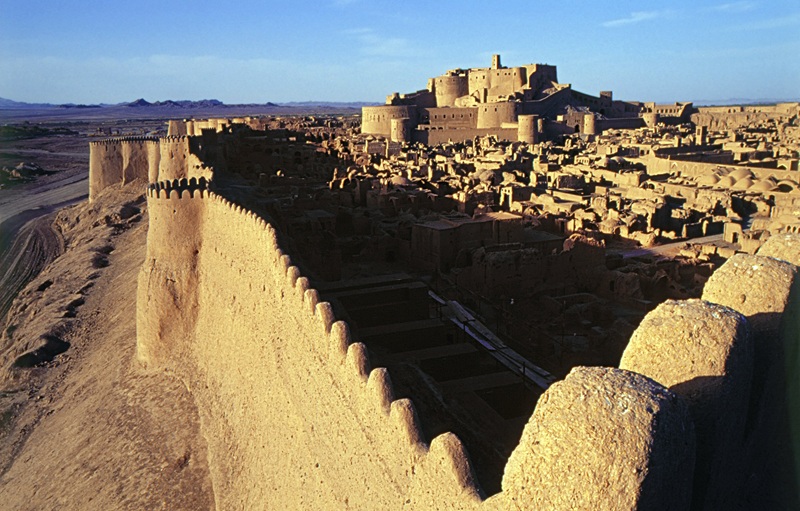
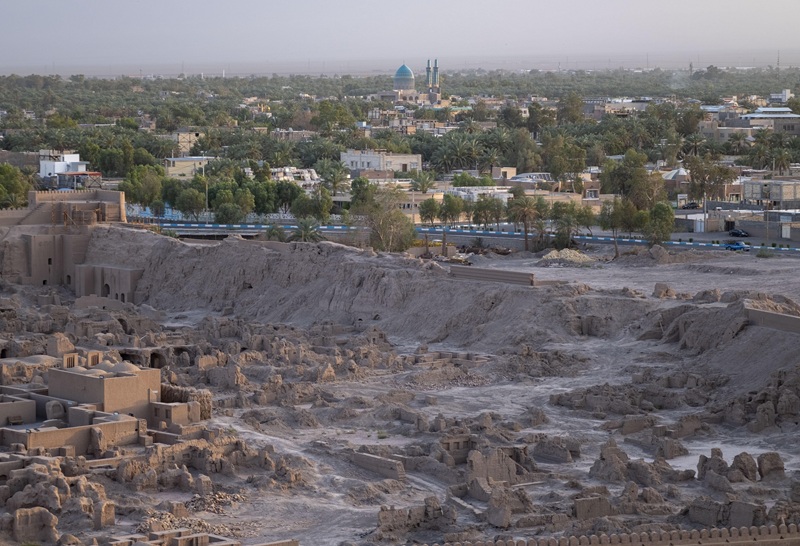
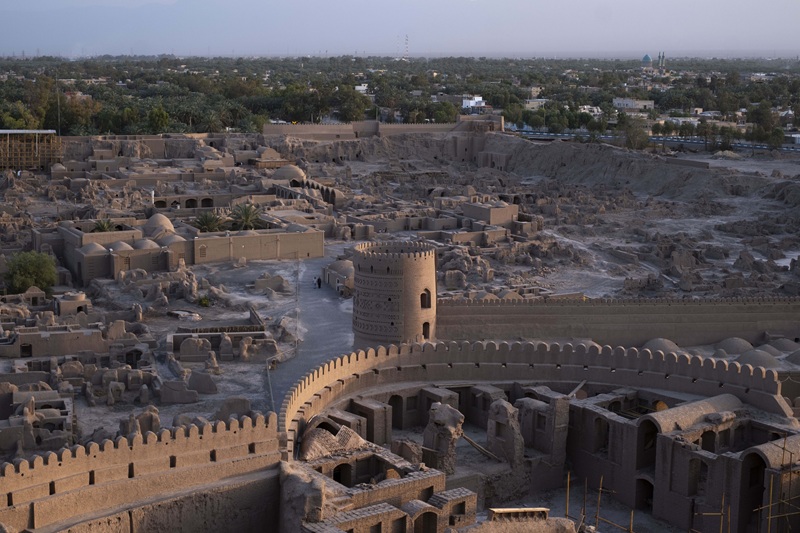
In the early hours of Dec. 26, 2003, a 6.6 magnitude earthquake levelled the ancient Iranian city of Bam in a matter of seconds. Bam, which traces its origins back to the Achaemenid period (6th to 4th centuries BC), is a UNESCO World Heritage Site.
Mehdi Zare, director of the Iranian Seismological Center (IRSC) and a university professor, has characterized the Bam tremor, where 50,000 people perished, as the deadliest ever in Iran’s history, and the Tabas earthquake of 1978 as the strongest.
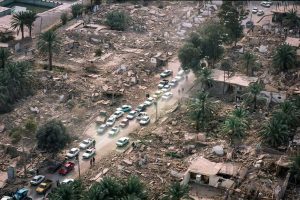 After 22 years, the streets of Bam remain unpaved, and unused construction materials are scattered among unclaimed plots by uninterested descendants. Many areas have not been dredged, and waterways such as drains or canals remain obstructed or blocked. The only hospital that served the community has still not been reconstructed.
Roshanak Astaraki, our Kayhan London colleague, visited Bam as an official secretary of the “Totem Andisheh” agency during the brutal winter of 2004, in the immediate aftermath of the earthquake. She managed the women’s relief committee of non-governmental agencies of Isfahan province, which was charged with getting aid to affected areas.
In a recent conversation, Astaraki recounted the harrowing circumstances surrounding the recovery and burial of loved ones. Damaged structures had been indiscriminately demolished and dead bodies placed in mass graves because of overflowing morgues and the absence of refrigeration. The fortunate families were those that had recovered and buried their deceased loved ones on their own within days of the disaster, or those whose loved ones had been laid to rest by the municipality.
Cases of injured people being discharged from relief centers only to begin the search for missing relatives created another level of anguish.
At the time, Iran had not yet fully transitioned to computerized data bases, and record keeping in small towns and villages, including Bam, was done on paper. The disaster exposed the inadequacy and lack of accountability of local officials.
Astaraki recalled one family saga that she witnessed all the way to Isfahan. Many injured patients were taken by rescue helicopters to hospitals in other provinces, without any proper paper trail. She accompanied the eldest of three surviving brothers in the search for the youngest, who was lying in a coma somewhere. Astaraki and her friend witnessed the 24-year-old’s futile search for the 16-year-old in the hospitals of Isfahan.
Then they received information about a helicopter transfer to Shiraz of an unidentified male. The elder brother spent the night at an indoor sports arena that received the injured, where he miraculously found his other brother, recovering from a broken arm and unaware of the tragedy of the loss of their parents and younger sister. By then, the youngest brother had come out of coma, and the brothers were reunited in Shiraz.
Theft was another blow to families that had to vacate their homes after the earthquake. Disaster victims had to grapple with the loss of extensive personal belongings and furnishings.
The distribution of aid provided by the Red Crescent and other agencies was inconsistent and problematic, as government agencies suffered from mismanagement. There were reports of families shivering in the cold of the desert, while others were given multiple blankets. There were similar issues with the distribution of food and sanitary items.
The Islamic Republic lacks cohesive management teams or government agencies tasked with addressing the increasing ravages of climate change and natural disasters. The aid provided by international humanitarian agencies needs to be distributed through channels that have yet to be set up. Recent floods in Hormozgan and Bushehr provinces have laid bare the same issues.
Astaraki, who has covered several disasters — including the collapse of the Metropol building in Abadan – said she believed that aid workers were unable to do their job effectively because of structural and institutional failures in the government.
Reza Gholizadeh, a civiactivist and member of a youth solidarity group that worked with non-governmental organizations (NGOs) following the Bam earthquake, said he witnessed disorganized rescue efforts and encountered personnel who were not given procedural instructions or first aid training.
Gholizadeh, a former political prisoner, blamed corruption and mismanagement in government agencies that distribute international aid. He said medical equipment destined for Bam was confiscated by the Islamic Revolutionary Guard Corps (IRGC) and sent elsewhere. He acknowledged the positive impact of NGOs focused on children and planning for future projects.
Gholizadeh also helped set up a website with photographs and details of the injured in the Isfahan hospital ward to help relatives locate their loved ones. Doctors without Borders (MSF) had sent a team of psychologists to Bam and he commended their efforts at painstakingly helping survivors.
Gholizadeh recalled helping organize the one-year anniversary of the disaster, which was attended by thousands of people, andbringing joy and solidarity to the community. He credited that occasion with replacing the ugly Iranian tradition of tears and sorrow for mourning and joy and laughter for wedding ceremonies.
Gholizadeh criticized the government for spending on ideological projects such as the reconstruction of infrastructure in Lebanon, in the aftermath of the 33-day war in 2006, while ignoring the basic needs of the people of Bam – needs -such as portable toilets or shower trailers.
Civic activists have reported that aid from Iran routinely gets sent to Gaza, Syria, and Lebanon.
Gholizadeh said he believed that complaints around mismanagement in the aftermath of tragedies — such as the collapse of the Plasco building in Tehran, the earthquake in Azerbaijan, or other natural disasters — were being overlooked because ideological objectives dominated the national budget.
Gholizadeh cited a specific incident involving a family member dying in the crash of Caspian Airline flight 7908. Rather than identifying the remains through DNA testing, the family was handed body parts wrapped in white cloth along with instructions to immediately bury them.