By Nazanine Nouri
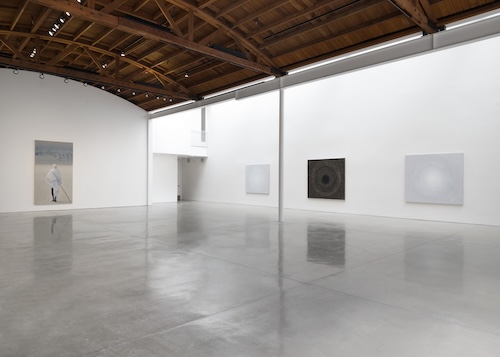
The Iranian-born, New York-based artist Y.Z. Kami has just opened a major exhibition at the Gagosian Gallery in Beverly Hills – one of many shows that the artist has presented at Gagosian Galleries around the world. The Beverly Hills exhibition (which ends Aug. 8) comes nearly a decade after Kami’s solo exhibition at the Los Angeles County Museum of Art (LACMA) in 2016.
Meanwhile in France, Kami’s artworks are featuring in two museum exhibitions in France: “Dans le Flou” [Out of Focus] at the Musée de l’Orangerie in Paris (through August 18th), and “Copistes” (Copyists) at the Centre Pompidou-Metz, organized in collaboration with the Louvre Museum (through Feb. 2, 2026).
Kami found fame in the 1990s with his “Untitled” series – 18 monumentally sized, poignant portraits of young men which coincided with the deadly AIDS epidemic and were long thought to be representations of sufferers (though they were not). The artist is also known for his “In Jerusalem” (2006) series of five paintings, which depict five religious clerics of different faiths (a Catholic cardinal, an Eastern Orthodox bishop, Sephardic and Ashkenazi rabbis, and a Sunni imam) who came together in the Holy City in 2005 to protest against a Gay Pride march due to be held there.
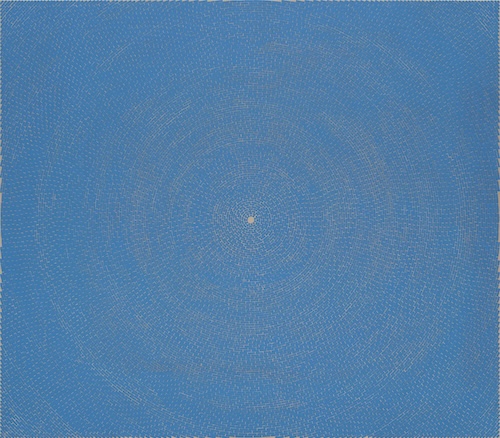

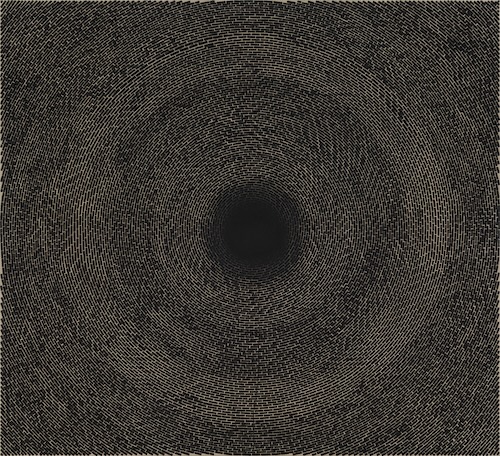
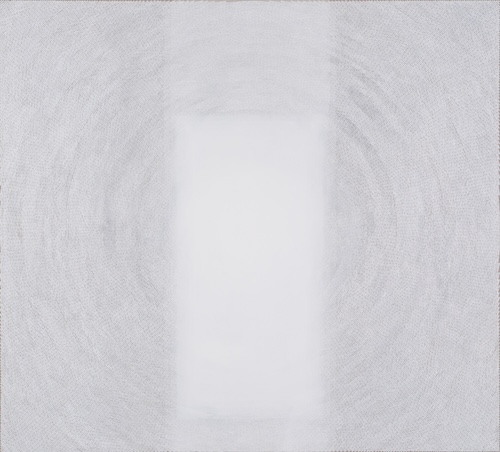
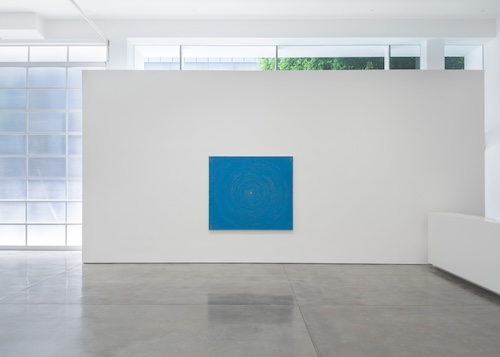
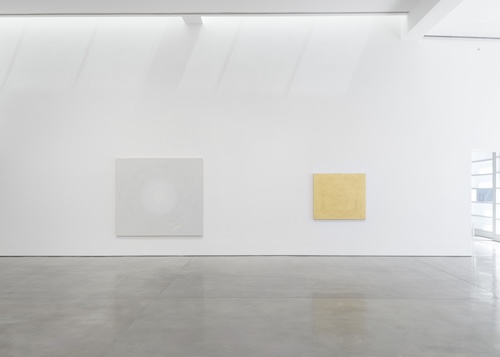
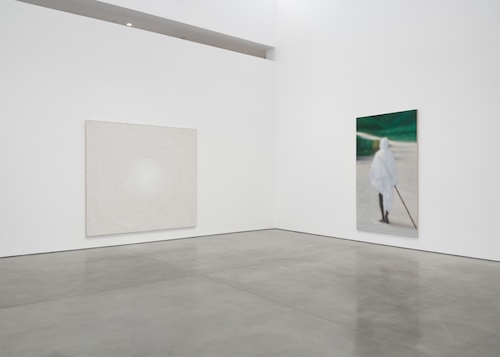
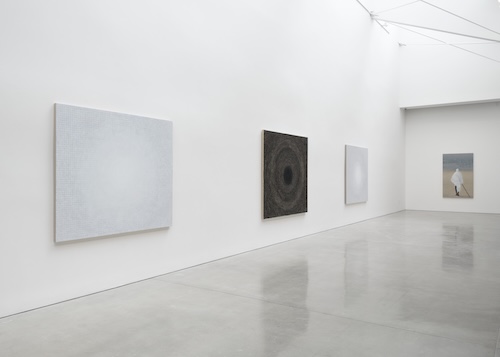
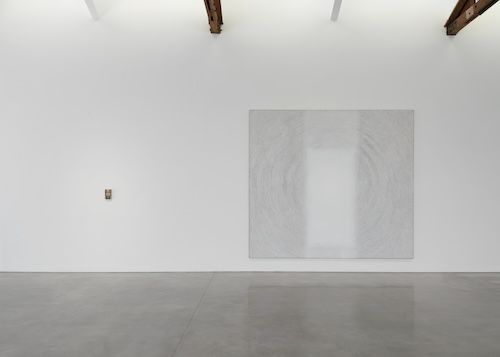
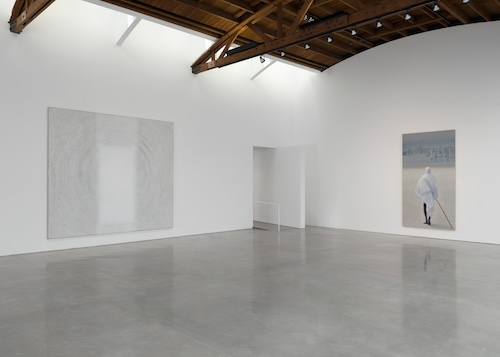
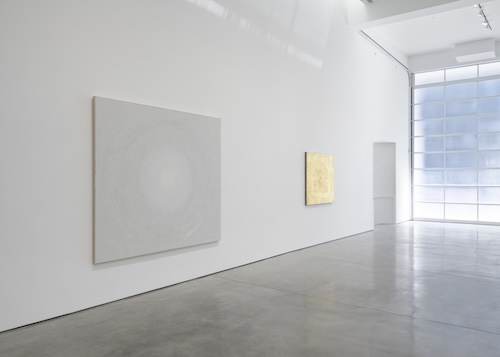
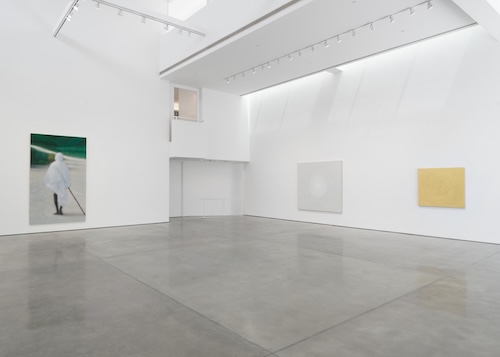
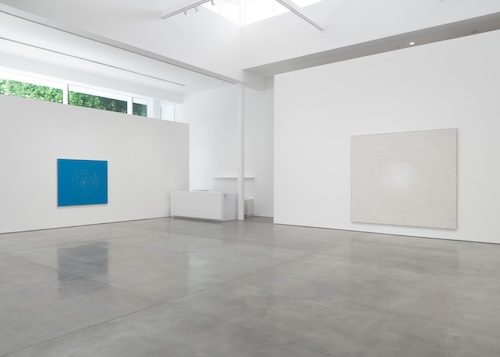
Kami’s approach to art is philosophical and contemplative, and explores notions of selfhood and spiritualism. His Dome paintings emerged from his observation of sacred architecture and evoke the domes of temples, churches and mosques. The paintings function as mandalas – meditative designs that aspire to infinity.
“I’ve always been fascinated by, and really connected to, architecture, since I was a young teenager in Iran,” said Kami in an interview last month. “At the time, I visited different world architectures, from medieval and ancient times.”
“When I came to study in Europe after high school, my fascination continued, and especially with sacred architecture,” he added in an interview with Wallpaper magazine. “In churches, temples and mosques, there is this idea of the dome as a metaphor of heaven. This meditative movement is like a repeated mantra that goes through me.”
The Domes are painted in four colors – white, blue, black or gold — which, according to Kami, refer to different traditions.
“Most of the domes at this exhibition in L.A. are white domes, with that white light at the center, which gets absolutely wide, and then gradually there is movement,” he noted in the interview. “In different mystical traditions, they talk about the experience of the white light, so there is probably a reference to that.”
“The blue has a direct reference to the sky and to the heavens,” he added, “and then the black references traditions of alchemy in Asia, in the Near East and in Europe. Particularly in regarding the process of transmutation, from base metals to gold, they say the process starts with black, which is dark. Psychologists call it depression, but for the alchemists it is the Latin word for it – black liberator.”
The Dome paintings are accompanied by three new paintings from the “Messenger” series, which incorporate a single figure seen from behind, caught as if at a crossroads, positioned either before the lush green of forest-covered hills or moving toward a metropolis with skyscrapers rising like a mirage in the distance. These paintings “present a contrast between humanity, nature and architecture, and perhaps between timelessness and the materiality of the secular world,” Gagosian said in the exhibition texts.
Kami was born Kamran Youssefzadeh in Tehran in 1956, and grew up in Iran. His first encounter with art came at an early age: his mother, Mahin Youssefzadeh, was a portrait painter, so he too started painting portraits when he was just five or six years old. Traveling frequently around Iran with his family, he was impressed by old architecture and the desert landscape, both of which would subsequently influence his work.
Kami told the New York Times in May 2023 that as an adolescent, he took to copying Western masters – Velazquez, Rembrandt, Degas (pastels), Picasso (Rose Period) – and painting his own still lifes, abstract works and portraits of friends. He also became an avid reader of Persian poetry – from the centuries-old verses of Rumi and Hafez to the modernist works of Forough Farrokhzad – and was introduced to other forms of art over three summers, while attending the international avant-garde Shiraz Arts Festival, which featured music, dance, drama and film from around the world.
After a year at the University of California in Berkeley (1975-76), he moved to Paris where he studied philosophy at the Sorbonne (1976-81) before settling in New York.
Kami’s work has been collected and exhibited by New York’s Metropolitan Museum of Art, Museum of Modern Art, Whitney Museum of American Art, and Solomon R. Guggenheim Museum. It is also in the collections of the British Museum.
He has had solo institutional exhibitions at the 52nd Venice Biennale (2007); at the Arthur M. Sackler Gallery (Smithsonian Institution) in Washington D.C. (2008); at the Parasol Unit Foundation for Contemporary Art in London (2008); and at the Los Angeles County Museum of Art (2016-17).