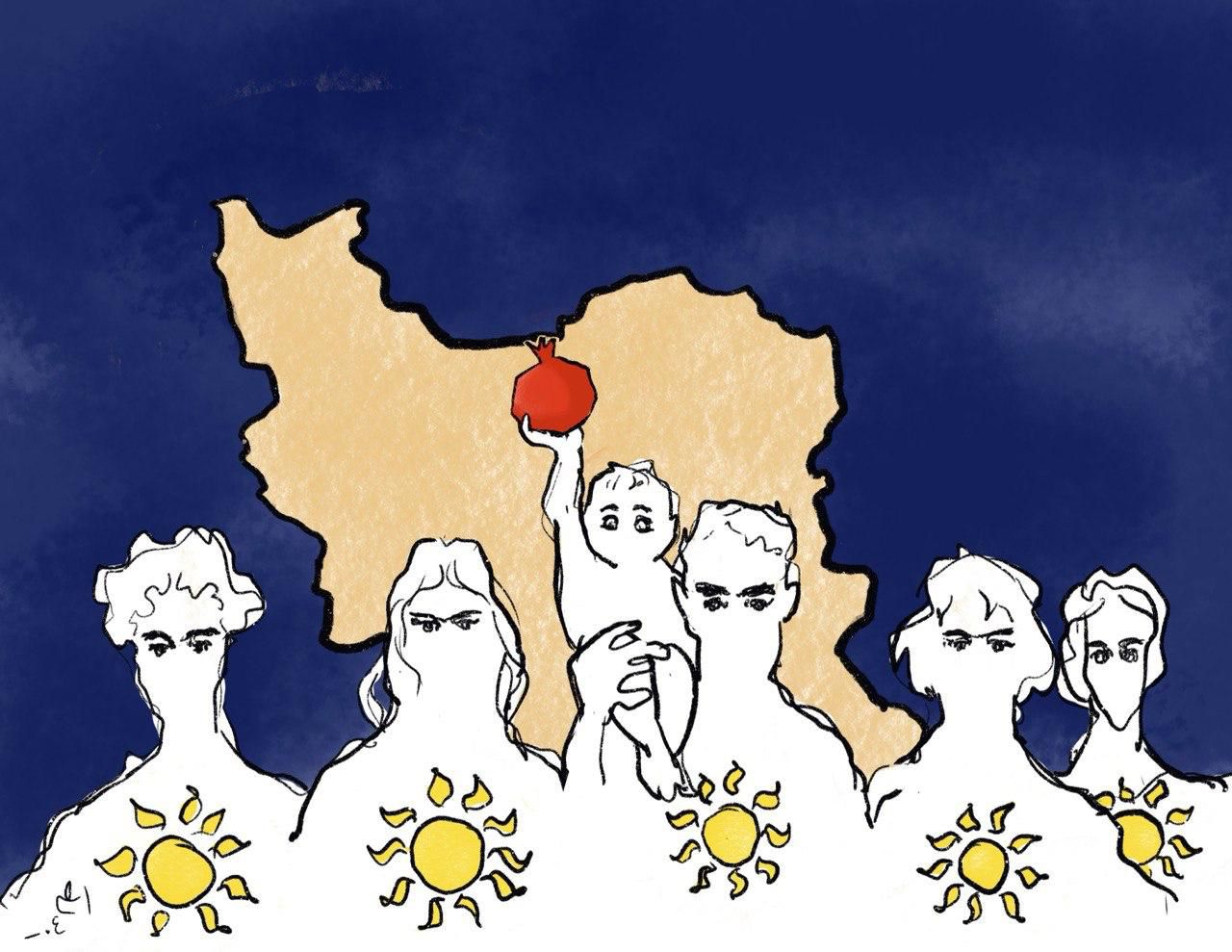
Artist: Ahmad Barakizadeh
By Kayhan Life Staff
On the longest night of the year, December 21, Iranians do not retreat from the darkness—they face it together. Shab-e Yalda, the ancient celebration of the winter solstice, has endured for millennia.
Rooted in pre-Islamic mythology, Yalda marks the rebirth of light. According to ancient mythology, a dark and demonic force who overpowered the world, was routed by the radiant energy of Mithra, the Sun God/esse, the embodiment of light, justice, and love.
As with all Persian rituals, nature and the blossoming of life are central to Yalda. Families gather and light candles and fires, transforming cold and darkness into warmth and light. They eat fruits and nuts while reciting poetry. Pomegranates, with their plentiful seeds, symbolize life. Watermelon, a summer fruit, conveys the warmth that is on its way. Nuts, dried fruits, and seeds symbolize patience.
Nezami Ganjavi, Iran’s 12th-century poet, famously wrote, “In despair there is much hope; the dark night ends with light.” The verse is more relevant today than ever for Iranians both inside the country and across the diaspora.
In the face of decades of repression, economic hardship, and social despair, Yalda has turned into an act of civil resistance affirming that hope, in the face of uncertainty and anxiety, is not naïve; it is necessary.