By Katty Biglari
Afsoon is a London-based artist whose works are in the collections of the British Museum and the Los Angeles County Museum of Art (LACMA). She is best known for prints and collages that evoke the culture, art and poetry of Iran, as well as its contemporary, pre-revolutionary history.
Her work has appeared in numerous publications, and Afsoon was among the talents profiled in Mohammed Afkhami’s new book, “Boundless Spirit: Iranian Women Artists.” Her art is also in the collections of the Yves St. Laurent (YSL) Foundation in Marrakech, and The Farjam Collection in the UAE.
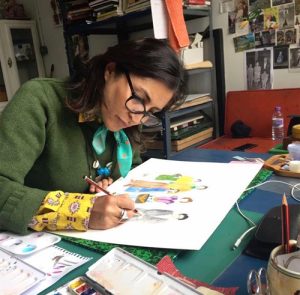
Afsoon has participated in numerous group shows and has had solo exhibitions in galleries around the world. She is represented by Advocartsy, a collaborative visual arts platform and permanent gallery space in Los Angeles.
Born in Tehran, she lived there until the age of 6, when the family moved to Kermanshah and later to Isfahan. She left Iran at around the time of the Revolution, and settled in California, where she studied radio and television at Fresno State University.
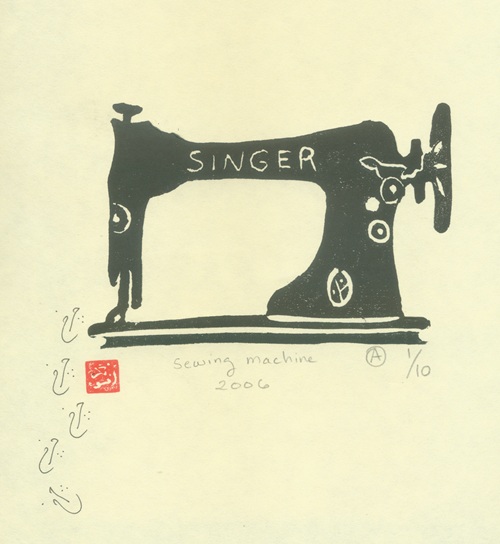
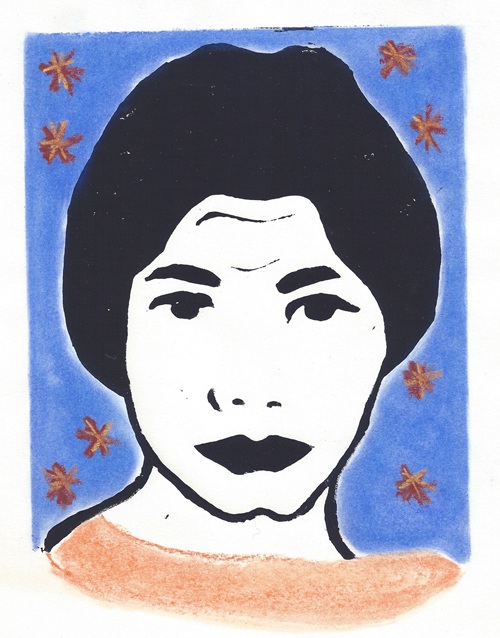
Afsoon then moved to London in her mid-twenties and became a mother. A decade or so later, she decided to take up art. She studied etching, then linocut, which became one of her favorite mediums.
Exhibiting her prints for the first time, she sold a large number of them, including a series bought by the philanthropist Shirley Elghanian, who asked for another set to be auctioned at a Dubai benefit for her charity, Magic of Persia.
At the Dubai event, where the series sold, Afsoon was approached by a British Museum curator who invited her to bring her works to the museum for presentation. Three days after her visit to the museum, she received a letter saying that the British Museum wished to buy all 12 pieces in her series for its permanent collection.
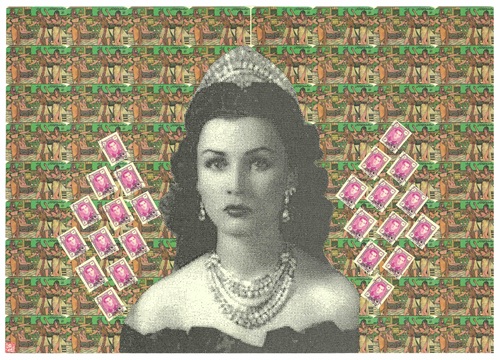
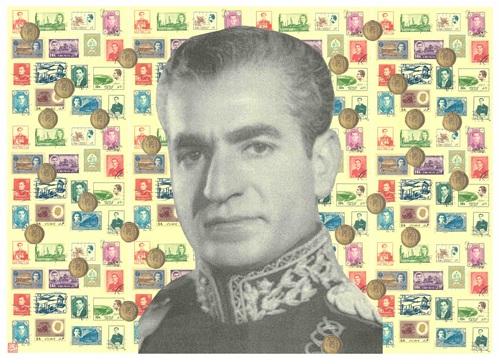
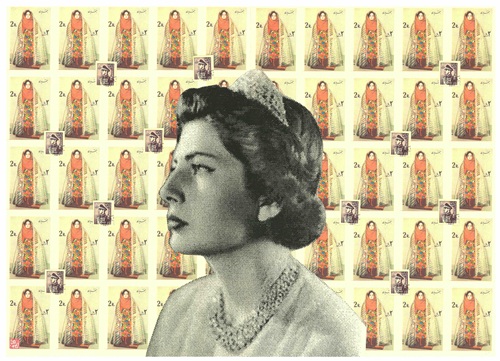
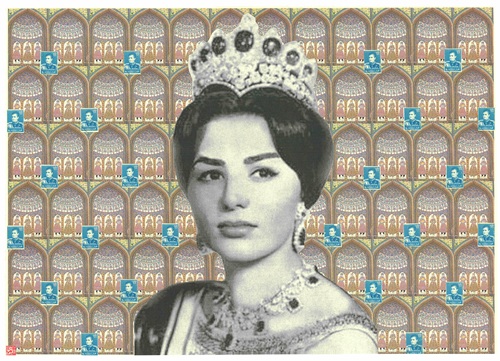
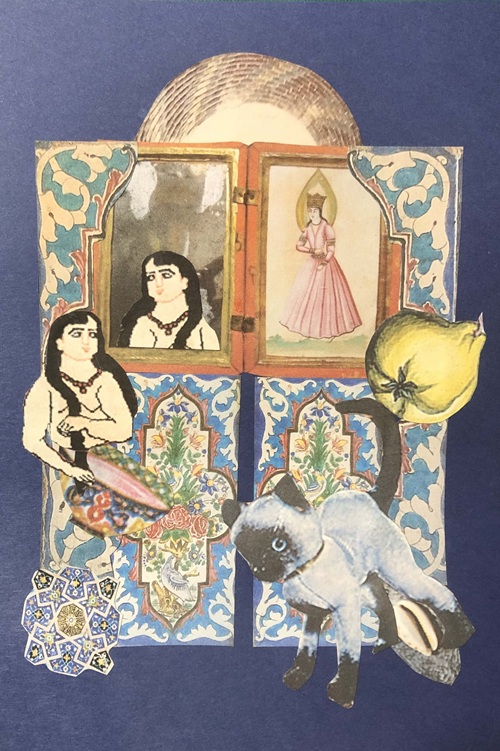
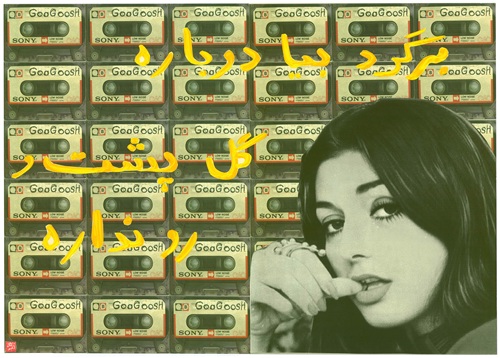
Afsoon then travelled to Iran for the first time in 25 years, and came back with postcards, magazines and memorabilia from the pre-1979 era. She then started her “Icons” series, featuring personalities such as Qajar kings, the star singers Googoosh and Hayedeh, famous athletes, the Shah’s three wives (including Empress Farah), and the nationalist Prime Minister Mohammad Mosaddegh.
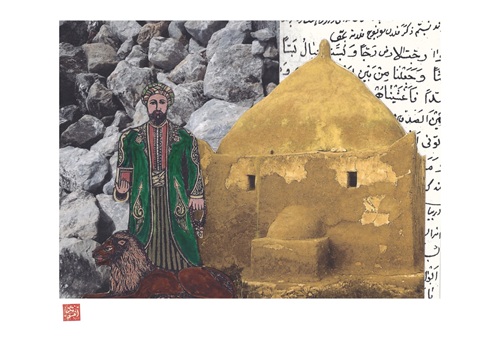
Her subsequent “Poets in Heaven” series featured 12 poets from around the world, including Iran’s Forough Farrokhzad and the U.S.’s W.H. Auden.

In a recent conversation with Kayhan Life, Afsoon discussed her inspiration for the various series, her interest in portraying women, and what she is doing next.
Printmaking and linocut in particular played a key role in your early career. Can you speak about the works that are now in the British Museum?
The “Persian Speaking Objects” series started with a longing for Iran. I would think back to my childhood in Iran, the mandatory afternoon naps, the games we played, our toys, the contents of our houses, and somehow all of these came together to tell the story of a loss, the loss of home.
A visit to Iran inspired your popular “Icons” series. You depicted a wide range of political figures, poets, pop stars, and athletes. From Qajar Kings to Pahlavi-era dissidents and political figures, the collages were a visual shortcut to Iranian collective memory. Did the choice of imagery reflect your connection to the subjects, or was it random? How did you feel about the reaction to this popular series?
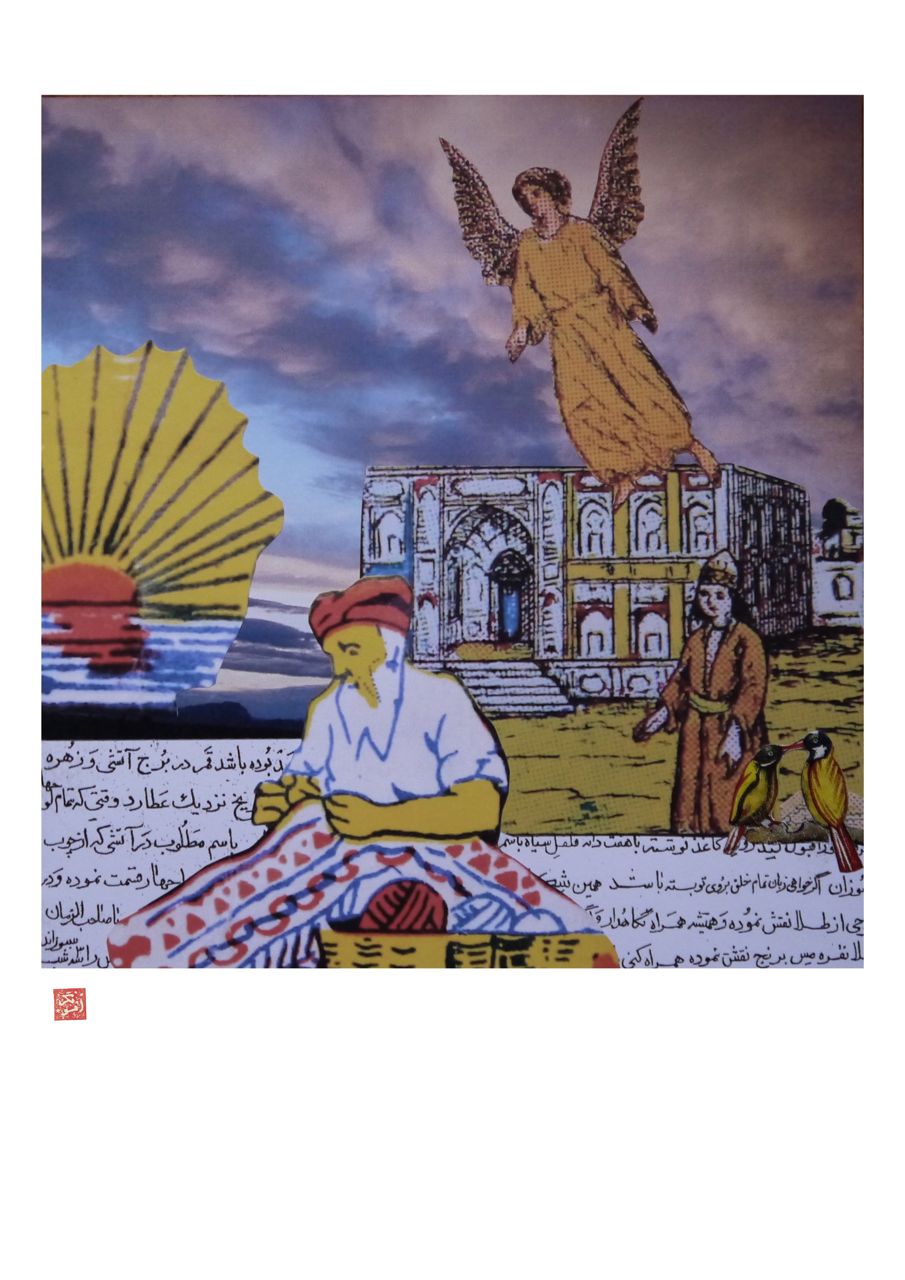
The Icons were for me a departure from my printmaking. I am a restless artist. I need challenges and changes to keep myself interested. I have always liked making collage, and I have been a collector of stamps, postcards, vintage advertisements and old magazines for most of my adult life.
To start the Icons series, I looked back to my childhood and also asked family and friends to see who they thought were true Iranian icons. After deciding on the subjects, I spent a long period sourcing material.
Initially, I was told by various people in the art world that it was a huge shift from printmaking to these rather Pop-Art-y pieces, and it might not be the right choice for my career. But I went ahead and was happy with the move.
With time, the Icons became my most popular series. I could understand how collectors were reacting based on their own memories, and how the images triggered something emotional in them. In a way, these personalities were also part of their past and their collective memory. These Icons were theirs as well.
Discuss your residency in Morocco in 2013 and what led you to explore magic in the Islamic world and the role of women.
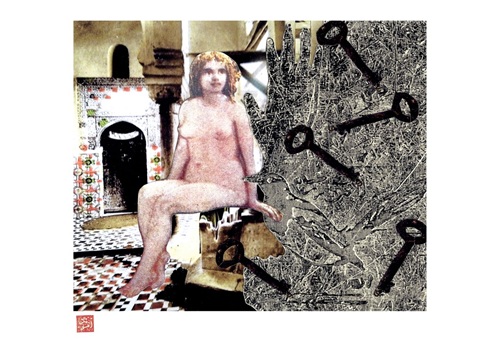
I remember I was staying in an old house in the heart of the medina of Marrakech. I spent a lot of time with the locals and heard their stories and beliefs in magic. This is a complicated subject, but in a nutshell, I found that a lot of so called jinns and efrits were seen as women.
After Morocco I looked at Iran and Egypt and found the same pattern. It was mainly women who were seen as the source of magic and evil. This put me on a path of reading and research to find how women are viewed through folk tales, fairytales, popular cultures, etc.
The more I looked into this, the more interested I became in how these beliefs reflected the way women were perceived and represented in different cultures.
Your artworks engage the viewer emotionally. Discuss the 2016 “Matchbox” series and the 2017 “Poets in Heaven” series and what you wanted the viewer to experience.
The Matchbox series started as an experiment. I wanted to somehow be able to tell a story with an image and a few words. The etchings and later photo-etching images of random photographs helped me to do just that.
“Poets in Heaven” came from my love of poetry. I have been reading poetry since my teenage years and wanted to pay homage to some of my favourite poets.
With both series, my hope was that my audience would perhaps discover their own stories, ideas and love of poetry in the images and the words.
The role of women in society as manifested in stories and folktales buttress your creations. Discuss your takeaway from the folktale that led to the 2018 series “The Adventures of Her Ladyship.”
I found this unusual folk tale in an out-of-print book. It was a feminist tale with highly sexual undertones: the tale of a female body part which finds its voice and becomes whole. I was very much inspired by this old tale and the way it expressed the power of one’s voice and how we all have that power within our reach. I spent a few years putting together this series: the story, the collage pieces inspired by it and a short animation based on the collage work.
You have studied jinnd and have written stories about them. Is there a moral to the stories or are they cautionary tales?
For me, they are a way of sharing centuries-old ideas and retelling stories from the past with a modern take, without turning them into lessons in life.
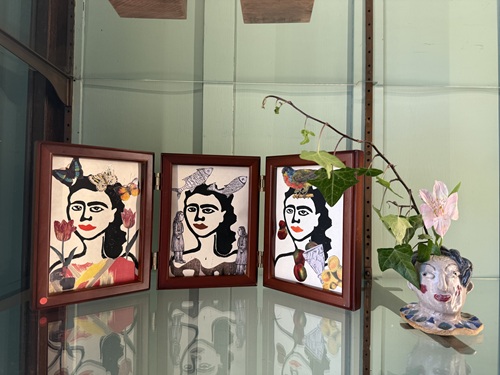
Women’s issues, mystical overtones, and ceramics come together for the series “Women for All Seasons.” Discuss how this merger of mediums shaped the narrative of the series.
As we get older, I think we women start to slowly disappear. There is so much attention given to youth and beauty that experience and lived lives never get. I believe a woman is for all seasons and there is no real spring or winter. I, for myself, can experience all four seasons in a day depending on my moods!
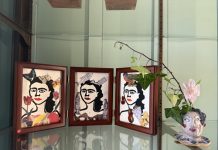
As for merging the mediums, for the first time with this series I have used both 2D and 3D within one body of work, in a way using the work on paper, which was linocut and paper collage, as a form of narrative and the ceramic piece as the body of the piece.
What is an upcoming project and what ideas are you currently exploring?
I have started looking at the fairytales I grew up with and reworking them from a feminist, or I should say, a female point of view, since most of these famous tales were written by men. Right now, I am looking at Snow White. It is still in very early stages, so watch this space.