By Katayoun Halajan
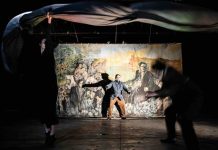
Vanya Chokrollahi is a Paris-based film director, actor and writer who recently made his debut as a theater director with a production of Shakespeare’s tragedy “Macbeth” — inspired by the Iranian tradition of pardeh-khani, where a storyteller narrates a tale in front of a painted canvas.
Paris-based artists Vitalia Samuilova and Nathan Harbon painted the large canvas that serves as a backdrop to the production, which is being performed in Paris through November after being staged in Paris and other cities as of last year.
Chokrollahi has made about 20 short and medium-length films. He co-directed his first feature-length film, the documentary “Paris, a Day in May,” with Romain Rampillon, released in 2024.
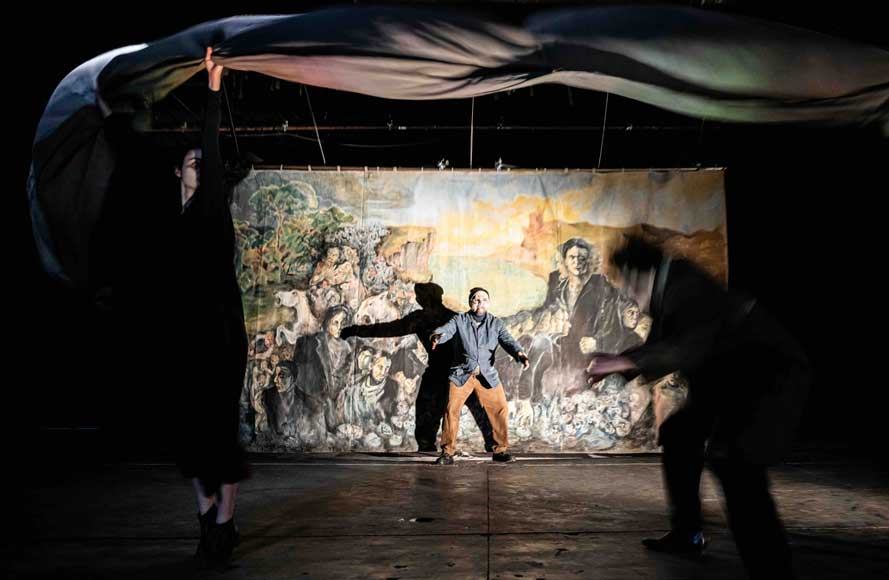
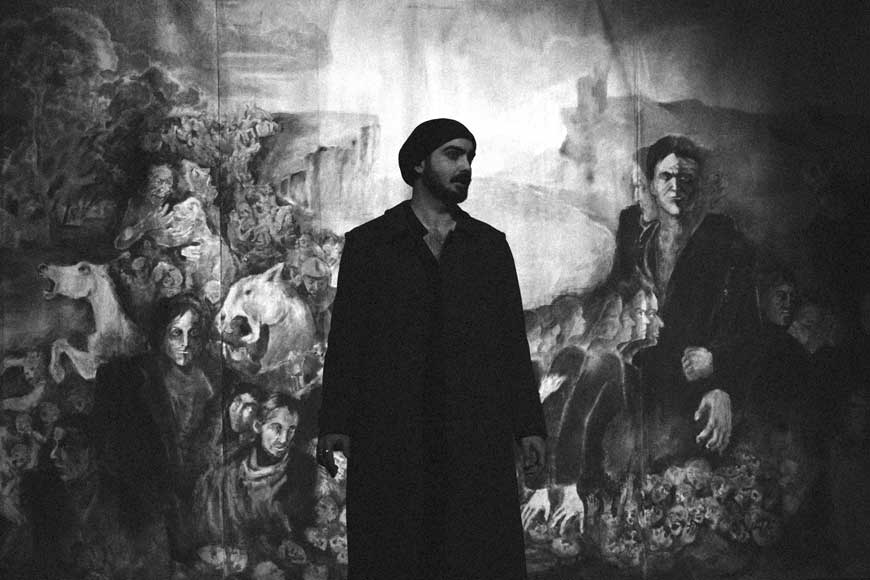
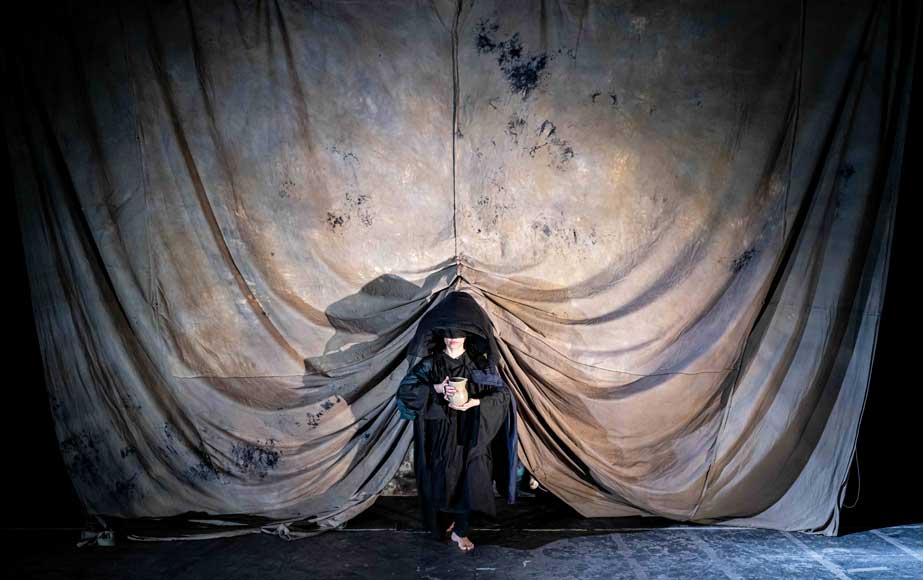
He founded his theater company Le Bateau Noir (The Black Boat) in 2023 in Paris. The company has since won the support of theater companies Compagniemia and La Fonderie, which are also on a quest for a type of theater that is attuned to the intellectual and social currents of our time. Working with masks is another strand of their artistic project.
Asked how a tragedy written in the 17th century can still be staged today and feel so immediate, Chokrollahi said:
“The very fact that we ask this question is a confession about our times, about our political and social climate, and about the darkness that has settled over us. Macbeth explores the fear that echoes through our society and the violence of ordinary people, whether voiced openly or buried deep in the human heart, as well as the violence of governments. The play’s universality lies in the human soul’s twists and turns and the terrifying masks it wears.
“Two sources lie behind my choice of this play. One of them is undoubtedly in Iran, in the village of Taghrud, on a barren stretch of land near the city of Qom, where my father’s roots lie. Shortly after the Revolution, my father left Iran to study in France. A few months later, the Iran–Iraq War began. (Ayatollah Ruhollah) Khomeini held power, and repression at home, alongside the war, became a fact of daily life. Brothers-in-arms became enemies.”
“I grew up with these stories: revolution, dictatorship, mass raids and arrests, prison, assassination and repression. The house where I was raised was always full of Iranian, Afghan, Lebanese, Syrian, Palestinian and Armenian friends, each with their own tales of exile, of an imagined past painted in the colors of memory, and of a broken, ruined state of mind. They kept repeating the same phrases: before the war, before the Revolution, before the occupation.
“Macbeth is Shakespeare’s darkest play, and it tears me apart from within. Darkness covers everything. The author is warning us: Beware! This path leads to no return. Beware the fall of heroes! What moves me most is Macbeth’s hesitation, his humanity, and the fear that comes and goes until, in the end, he overcomes it.
“Macbeth carries no light, but he carries the fears and doubts of a mortal man, a creature of flesh and blood who is afraid of death, of ghosts and of God. He reminds us that the worst evils originate in human beings and that they destroy everything so thoroughly that there is no way back.
“These evils are born of hope: an immense hope, the hope of a nation. It is a hope that, in the wake of crimes, purges, persecutions and repression, is shattered bit by bit until it turns into a fever. Those who believe they are building a better world but end up creating horror and terror, first to seize power and then to save their own lives, are left in the end with nothing but skin soaked in blood, blood whose stains will never wash away.”