By Kayhan Life Staff
The World Bank has projected that Iran’s poverty rate will climb to 38.4 percent this year because of price pressures that have pushed the nation’s inflation rate to 74.2 rate. In its new Macro Poverty Outlook, a country-by-country analysis and forecast for the developing world, it estimates that the income levels of more than 2.6 million additional Iranians will fall below the poverty line in 2027.
These estimates rely on the Islamic Republic of Iran’s official statistics. Many experts believe that actual inflation rates exceed official figures, and that the number of people living in poverty may be higher.
The World Bank said the poverty rate stood at 36 percent in fiscal year 2023, 35.1 percent in 2024, and 35.5 percent in 2025. The bank added that real per capita income in 2025 remained roughly at the levels recorded 15 years earlier.
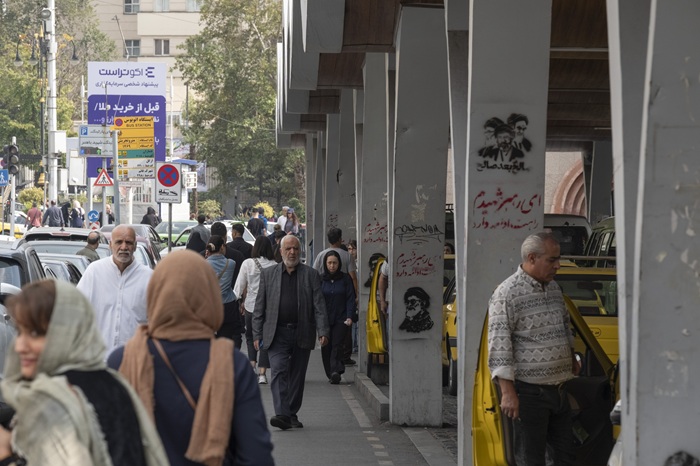
Iranians Cut Essentials and Put Dreams on Hold as War-Hit Economy Bites
The World Bank estimates that Iran’s real gross domestic product (GDP) will contract by 7.7 percent in fiscal year 2026, following an estimated decline of 0.9 percent in 2025. Average annual inflation is expected to rise from 49.1 percent in 2025 to 74.2 percent in 2026, while the budget deficit is expected to widen from 3.2 percent to 5.8 percent of GDP.
Persistent inflation and the declining value of the national currency are steadily eroding workers’ real incomes and purchasing power, despite the fact that workers’ wages do tend to increase each year. As a result, wage earners can afford less and less with their monthly pay.
Sociologist Abbas Kazemi said the sharp decline in wage earners’ purchasing power meant that Iranian society was on the verge of a kind of “bureaucratic collapse,” in which wages lose so much value that working becomes economically pointless for many government and service-sector employees.
Kazemi pointed to the low salaries of teachers, nurses, and clerical workers, and warned that continued currency devaluation could eventually push commuting costs to the point where they equaled a person’s income, leaving employees unable to afford the trip to work.
He also said shrinking household food budgets and the inability to pay for medical care, car repairs, and housing, among other pressures, could widen the gap between the privileged and the deprived.
Warning that the crisis could worsen in the event of war or an internet shutdown, the sociologist said the only remaining hope was that “in the distance, there may be a small glimmer of light,” allowing society to keep going.
Other experts have criticized government policies. Despite sweeping campaign promises, President Massoud Pezeshkian’s government has failed to protect people’s livelihoods, even amid war and sanctions. Its main support scheme, the kalabarg (an electronic goods voucher scheme), has failed to deliver in practice.
Economist and analyst Davoud Souri said: “The main problem with our support policies is that we keep repeating schemes that were tried before and did not produce lasting results. For years, we have implemented policies such as subsidies and kalabarg, but the key question—the missing link throughout all these years—is this: Where are the financial resources for these policies supposed to come from?”
In an Oct. 16 interview with Tehran-based Eghtesad News, Souri warned: “No government in the world can give people money forever without creating wealth. We cannot run the economy of a country with 80 million people solely through subsidies, charity-style handouts, and support schemes. Continuing down this path, ignoring production and focusing only on distributing resources we do not have, will ultimately bring our economy closer to failed models.”
Explaining the state of Iran’s economy, Souri said: “In economic literature, there is a concept called ‘poverty dynamics,’ or dynamic poverty. We also speak of a phenomenon called the ‘poverty trap.’ Put simply, a poverty trap means that if a household falls into poverty for whatever reason, it is very likely to remain there. Escaping this swamp is very difficult, and the household needs effective, targeted outside help to pull itself out.”
He added: “Poverty dynamics mean that if a household cannot afford the minimum necessities of daily life, it is forced to cut back. What are the first casualties? The household has to reduce spending on its children’s education. It has to forgo medical care for the children and even for the head of the household. As a result, the quality of the food they eat drops sharply, and the services they receive are of very low quality.”
“These deprivations mean that the household will send its children into society with fewer abilities and skills. These children will have less ‘human capital’ because they will not have received proper education and training or enjoyed adequate physical and mental health,” he continued.
“The inevitable result is that these children will not be competitive or efficient participants in the future labor market. Consequently, they will not be able to earn enough, and they themselves will become poor adults.”
“These poor adults will then raise another generation of poor children, and this vicious cycle, unfortunately, will continue. Poverty is an entirely dynamic phenomenon and cannot be viewed as limited to a brief period of life,” he added.