#UnitedStates, #Iran, #StraitOfHormuz, #DiplomaticTalks, #MaritimeSecurity
ANALYSIS-How Iran Is Widening Its Pressure Campaign to Force U.S. Concessions
By Parisa Hafezi and Nandita Bose
DUBAI/WASHINGTON, Aug 4 (Reuters) – An attack on a vessel near the Strait of Hormuz and a rebound in oil prices on Tuesday underscored doubts that the U.S.-Iran war was nearing a resolution, as Tehran pushed back against President Donald Trump’s assertion that talks were under way.
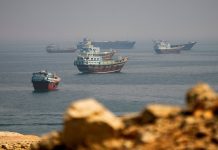
Oil prices rose nearly 3% after a steep selloff in the previous session as investors reassessed optimism over diplomacy, while a cargo vessel reported being struck by an unidentified projectile near the Strait of Hormuz off Oman’s coast, according to the UKMTO maritime security agency.
Trump said on Monday that talks with Tehran were under way and Iran faced a “last chance” to reach a deal, while Iranian officials insisted no negotiations with the United States were taking place. Iran says its only talks are with Oman about the Strait of Hormuz and no major meetings are planned this week.
“They are going on right now,” Trump told reporters at an Oval Office event when asked about negotiations, adding that discussions were taking place at the request of Iran, Saudi Arabia, the United Arab Emirates and Qatar.
“This is a last chance for them (Iran) to sign a good document.”
Trump’s remarks followed his weekend decision to cancel what he described as “massive attacks” on Iran, repeating a pattern in which he has threatened major military action before stepping back and citing negotiations.
Iran‘s President Masoud Pezeshkian said Iran did not want the conflict to widen: “We defend our borders, but we do not seek to expand the war,” he was quoted as saying by state media.
Iran has halted most traffic through Hormuz while Washington maintains a blockade of Iranian shipping and ports, disrupting a corridor that normally carries about a fifth of global oil and liquefied natural gas shipments.
Maritime sources told Reuters on Tuesday that the vessel struck near Hormuz was a dry bulk ship. Its crew had to abandon the vessel and one seafarer was missing, the sources said.
Traffic through Hormuz remained slow, with three tankers and three bulk carriers among the six vessels transiting the strait on Monday, down from seven the previous day, Kpler data showed. In peacetime, more than 100 ships would typically transit per day.
OIL SELLOFF ‘SEEMS OVERDONE’
Brent crude futures LCOc1 had fallen about 7% to a three-week low on Monday after Trump’s upbeat spin on diplomacy, but analysts cautioned that the move appeared premature.
“The scale of the sell-off seems fairly overdone, given that there’s still considerable uncertainty. We’ve been in this situation multiple times before, only to see things unravel,” ING analysts said in a note.
The [Persian] Gulf officials and analysts say Iran is betting it can outlast Washington by turning the region’s trade routes, shipping lanes and energy infrastructure into pressure points that steadily raise the cost of confrontation.
“Their big advantage is that they can hurt the regional states and the global economy,” said Michael Knights of the Washington Institute.
In a post on Truth Social on Monday, Trump called Iran‘s leadership “unbelievably duplicitous,” saying they had asked for a meeting and more talks were set for the “immediate future.”
Sources in Pakistan, which has been mediating efforts to end the conflict, said attempts to bring Washington and Tehran back to the negotiating table were continuing.
“A lot is happening on background…We are talking to both the sides. Our sole goal at this moment is to make both the parties to at least agree to start talking,” a senior Pakistani security official said.
REPEATED PATTERN
Monday’s events appeared to fit a pattern that has emerged since Trump launched “Operation Epic Fury” alongside Israel more than five months ago. He has repeatedly threatened military action against Iran, only to later point to diplomatic contacts as a reason to step back.
Iran, however, has publicly rejected negotiations with Washington since the collapse in early July of a memorandum of understanding the two sides signed the previous month in an attempt to end the conflict.
Trump has yet to achieve the objectives he set out at the start of the war: dismantling Iran‘s nuclear programme, curbing its ability to attack regional rivals and creating conditions for Iranians to overthrow their clerical rulers.
The dispute over Hormuz remains a central point of contention. Washington says the June memorandum required Iran to reopen the strategic waterway, while Tehran says the text explicitly preserved its authority over shipping traffic.
(Reporting by Reuters bureaux; Writing by Lincoln Feast and Ros Russell; Editing by Clarence Fernandez and Peter Graff)