By Nazanine Nouri
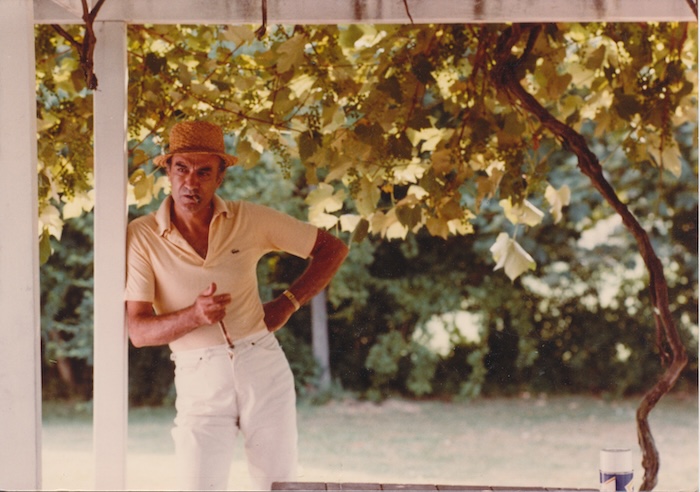
Manoucher Yektai — the pioneering Iranian-born modern artist who died in 2019 and was a founding member of the New York School of Abstract Expressionism — is getting his first-ever U.S. solo museum show at the ICA Miami (through Nov. 22).
Meanwhile, the internationally renowned Mennour gallery in Paris has announced the representation of the Estate of Yektai, in collaboration with Karma, a gallery in Manhattan’s East Village. A solo exhibition of the artist’s work is being planned for next year.
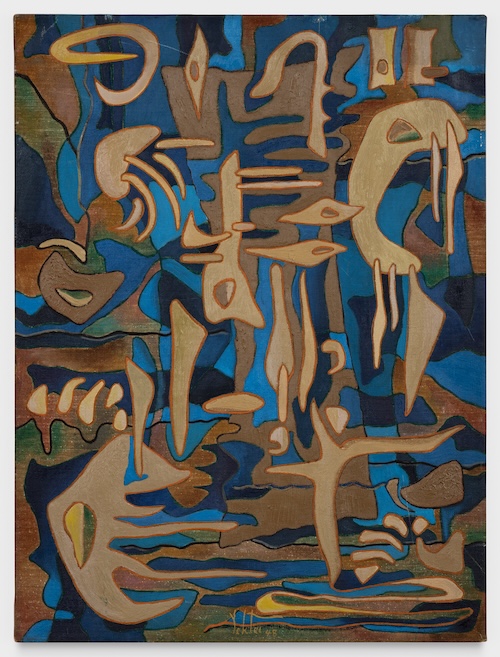
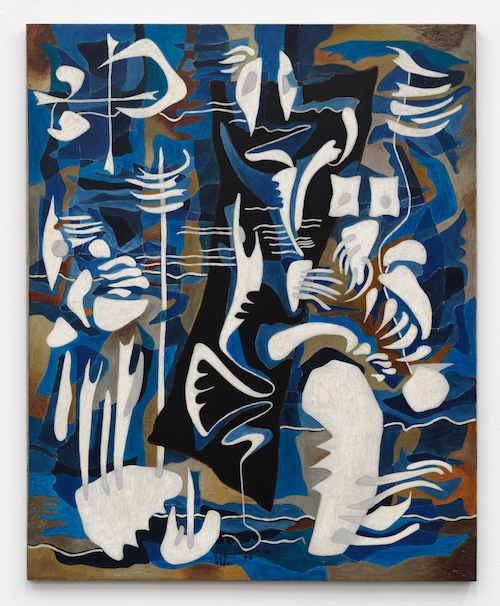
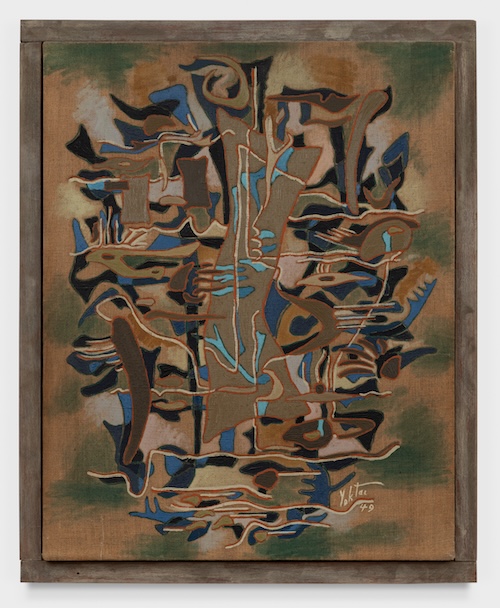
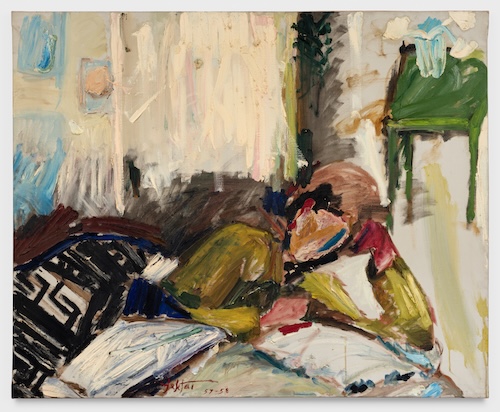
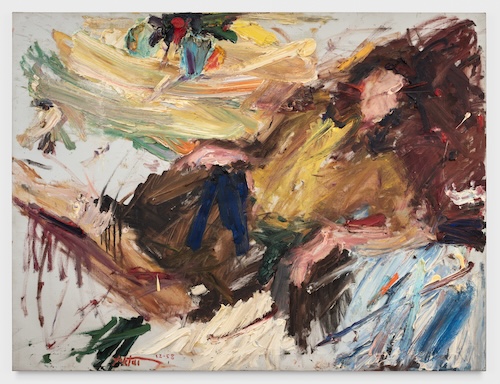
The ICA Miami exhibition, “Manoucher Yektai: The Stranger and the Tree” — whose title is derived from a 2005 poem by the artist — showcases some 30 paintings belonging to four series of works that the artist produced between 1948 and 1963 in a range of styles.
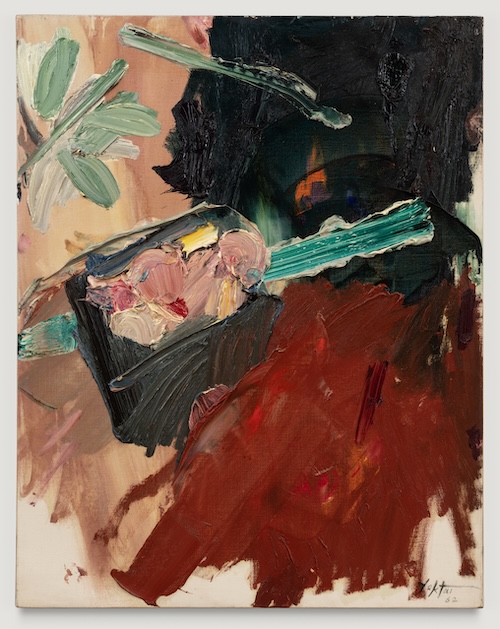
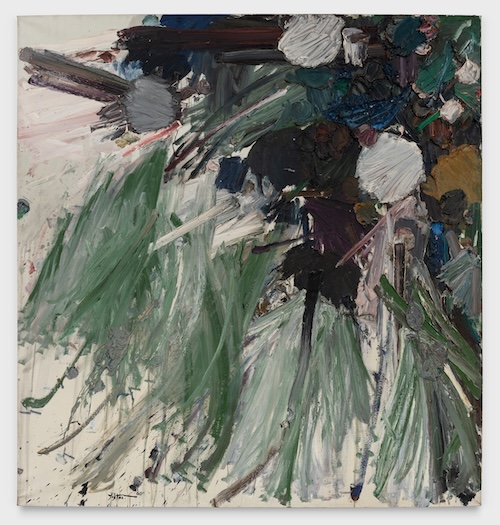
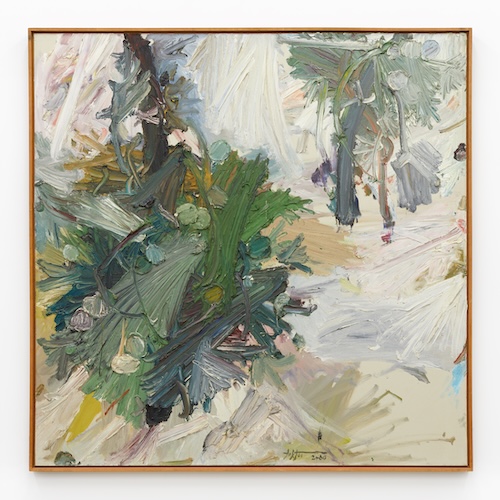
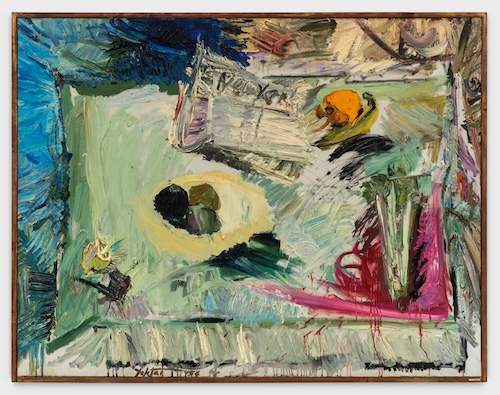
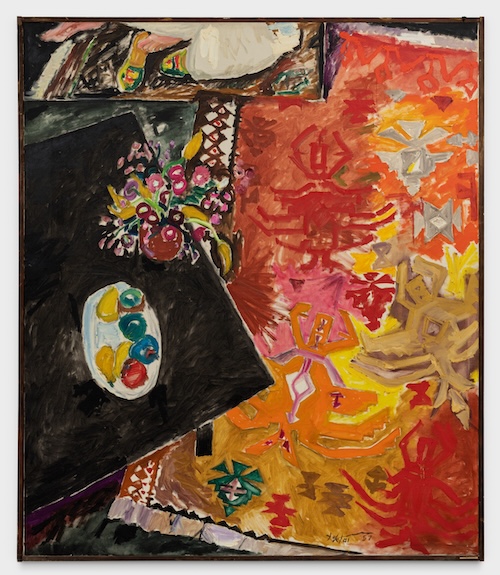
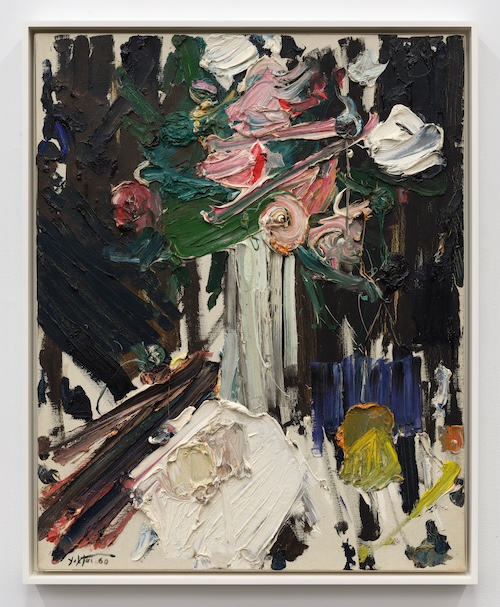
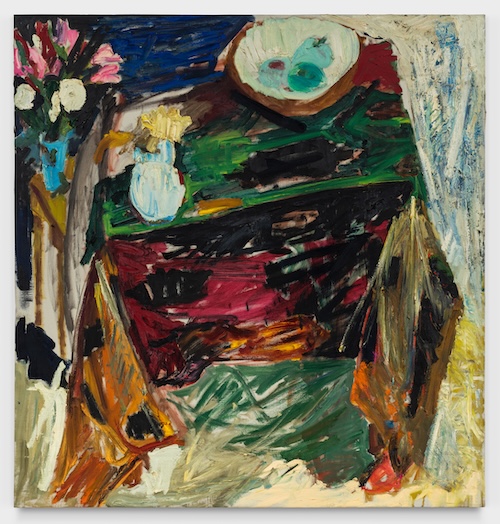
The exhibition is curated by Donna Honarpisheh, associate curator, and opens with blue, beige and brown paintings from 1948 and 1949 which evoke calligraphy and mystical symbols and have rarely been on public view. Then come a series of works which the artist is famous for: heavily impastoed canvases from the 1950s representing still lifes and table settings in thick and protruding layers of paint.
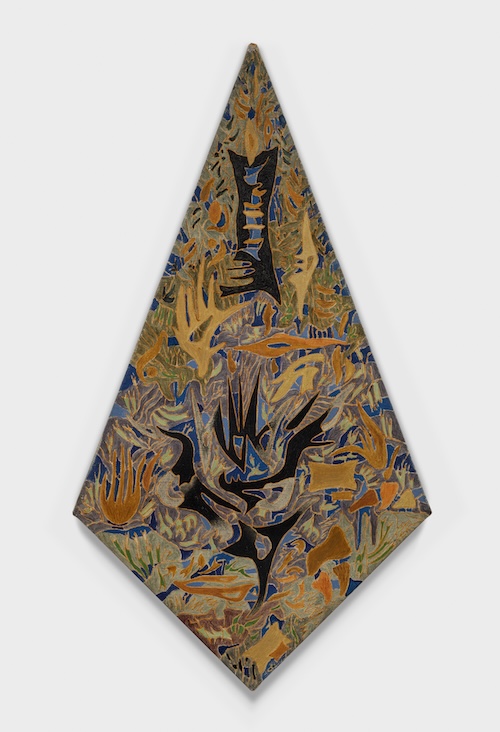
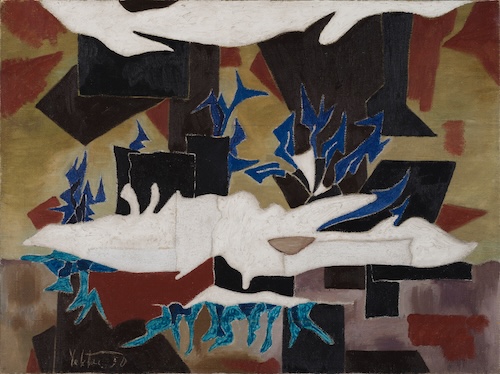
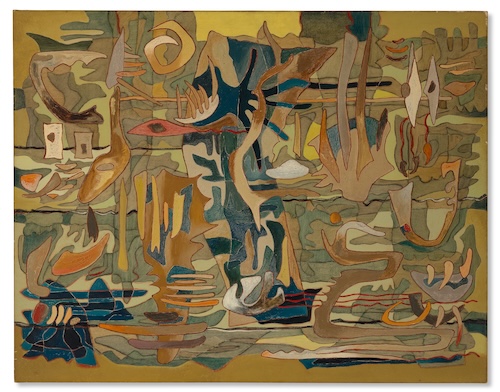
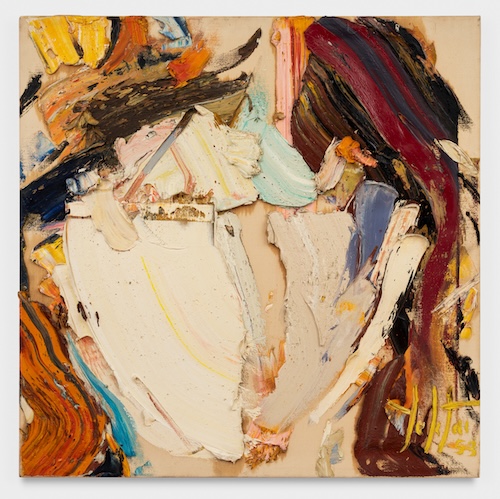
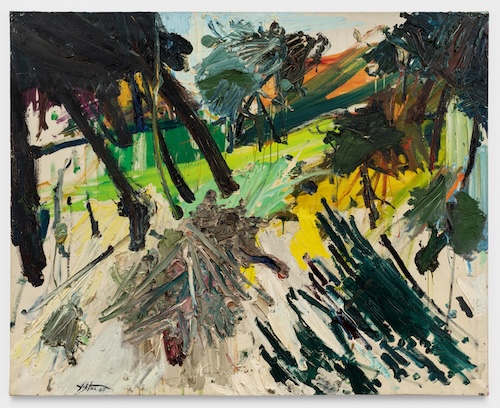
The show ends with naturalistic abstractions from 1959 to 1963 — depictions of landscapes, flowers and plants in thickly applied and repeated brush strokes.
Yektai was among the first generation of Iranian artists to leave his homeland to pursue a modern artistic education abroad in the mid-1940s.
His artistic journey blended Persian poetic sensibilities, European modernist traditions and the raw energy of American Abstract Expressionism. His paintings oscillated between figuration and abstraction, reflecting with the New York School’s abstract approach, while integrating the Parisian School’s traditions of representational painting.
Yektai was born in Tehran in 1921, and his early dream was to become a poet. He wrote poetry from an early age, and his works were published in the local press when he was just a teenager.
It was his fateful encounter with one of the earliest Iranian modernists, Mehdi Vishkai, that inspired him to pursue his studies in fine arts. Yektai realized that poetry was constrained by language, while the emotion and beauty conveyed in paintings was universal.
After receiving his early arts education at Tehran’s Faculty of Fine Arts, he and the soon-to-be renowned Iranian modernist Monir Shahroudy (1922 – 2019) were among the few who, in 1944, acted on their desire to leave Iran to study. Setting sail for California by way of Bombay, they finally arrived in New York in 1945. (Shahroudy became Yektai’s first wife from 1948 to 1953, before marrying Abol-Bashar Farmanfarmaian, and becoming known henceforth as Monir Shahroudy Farmanfarmaian.)
In New York, Yektai entered the Art Students League, studying in the studio of the renowned French painter Amédée Ozenfant. A year later, following Ozenfant’s suggestion, Yektai moved to Paris and enrolled at the École des Beaux-Arts, working in the atelier of Cubist painter André Lhote.
Returning to New York in 1947, Yektai embraced the school of Abstract Expressionism and was exposed to the works of Willem de Kooning, Sam Francis and Jackson Pollock.
Speaking in a 2017 documentary produced by The Artist Profile Archive (and released during a Yektai retrospective at Guild Hall in East Hampton, New York), Yektai recalled that the first time he discovered a completely different way of making art was when he saw the works of Jackson Pollock pictured in Life Magazine in 1949.
“That was an introduction to something new for me,” he said. Renaissance and Impressionist painting were one thing, he explained, and Pollack’s abstract painting were something else.
Yektai acknowledged in the documentary that he did not find the experience of Pollock’s abstracts all that satisfactory, because they had become “a question of fashion, and I did not like it.” But they allowed him to explore “the freedom to paint” while remaining “connected to the tradition.”
Through the American modern painter Milton Avery, he was introduced to Grace Borgenicht Gallery and by the early 1950s, he became the first Iranian artist to exhibit his works in New York with a series of solo exhibitions at that gallery.
Between 1951 and 1952, the legendary Italian-American art dealer Leo Castelli introduced Yektai to other Abstract Expressionist artists with whom he would establish lasting friendships. They included Mark Rothko, Mark Tobey and Philip Guston, as well as Franz Kline, Willem De Kooning, and Robert Motherwell who would remain close to the artist until the end.
He continued to exhibit his works throughout the 1950s and 1960s, namely at the Poindexter Gallery, which would contribute to his later recognition as an influential member of the New York School.
His work was championed by critics including John Ashbery, who, writing in the French magazine “Aujourd’hui: Art et Architecture” in 1961, noted: “Yektai wants to render us conscious of our existence from second to second, of the joy of breathing, of the rapid changes of things.”
Yektai’s work was characterized by his striking impasto technique. Placing his canvas on the ground like Pollock (a style of painting closely associated with abstract expressionism and known as action painting), he layered thick, textured paint onto the canvas, rendering still lifes, portraits and landscapes in extra-thick, lush brushstrokes, and producing works that pulsed with movement and emotional depth.
“I want to engage all the possible tools – brush, hand, piece of wood, edge of anything, spatula, trowel, carver, anything if it’s possible, and brush and brush and brush,” he said in the 2017 documentary.
Yektai never lived in Iran again and spent most of his life in America. Yet his soul remained Persian until the very end.
“Inherent in his painting, he retained his Persian heritage,” said Donna Stein, the art historian who curated his solo exhibition “Paintings 1951-1997” at Guild Hall in 1998. “He depicted ideas with a different scale and intensity, as if he were blowing up little units of Persian miniatures.”
A poet as much as a painter, he never stopped writing poetry — always in Persian and imbued with mysticism in the tradition of Rumi. One of his epic poems, “Falgoosh” [eavesdropping] was adapted for the stage at the Shiraz Festival of Arts in 1970 by the renowned actor and director Parviz Sayyad, and was restaged several times after that.
Yektai’s second wife, Helene (Niki) Kulukundis Yektai, was a Greek-American author and illustrator of children’s books. The couple got married in 1968 and had three children, Nico and the twins Darius and Mahan. Nico would become a sculptural furniture designer and maker, while Darius would become a painter like his father. The three were featured in the 2017 group exhibition “Yektai” at Guild Hall in East Hampton, New York.
Yektai stepped away from the commercial art scene and stopped showing and selling his work in the 1980s.
“Manoucher, like many other artists who could afford it, had an antipathy to the gallery system,” noted the gallerist Alex Rosenberg who represented Yektai in the 1980s. “He didn’t like galleries and I can’t blame him, and for some reason I seem to have been an exception.”
According to his son, Darius, the National Academy of Arts and Letters sent him a letter to induct him for 30 years in a row; he never responded.
That period of isolation, which extended for more than four decades, was joyful and very productive. The immense volume of works he produced in the last part of his life – almost none of which were seen publicly while he was alive – powerfully reflected his Persian soul.
Yektai died at his home in Sagaponack, New York in 2019 at the age of 98. Only after his death did his wife Niki and two sons Nico and Darius embark on a celebration of his life and work, in collaboration with Karma and the art consultant Rob Teeters.
That program of Yektai tributes began with a solo exhibition at Karma, New York (2021); “Landscapes”, Karma, New York (2024); “Beginnings”, Karma, L.A., curated by Negar Azimi (2025); as well as the publication of “Paint Box: Selected Poems 1997-2006”; “Manoucher Yektai” (2021); and “The Manoucher Yektai Catalogue Raisonné.”
Today, works by Yektai are held at the Museum of Modern Art, and the Whitney Museum of American Art, New York; the San Francisco Museum of Modern Art; the Hirshhorn Museum and Sculpture Garden, Washington, DC; Guild Hall, East Hampton, New York; and Yellowstone Art Museum, Billings, Montana, among other institutions.