By Kayhan Life Staff
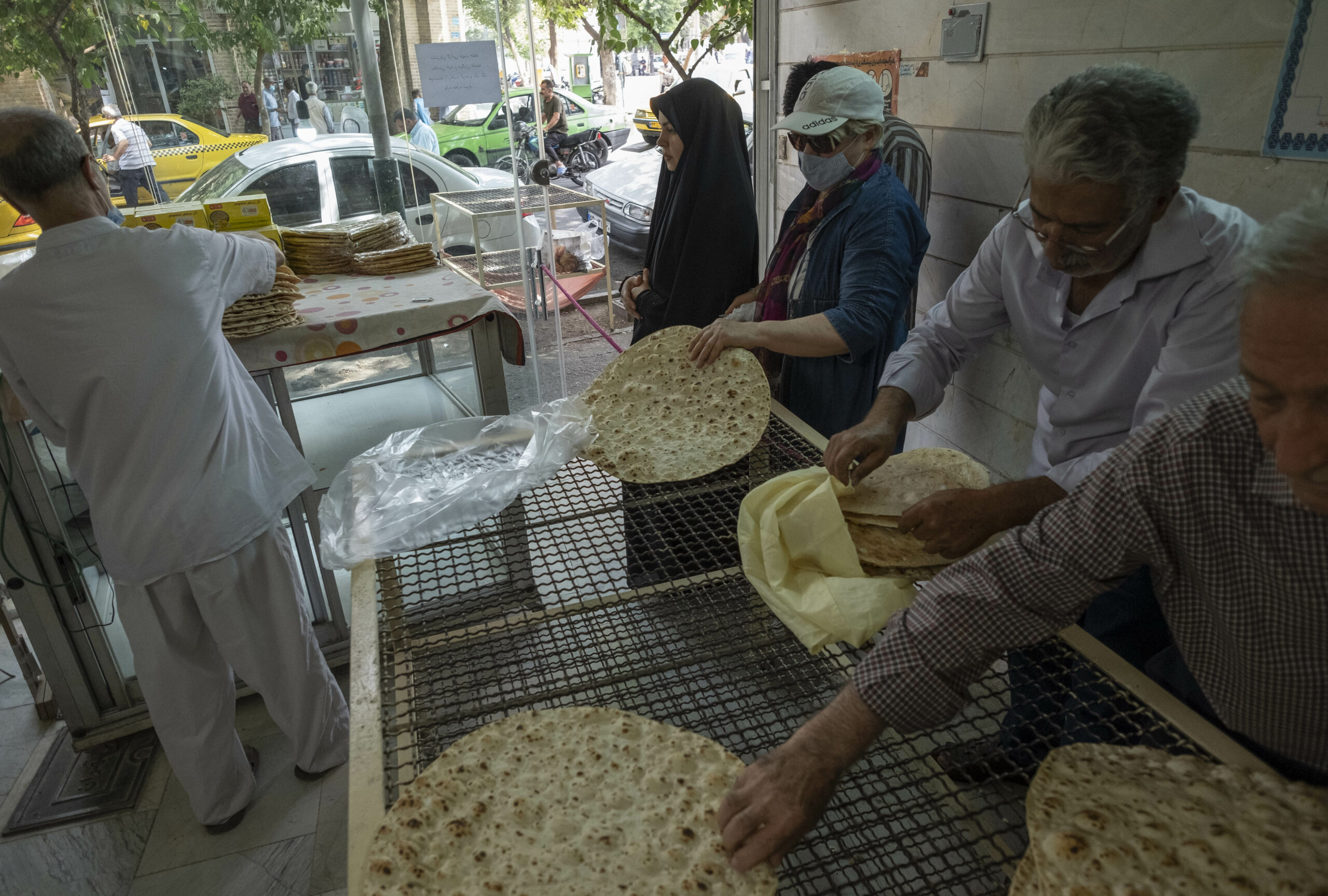
Bread prices have flared up in several Iranian cities including Tehran after the government of Iranian President Massoud Pezeshkian cut flour subsidies.
At a time of high food inflation and a growing ‘cheap eating’ trend among Iranian households, demand for bread as a filling staple has soared. Yet a doubling in bread prices has made it less affordable for many low-income households.
The Pezeshkian government has been planning the liberalization of bread prices since last year. The recent increases appear to reflect the implementation of this policy. Removing bread subsidies directly hits low-income households, for whom bread is a basic and vital staple.
Nearly 40% of Iran’s Export Earnings Fail to Return to Country, Analysts Say
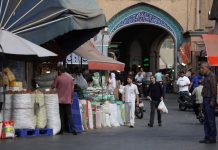
Mohammad Javad Karami, head of the flour and bread working group at the Iran Chamber of Guilds, announced this week that bread prices had increased in Tehran. The price hike reportedly took place overnight without any prior public notice.
The price of lavash bread (a thin flatbread) in Tehran has doubled, he said.
According to Karami, the current prices for a single loaf of bread in Tehran Province are: lavash at 2,700 tomans ($0.016), barbari (a thick flatbread) at 10,000 tomans ($0.62), and sangak (a traditional flatbread baked on hot stones) at 15,500 tomans ($0.096).
According to domestic media reports, revised bread prices were implemented in bakery systems on June 23, and many consumers became aware of the increase when visiting bakeries early that morning.
Iranian Official Warns of Rising Public Pessimism, A ‘Serious Warning Signal’
Iran’s bakery sector operates under the state-subsidized Nanino system, a digital platform that monitors flour allocations and bread sales through smart card readers. Bread pricing and subsidy policies are administered at the provincial level by local authorities.
The semi-official Mehr News Agency reported that in the northern province of Mazandaran, residents suddenly faced an almost twofold rise in bread prices: lavash at 1,700 tomans ($0.010), tafton (a thin flatbread suitable for wraps) at 2,600 tomans ($0.016), barbari at 6,500 tomans ($0.040), and sangak at 7,500 tomans ($0.046).
The deputy for development and planning in the governor’s office of Eslamshahr in Tehran Province also confirmed the price increase in that county, stating that prices for all types of bread had doubled in the bakery system.
In Mashhad, the capital of the northeastern province of Khorasan, the head of the Bakers’ Union announced a 49 percent increase in bread prices in the province.
In the western province of Hamadan, a new official price list was issued: lavash at 2,000 tomans ($0.012), sangak at 8,000 tomans ($0.049), and barbari at 6,500 tomans ($0.040).
The issue of bread pricing had been under discussion for some time, and in some provinces, prices had already risen unofficially, although the government had previously stated that no price increase was planned.
Gholamreza Nouri Ghezeljeh, Iran’s Minister of Agriculture, said around 500 trillion tomans ($3.1 billion) had been allocated in the budget for bread subsidies this year. He said the government purchases wheat from farmers at about 48,500 tomans ($0.30) and sells it to flour mills and bakeries at roughly 1,000 tomans ($0.006).
He added that the transfer of subsidies from the flour and bakery chain to households, or to kalabarg (an electronic subsidy and credit system), was under review, but that no final decision has yet been made.
The Tehran-based Etemad newspaper criticized the government’s plan to liberalize bread prices, writing that “the government and the Ministry of Agriculture have, in a questionable and poorly timed move, proceeded toward removing bread subsidies and integrating them into the electronic coupon system, which will lead to a significant increase in bread prices.”
“The government intends to cover the budget deficit required to increase the coupon value through the removal of bread subsidies, but in addition to creating new inflation, it is taking bread — one of the last remaining protected basic necessities –off people’s tables.”
“No information system will be able to accurately predict bread consumption in different households, and the government will be forced to define a standard number of bread loaves within the coupon system, with any additional consumption needing to be purchased at free-market prices,” the paper added.
Etemad warned that “removing bread subsidies under current conditions is extremely dangerous and could have wide political, social, economic, and security consequences. People are already exhausted by continuous price increases and cannot tolerate further inflation, especially for bread, which remains a last pillar of basic livelihood for many groups.”
The paper further argued that while rising inflation and increasing prices of goods and services have already placed heavy and unsustainable pressure on people’s livelihoods, and public dissatisfaction with government inaction is growing, the government and the Ministry of Agriculture are still pursuing a questionable and poorly timed move toward subsidy removal.
It also warned that public tolerance for inflation has reached its limit, and that society could face serious tension and shocks from additional price pressures, particularly regarding bread, which is widely consumed in both urban and rural areas and among vulnerable groups — a shock that, it argued, could ultimately serve the interests of adversaries.
At the end of February, the hardline Tehran-based Kayhan newspaper, citing the 2026–27 budget bill and the government’s economic team, wrote that “the government, influenced by advisors acting in the interests of the enemy, is seeking to liberalize bread prices; a suspicious and dangerous move that could lead to disaster and must be stopped by concerned officials.”
“Some officials, at the worst possible time and under the influence of so-called economists who are considered by some to be suspicious or even agents of the enemy, are pushing the country toward crises and continuing shock-therapy economic policies,” wrote Kayhan, adding that some members of parliament “have supported these policies.”
Kayhan wrote that previous liberalization measures, such as the removal of preferential currency exchange rates, implemented at inopportune times, had severe social and security consequences.
It argued that “while enemies seek to create unrest and exploit terrorism-related opportunities, some officials continue to insist on crisis-inducing policies.”