
By Kayhan Life Staff
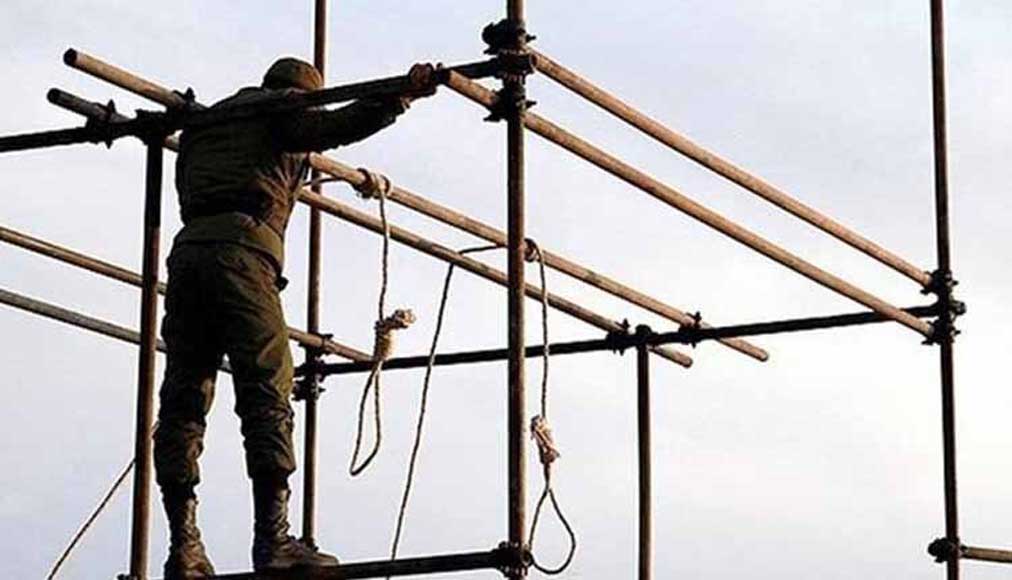
The Islamic Republic of Iran has pronounced death sentences against Esmaeil Ramezanpour, 38, and Arman Marefati, 30, both of whom were arrested during the January 2026 protests.
According to human rights sources, Arman Marefati, a resident of Saqqez in Iran’s western Kurdistan Province, was arrested by security forces during the nationwide demonstrations. Following a period of detention, he was transferred to Greater Tehran Central Penitentiary (Fashafoyeh Prison).
Branch 15 of the Tehran Revolutionary Court, presided over by Judge Salavati, subsequently sentenced him to death on charges of “enmity against God” (moharebeh).
Another protester, Esmaeil Ramezanpour, originally from the central province of Fars and residing in Yazd, was also arrested by security forces during the protests. He was transferred to a security detention facility in Yazd Province, where he remained throughout the interrogation process.
Ramezanpour was sentenced to death on charges of “assembly and collusion to commit crimes against the country’s internal security” and “intentional destruction of public property” — specifically, the charge of setting fire to the Yazd municipal building — with the intent of opposing the Islamic Republic.
OPINION: Let Iranians Decide Their Own Future Through the Ballot Box
According to informed sources, Ramezanpour was subjected to severe torture while being held in the Yazd security detention center in an effort to extract forced confessions from him. After his interrogations were completed, he was transferred to Yazd Central Prison.
The Islamic Republic has intensified both the pronouncement and execution of death sentences against political prisoners following the outbreak of the war between the United States, Israel, and Iran in late February.
Human rights organizations report that at least 39 political and security-related prisoners have been executed since the beginning of the conflict. Among those executed were individuals convicted on national security charges, including allegations of espionage, as well as detainees arrested during nationwide protests.
According to human rights organizations, detained protestors who received death sentences or lengthy prison terms were prosecuted on what they described as baseless charges and subjected to coercive interrogations and torture-induced confessions.
The defendants were also allegedly denied access to legal counsel of their choosing. Rights groups maintain that the evidence presented against the accused was insufficient to substantiate the charges. Nevertheless, death sentences were issued and later upheld by Iran’s Supreme Court.
Meanwhile, the judiciary continues to pursue additional death sentences against individuals who participated in nationwide protests.
In one notable case, four defendants arrested during the 2022 protests in what has become known as the “Ekbatan Case” were recently sentenced to death once again. The ruling was issued even though the same four individuals had previously received death sentences that were overturned by the Supreme Court and later annulled by a criminal court due to insufficient evidence.
The case concerns the death of Arman Aliverdi, a 21-year-old member of the Basij militia and a seminary student, who suffered fatal injuries during confrontations in Tehran’s Ekbatan district in October 2022. The incident occurred amid the nationwide protests that erupted following the death of Mahsa (Zhina) Amini while in the custody of Iran’s morality police.
Milad Armoun, Navid Najaran, Mehdi Imani, and Seyed Mohammad-Mehdi Hosseini — all defendants in the high-profile Ekbatan case and participants in the 2022 nationwide protests — were sentenced by the Tehran Revolutionary Court.
The court’s decision to reimpose the death penalty stands in direct contrast to an earlier ruling by Tehran’s Criminal Court, which stated: “Although the defendants participated in the assault on Arman Aliverdi (a Basij member who was killed during the 2022 protests in Tehran’s Ekbatan district), there is no conclusive evidence establishing which individual inflicted the fatal blow. Therefore, the legal grounds for issuing a retributive death sentence (qisas) do not exist.”