By Yasaman Ranjbaran
[The following opinion piece was contributed to Kayhan Life by Yasaman Ranjbaran, a researcher in biodiversity conservation and ecology at the University of Padua in Italy. The views expressed are her own.]
Iran’s underground missile cities have recently entered the public spotlight as military targets. Open source reporting now confirms that Iran operates multiple underground “missile cities,” that missile infrastructure near Khorramabad includes tunnels and launch portals cut into mountain slopes, and that the Imam Hossein missile base southwest of Yazd housed long-range missiles in underground tunnels.
Iranian officials have publicly claimed that some of these facilities reach depths of 500 meters, although the exact depth of each site is not independently verified.
What is no longer in doubt is the basic fact: that mountains in Iran have been excavated, engineered, and weaponized on an industrial scale.
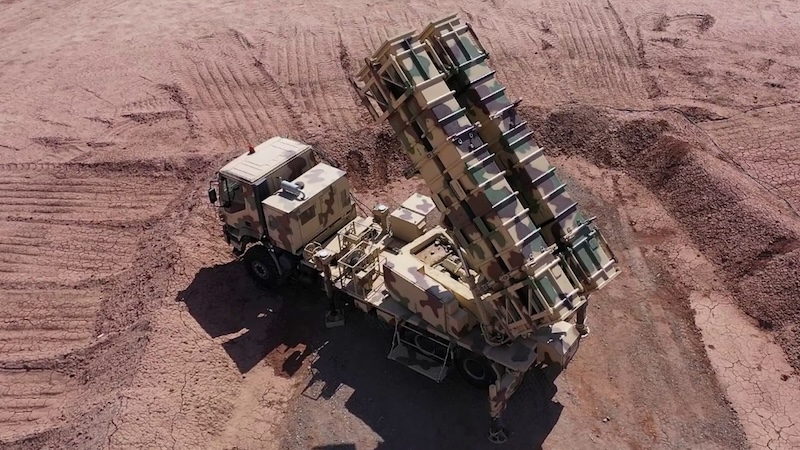
That matters environmentally, because these are not passive bunkers. They are active launch systems. Launchers, missiles, fuel, ventilation, power, roads, spoil disposal areas, and reinforced portals all require repeated disturbance of mountain geology.
In plain language, the mountain is not merely hiding the weapon: It has been cut open and turned into the weapon’s operating environment. Every entrance blasted through rock, every shaft bored for air and access, every road cut into slope, and every later strike on those surfaces compounds the damage.
In Yazd, the damage cuts into one of Iran’s oldest underground water systems: the qanat, whose origins in Iran reach back at least to the 1st millennium BCE. Qanats were the hidden architecture of survival, carrying mountain groundwater across the desert through gently sloping underground tunnels and sustaining cities like Yazd for centuries. They also formed living subterranean freshwater habitats.
Research shows that they function as aquatic refugia, supporting dozens of fish species, including many native and endemic taxa, alongside benthic invertebrate communities adapted to these shaded, stable underground waters. In other words, a qanat is not just a hydraulic structure. It is both a water system and an ecosystem.
That entire network depends on the slow recharge of mountain aquifers. Once those mountain bodies are drilled, blasted, drained, or intercepted, the damage travels downhill. Modern groundwater overuse has already pushed many qanats toward collapse, and the evidence is clear that deep extraction dries them by lowering the aquifers that feed them.
If secret military tunneling and construction have added further dewatering, pumping, or hydrological disruption in those same recharge zones, the result is not just damage to rock. It is damage to an ancient hydrological and ecological system that made life in central Iran possible.
No public environmental impact assessment or transparent water budget exists for the missile cities, but the likely mechanisms of damage are well understood. Tunnel engineering literature shows that excavation and drainage can lower groundwater tables, dry springs and wells, weaken the connection between surface water and aquifers, reduce soil moisture, stress vegetation, and trigger settlement.
Even conservative construction benchmarks are revealing. Tunnel boring alone can require substantial daily water inputs, while intercepted groundwater can generate sustained outflows if not carefully controlled. The exact figures for Iran’s missile cities remain hidden, but the direction of impact is clear. Excavating long military tunnel systems inside water-stressed mountains is a direct threat to groundwater stability
That is why the question of Zayandeh Rud River cannot be waved away. Basin studies already show a river system pushed past its limits by competing withdrawals, interbasin transfers, industrial demand, and chronic groundwater overuse. The documented transfers to Yazd establish the crucial point: this is an overdrawn basin where any large, secret, and unaudited military demand on connected aquifers or mountain recharge zones cannot be treated as negligible simply because it was hidden.
The ecological stakes around Yazd are just as grave. The Shirkuh massif is not barren stone, but a conservation-priority landscape marked by endemism, including the recently described endemic plant genus Yazdana. Nearby protected areas, especially Darreh Anjir and Bafq, support sensitive desert fauna, including a key corridor for the critically endangered Asiatic cheetah, at least 16 recorded lizard species, and one of Iran’s important Persian leopard landscapes.
In such terrain, tunneling, road cutting, blasting, spoil dumping, and later bombardment do not merely scar the view. They fragment habitat, create hard edges and barriers, disturb prey and predators, and intensify pressure on species already surviving at the limits of water and heat.
Khorramabad presents an equally severe, and in some ways even more scandalous, case because the environmental damage there intersects with globally important cultural heritage.
UNESCO describes the Khorramabad Valley as a narrow ecological corridor rich in water, flora, and fauna, with evidence of human occupation stretching back 63,000 years. This is not simply another mountain valley. It is a prehistoric archive embedded within a living hydrological and ecological system.
Recent climate-hydrology research confirms that spring flow remains central to the valley’s water balance. In such a setting, large underground military excavation and subsequent strikes are not just military acts. They are direct interventions into a water-sensitive heritage landscape where ecology and archaeology cannot be separated.
Lorestan’s biodiversity raises the stakes further. The forests around Khorramabad belong to the central Zagros oak system, already under pressure from drought and land-use change.
Persian leopard modeling identifies Lorestan as an active leopard landscape, and camera traps have confirmed its presence in the province. Springs in semi-arid mountain regions are not mere water outlets, they are biodiversity nodes. Damage or contamination there cascades through plants, invertebrates, herbivores, carnivores, and human communities. Then comes the toxic legacy of military sites. The damage is cumulative: the mountain is excavated and drained, then militarized and fragmented, then bombed and contaminated.
A serious case would not claim more than the evidence supports.
It would not argue that missile cities alone caused Iran’s water crisis. It would argue something more precise and more devastating: that Iran’s underground missile cities were built inside recharge landscapes, biodiversity refuges, and heritage-rich mountain systems; that tunnel excavation is a well-established cause of groundwater drawdown, spring depletion, vegetation stress, and land settlement; that Yazd and Khorramabad were already hydrologically vulnerable before these secret projects added further pressure; and that secrecy blocked environmental accounting while shifting the cost onto ecosystems, heritage, and the public.
The missiles were hidden underground. The damage will not be.