| Peace, Held Hostage by Hezbollah
By Behnam Mohammadi
Welcome to the Kayhan Life Week in Review
This week, Kayhan Life covered the military, political, economic, and human aspects of the war between the Islamic Republic and the U.S. and Israel, as well as the regime’s war against Iranians who oppose it. Markets were somewhat relieved by the two-week pause in hostilities between Washington and Tehran, but not entirely reassured. Inside Iran, the regime continued executions and arrests while ordinary Iranians confronted rising hardship. Beyond Iran’s borders, diplomacy advanced as regional tensions intensified and the fallout spread across shipping lanes, energy markets, and Western alliances.
►At a moment of military vulnerability abroad, the Iranian regime showed resolve at home through fear, speed, and force.
Iran Executes Two Men Involved In January Protests
Iran Executes Man Over Attack On Military Site During January Protests
Verdicts Against ‘Enemy Agents’ Should Be Expedited, Iran Judiciary Chief Says
►The reported killing of Majid Khademi, intelligence chief of the Islamic Revolutionary Guard Corps, suggested pressure on the regime was reaching beyond military infrastructure into the core of its intelligence and command apparatus, puncturing its image of total control.
Intelligence Head Of Iran’s Revolutionary Guards Killed In Strike
►Turning to the economic front, the Iranian people battled an economy battered by war: rising prices, vanishing jobs, damaged infrastructure, and fraying regional trade ties.
Iran’s Shattered Economy Means Any Success in War May Be Fleeting
►Meanwhile, international attention returned to the regime’s use of hostage diplomacy, spotlighted by the release of two French detainees after years of imprisonment.
French Nationals Freed From Detention In Iran, Returning To France, Macron Says
►In other spheres, the nomination of Shida Bazyar, a writer of Iranian descent, for the International Booker Prize reminded readers that Iran’s presence is not marked solely by theocratic rule but also by culture, memory, and artistic voice.
Author Shida Bazyar Is Nominated for the International Booker Prize
►Early in the week, while the Islamic Republic pushed back against ceasefire pressure, President Donald Trump escalated his rhetoric, framing the moment in apocalyptic terms. He went further still by saying that, were a ceasefire declared, the Iranian people should rise up against their government, even while acknowledging the danger they would face in doing so.
Trump Says Iranians Should Rise Against Government If Ceasefire Declared
►In one of the week’s most dramatic episodes, U.S. special forces rescued an American airman from inside Iran after his F-15 was shot down. The operation relied on CIA deception tactics to misdirect the Islamic Revolutionary Guard Corps, revealing how close the conflict came not only to escalation, but to deeper entanglement on Iranian soil.
In High-stakes Mission, US Special Forces Rescue Airman From Iran After F-15 Crash
►Returning to diplomatic developments, diplomacy remained fraught from start to finish. Early in the week, the Islamic Republic pushed back against pressure for a ceasefire. At the same time, President Donald Trump escalated his rhetoric, framing the moment in apocalyptic terms, while attacks on Saudi energy infrastructure threatened diplomatic moves altogether. Kayhan Life reported that Pakistan helped salvage talks that were on the verge of collapse. But the eventual pause in fighting was more like a stay of execution than a breakthrough.
Iran Rejects Ceasefire As Trump Ramps Up Threats Ahead Of Deadline
Saudi Arabia’s Oil Pipeline Bypassing Hormuz Damaged in Iranian Attack
US-Iran Talks Continuing, But Strikes On Saudi Arabia May Derail Effort
‘Talks Were Almost Dead’: Pakistan’s Last-ditch Effort To Secure Iran War Truce
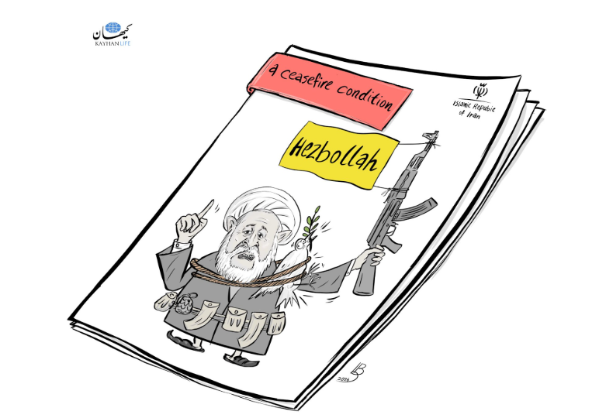
►The White House said Iran had indicated a willingness to hand over enriched uranium, one of Washington’s central demands. Still, U.S. forces would remain in place, and military action could resume if the Iranian regime failed to comply. The Iranian regime said peace talks would be “unreasonable” following Israeli strikes in Lebanon.
Iran Has Indicated It Would Turn Over Enriched Uranium, White House Says
Trump Says US Military To Stay Around Iran; Threatens Action If Tehran Fails To Comply With Deal
Iran Says Peace Talks Would Be ‘Unreasonable’ Following Israeli Strikes
►As the week progressed, the announcement of a pause in hostilities brought a burst of optimism. Shipping companies stayed cautious about the Strait of Hormuz, and Kayhan Life’s coverage suggested that Tehran’s effort to position itself as the effective gatekeeper of the world’s most critical oil chokepoint could leave energy markets vulnerable long after this immediate crisis subsides.
Maersk Cautious on Strait of Hormuz Shipping Despite US-Iran Ceasefire
Iran’s Hormuz ‘Toll Booth’ Set To Hardwire Higher Energy Prices: Bousso
►Despite the pause, wider strategic tensions persisted. Reports that Russia had supplied cyber support and satellite imagery to aid the Islamic Republic pointed to a widening strategic contest. At the same time, Trump’s tariff threats against countries arming Iran raised the economic stakes still further. Even NATO came under strain, as divisions emerged over support for the U.S. campaign.
EXCLUSIVE – Russia Supplies Iran With Cyber Support, Spy Imagery To Hone Attacks, Ukraine Says Trump Threatens 50% Tariffs on Countries Supplying Iran With Weapons.
Trump Criticizes NATO Over Iran In Meeting With Alliance’s Boss |