| Will The Islamic Republic Loosen Its Grip On Hormuz?
By Behnam Mohammadi
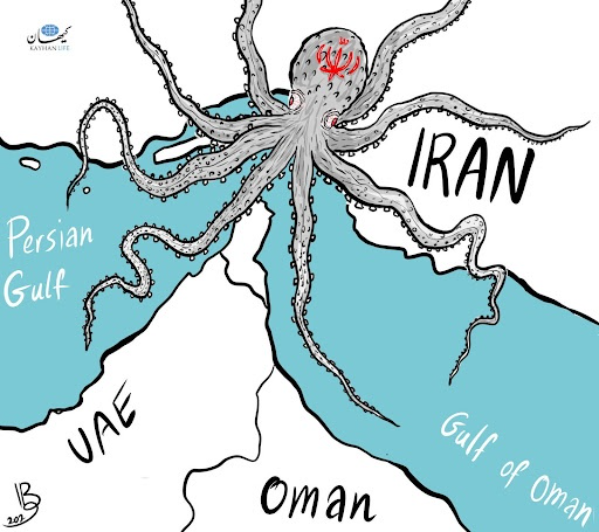
Even as hopes rose for a deal, the Islamic Republic sees Hormuz not simply as a passageway, but as a pressure point to choke the world.
Welcome to the Kayhan Life Week in Review
This week, Kayhan Life documented the status of power in the Islamic Republic, the revival of diplomacy, and the legal, financial, and economic consequences of the conflict in the Persian Gulf, and closed on a cultural note, reminding readers that Iran’s legacy lives through its people and culture.
►From inside the corridors of the Islamic Republic, Reuters reported that Mojtaba Khamenei, the new Supreme Leader, is recovering from severe injuries sustained in the airstrike that killed his father. His condition raises questions about the resilience of the theocratic rule.
Iran’s New Supreme Leader Has Severe And Disfiguring Wounds, Sources Say
►Beyond Iran’s borders, a U.S. court settlement ended 17 years of litigation and opened the way for victims of what prosecutors called Iranian state-sponsored terrorism to receive more than $300 million in compensation. The case showcased how the theocratic state’s political and financial networks were embedded abroad.
Terror Settlement Exposes Islamic Republic’s Manhattan Assets
►On the diplomatic front, the Islamabad talks ended without agreement after 21 hours. Tehran had wanted JD Vance at the table, seeing him as a potentially more pragmatic interlocutor.
Iran Wanted To Negotiate With Vance. They Got Their Wish
US-Iran Peace Talks End Without Agreement, Delegations Leave Pakistan
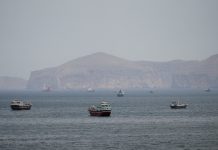
►By April 13, the focus of confrontation shifted to the water. Washington charted the bounds of its Hormuz blockade, extending from the east to the Persian Gulf, the Gulf of Oman, and the Arabian Sea. It warned that unauthorized vessels could be intercepted, while neutral transit to non-Iranian destinations would continue. The U.S. blockade expanded into a major operation involving more than 10,000 personnel, warships, and aircraft.
US Details Bounds Of Hormuz Blockade As At Least Two Ships Turn Around
U.S.-Iran Blockade Involves Over 10,000 Military Personnel, Ships, and Planes
►Meanwhile, as nuclear issues remained unresolved and the Pentagon continued threats against the Islamic Republic’s energy infrastructure, Washington moved to let a sanctions waiver on Iranian oil expire. Nevertheless, Pakistani mediation revived hopes of another round of talks.
US Military: ‘Locked And Loaded’ To Strike Iran’s Power Plants, Energy Industry If Ordered
EXCLUSIVE – US To Allow Waiver On Iran Oil To Expire, Administration Sources SayUS, Iran May Resume Talks This Week Despite Port Blockade
Trump Says Iran War ‘Close to Over’; Army Chief of Mediator Pakistan Arrives in Tehran
Hopes Rise For Deal To End Iran War, But Nuclear Issues Unresolved
►On the international front, the conflict’s dimension widened. One report said the Islamic Republic used a Chinese-built satellite to help target U.S. bases, a claim Beijing denied. Another incident showed how the conflict’s intimidation tactics echo far beyond the region: three people were arrested after an attempted arson attack on the London offices of Iran International, a Persian-language broadcaster serving Iranians worldwide.
Iran Used Chinese Spy Satellite To Target US Bases, FT Reports, Beijing Denies Story
Three Arrested After Attempted Arson At Persian-language Media Office In London
►Economically, Reuters argued that the Islamic Republic’s closure of Hormuz has permanently altered regional risk and created a tense “new normal” for Persian Gulf energy.
ANALYSIS: Iran’s Hormuz Gamble Ushers In A Tense New Normal For the Persian Gulf Energy
►In parallel, following the Trump administration’s decision to tighten pressure on Iranian oil, airlines warned of a deepening jet-fuel crisis as routes were disrupted and fuel prices surged. Meanwhile, the European Commission prepared temporary grants, subsidies, tax breaks, and loans to shield farming, fisheries, and transport from the war’s fallout.
Jet Fuel Shock From Iran War Worsens Crisis For Global Airlines
EU Eyes Grants, Subsidies To Offset Iran War Impact On Farming, Transport
►Finally, Katty Biglari’s traced a lineage of Iranian artistic life from a landmark Tehran gallery to its sequel in Washington, DC, reminding us that Iran is about people and culture.
Gallerist Nader Seyhoun Looks Back On A Lifelong Engagement With Art |