
By Kayhan Life and Kayhan London Staff
Leaked data from Iran’s energy sector offer a rare, unvarnished look at how the country’s gasoline crisis has been managed—and mismanaged—over the past decade. The documents suggest a system increasingly reliant on diluted fuel standards and chemical stopgaps, rather than structural reform, with mounting consequences for public health and the environment.
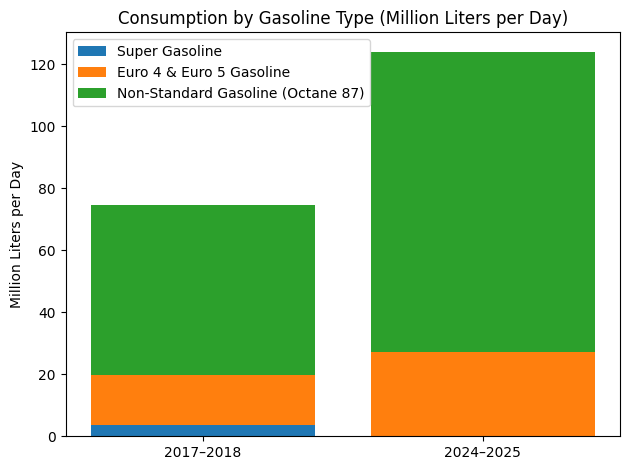
According to a report by the Iran Open Data Center, based on classified figures from the National Iranian Oil Refining and Distribution Company (NIORDC), in February-March this year, Iran’s daily gasoline consumption reached approximately 124 million liters. This represents a nearly 65 percent increase over a decade. In 2015–2016, daily consumption was approximately 75 million liters.
This surge has occurred against the backdrop of international sanctions, chronic underinvestment, and state-controlled fuel prices that rank among the lowest globally. Rather than expanding refining capacity or improving efficiency, the data indicate that authorities have chosen a faster, cheaper alternative: lowering fuel quality while continuing to market gasoline under ostensibly international standards.

As consumption climbed between 2022 and 2024, the share of petrochemical additives blended into gasoline increased nearly fourfold. Over the same period, production and distribution of higher-grade fuels—Super gasoline and Euro-4/Euro-5 grades—were steadily curtailed. The result is a national market dominated by lower-quality gasoline, often sold under labels that obscure its actual composition.
Air Pollution Causes 50,000 Deaths A Year in Iran, Says University Expert
The collapse of Super gasoline consumption is especially revealing. In 2017–2018, Iranians consumed about 3.74 million liters per day of Super gasoline. By 2024–2025, that figure had fallen to just 164,000 liters per day—a 96 percent decline. Roughly 71 percent of the remaining supply was consumed in Tehran, effectively cutting off the rest of the country from access to higher-grade fuel.
Euro-4 and Euro-5 gasoline—frequently cited by Iranian officials as evidence of environmental progress—fare only marginally better. These fuels are distributed in only 12 of Iran’s 31 provinces, with a total daily consumption of approximately 27 million liters.
NIORDC figures show that gasoline sold under Euro-4, Euro-5, or Super labels continues to be blended with additives such as MTBE (methyl tert-butyl ether). MTBE is a petrochemical that is banned or tightly regulated across much of Europe and North America due to its association with groundwater contamination and health concerns. In effect, the standards are largely nominal rather than substantive.
Low-grade gasoline now underpins Iran’s fuel supply. In 2017–2018, 87-octane fuel made up roughly 65 percent of total consumption; by 2024–2025, that figure had risen to about 78 percent. The trend leaves little doubt that the surge in gasoline demand has been absorbed almost entirely by inferior fuel, not by cleaner or more efficient options.
Provincial data reinforce the trend. Consumption of 87-octane gasoline across all 31 provinces has increased annually by 13.2 percent. In 2023-204, approximately 85.8 million liters were consumed per day. The figure increased to 97.1 million liters per day in 2024–2025. Markazi Province recorded the largest increase, followed by Tehran, underscoring the extent to which low-grade fuel has penetrated the national supply.
A separate report published earlier this year sheds light on the policy logic behind this shift. The government has increasingly relied on chemical blending outside standard refinery processes to mitigate chronic gasoline shortages resulting from sanctions, aging refineries, and surging domestic demand.
Confidential Ministry of Oil documents reveal widespread use of MTBE and other aromatic octane boosters to raise octane levels artificially. The share of blended gasoline increased nearly fourfold from 2022 to 2024, even at refineries that publicly claim adherence to Euro-4 and Euro-5 standards.
The scale is striking. The same classified documents indicate that the Shazand refinery, Iran’s largest producer of gasoline labeled as Euro grade, uses approximately 350,000 liters of MTBE per day, while the Isfahan refinery, the country’s second-largest, consumes about 325,000 liters per day. In a system with independent regulation, figures of this scale would invite close examination; in Iran, they instead underscore the lack of effective environmental oversight.
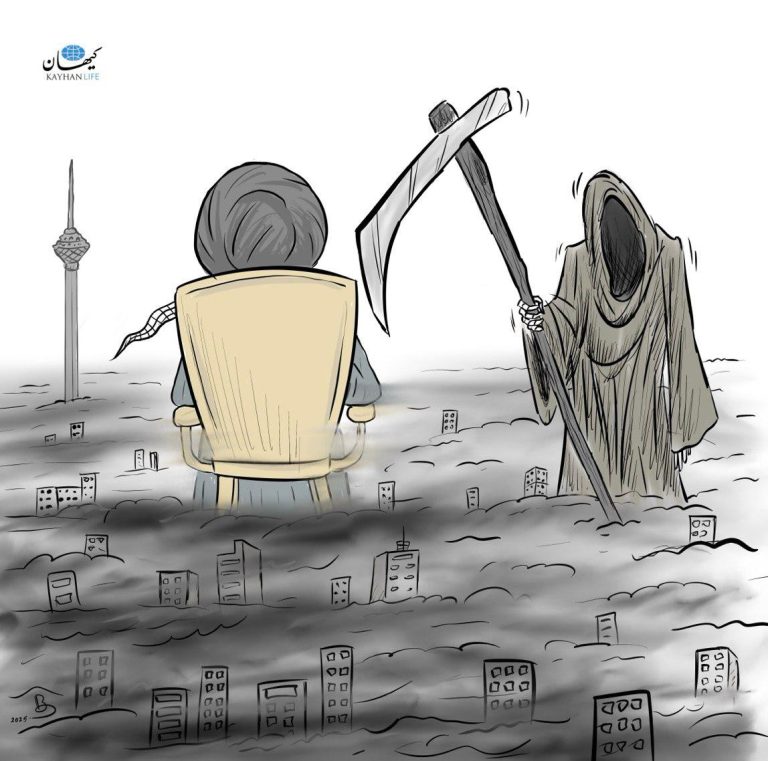
The European Union developed Euro-4 and Euro-5 standards to reduce emissions and improve urban air quality—an especially urgent issue in Iran, where cities such as Tehran routinely experience hazardous smog levels. Iranian officials frequently claim that the country is modernizing and adhering to international standards by using these labels. Ministry of Oil data, however, tells a different story. They reveal that although approximately one-third of Iran’s gasoline is sold under such designations, its chemical composition falls far short of globally accepted benchmarks.
Analysts point out that the state has opted for short-term measures that impose burdens on public health and the environment. They maintain that what is sold to Iranian motorists as “Euro” gasoline is, in reality, a degraded product.
Death Roams Iran’s Streets, the Islamic Republic Barely Blinks