By Kayhan Life Staff
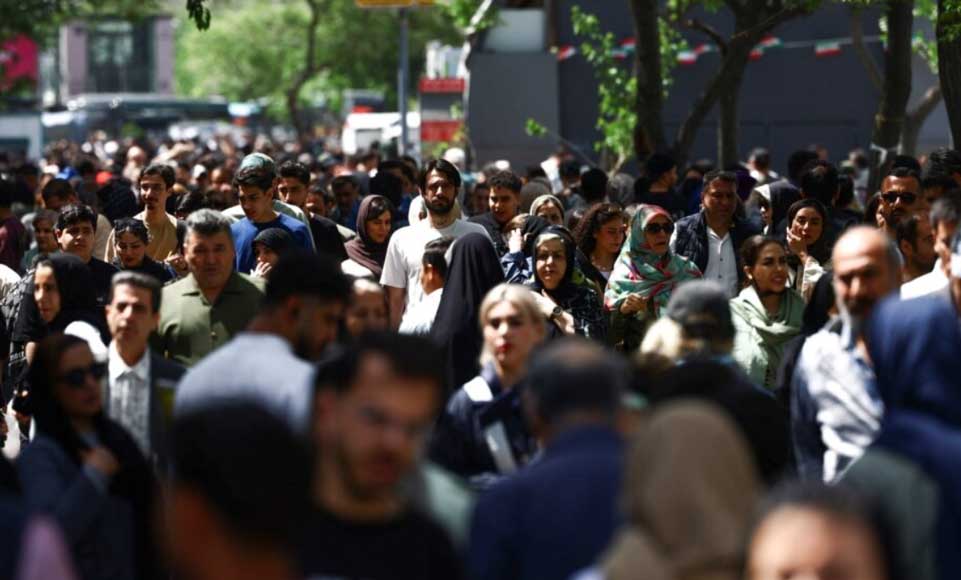
An academic in Iran has warned that a new wave of nationwide protests is likely to break out because of severe economic conditions, daily price increases, hyperinflation, and extreme social and psychological pressures endured by the population.
In an interview with the Tehran-based Jamaran news website, Dr. Jabbar Rahmani, an associate professor of anthropology at the Institute for Cultural, Social and Civilization Studies (ICSCS) — whose institute operates under the Ministry of Science, Research and Technology — warned: “From a social standpoint, people’s spirits and mental well-being are being damaged every day.”
He added that Iranian society was on the verge of “a repeat of the December 2025–January 2026 protests.”
According to Dr. Rahmani, since the outbreak of the war, the Islamic Republic of Iran has been seeking to implement a model of “general mobilization,” in which “the state keeps people engaged and present on the scene, creates a popular resistance movement, and builds infrastructure to strengthen that resistance.”
“Under this model, the assumption is that we are still in a state of war, that we cannot back down, and that people must endure the pressure. As a result, the normal lives and welfare of families are postponed, and quality of life deteriorates,” he noted.
Dr. Rahmani added that this model is patterned after models used by the former Soviet Union, and that “under such circumstances, social freedoms are also reduced, and in practice, a wartime state of alert spreads throughout society. According to this model, victory is always envisioned, and the continuation of resistance is emphasized. While this model can create temporary cohesion, ultimately it drains society socially and culturally.”
Referring to the country’s economic problems, he explained: “Overall, the country’s economy has ground to a halt, hyperinflation is expected, and the broader economic outlook is unclear. We are facing daily price increases, and more than three-quarters of society cannot be convinced as to why they should endure this situation; they are simply under tremendous psychological pressure.”
“The further we go, the more society’s resilience, hope, solidarity, and outlook for the future become eroded,” he added.
He stressed that even the number of government supporters taking part in nighttime gatherings had declined, and noted that a radical atmosphere was taking shape within society.
“Both ends of the extremist spectrum can move toward extreme radicalism; in other words, there is even a possibility that people could turn against other people,” he warned.
“The moment of explosion cannot be predicted, but this pressure exists within society,” he added. “In fact, given that the factors generating dissatisfaction are not being addressed, the longer this protest pressure remains bottled up, the larger and more concentrated it will become when it is eventually released.”
“One part of the establishment genuinely wants to fundamentally reform the rules and procedures in order to achieve a successful reconstruction, but another part would have no problem even if the country were to become like Sha’b Abi Talib for several years, and they continually call on people to resist.”
ANALYSIS: U.S. ‘Economic D-Day’ Could Push Iran’s Regime to the Brink
Sha’b Abi Talib, also known as the Valley of Abu Talib, was a mountain valley in Mecca where the Prophet Mohammad, his family, and the Banu Hashim clan lived during a severe three-year social and economic boycott imposed by the Quraysh, a powerful mercantile Arab tribe that controlled Mecca and the sacred Kaaba before the rise of Islam.
“When people are facing enormous difficulties obtaining medicine and meeting their basic living needs, and are becoming poorer every day, how can they possibly resist?” he added.
“The results of a recent survey show that the desire to emigrate among Iranians has declined by around 8 percent. This does not mean that people want to stay in Iran; rather, it indicates that people have reached the height of despair. Members of society have become so disillusioned that they no longer have any hope of seeing any change in their lifetime and want to live out the remaining years.”
Some analysts argue that if a new wave of emigration from Iran has not taken place following the two recent wars and the bloody suppression of the December 2025–January 2026 protests, it is precisely because, given the current circumstances and the regime’s severe and comprehensive weakening, people are hopeful for fundamental changes through the fall of the Islamic Republic. That hope is what has kept them in the country.
Dr. Rahmani also said: “It appears that the government is still at a stage where it needs to get society out of this critical livelihood situation and prevent it from falling apart.”
“We have not yet entered the stage of social reconstruction, and the same clichéd thinking still exists among officials: ‘Once the war is over, we will think about reconstruction.’ At the same time, postwar reconstruction begins during the war itself. However, the government is still preoccupied with necessities.”