#Pezeshkian, #Iran, #DonaldTrump, #USIranRelations, #AnnihilationThreat
By Parisa Hafezi, Humeyra Pamuk and Jana Choukeir
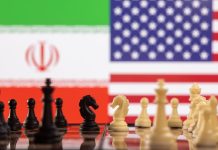
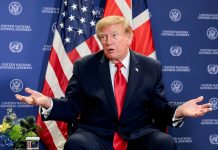
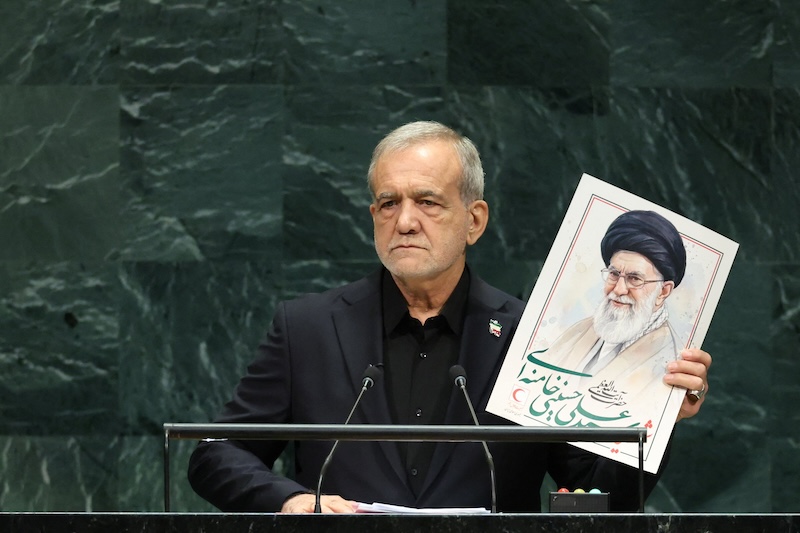
UNITED NATIONS/DUBAI, Sept 23 (Reuters) – Iranian President Masoud Pezeshkian said in a speech at the UN on Wednesday that Tehran would never surrender to the US but still believes in diplomacy, a day after President Donald Trump used the same forum to threaten to “annihilate” Iran.
The duelling speeches at the annual UN General Assembly in New York bookended the first shuttle talks between the United States and Iran for months, which appeared to have yielded no concessions in the public stance of either side towards ending the Middle East war.
In his speech, Pezeshkian defended Iran‘s military actions as defensive, and insisted Iran was not seeking nuclear weapons.
Tehran Reviewing US Response to Its Proposal, Senior Iranian Official Says
In a potential new flashpoint, Iran also threatened to act against its neighbours if they abide by new US sanctions intended to ground Iranian civilian aircraft worldwide.
Washington has said it will impose so-called secondary sanctions against any country that allows Iranian flights after Wednesday. Mohsen Rezaei, secretary of Iran‘s Supreme National Security Council, told state TV Iran would ensure neighbouring countries’ airports could not function if they stop Iranian flights.
The annual UN gathering in New York provided the occasion on Tuesday for Iranian and U.S. officials to hold their first known indirect talks since a ceasefire collapsed in July, with Iran‘s Foreign Minister Abbas Araqchi and US envoys Steve Witkoff and Jared Kushner communicating through mediators on the sidelines.
“Steve and Jared had a very productive meeting today with mediators of Iran,” Trump said on Tuesday after his own speech. “I think there’s a lot of momentum for them to make a deal. It’s what we’re hearing from everybody.”
Iranian Foreign Ministry spokesperson Esmail Baghaei said Tehran had engaged with Washington through a Qatari mediator and conveyed conditions, including an end to the war on all fronts and a halt to US “acts of aggression”.
Some Iranian state media initially reported that Araqchi and Witkoff had met, but Iranian officials clarified to Reuters that it was not face-to-face.
IRAN HARDLINERS RESIST DIPLOMATIC MOVES
The diplomatic contact in New York caused a backlash in Iranian media associated with hardliners.
An opinion piece run by the semi-official Tasnim news agency, associated with the Revolutionary Guards, said Araqchi was wrong to have contacts with Witkoff and Kushner, “a major gift to Trump”, as Iran had already conveyed its terms.
Iranian sources told Reuters the delegation had been ordered not to meet the Americans face-to-face by the Supreme National Security Council, a body that includes figures selected by Ayatollah Mojtaba Khamenei, the supreme leader. Khamenei has yet to appear in public since replacing his father, who was killed on the war’s first day.
One Iranian journalist covering the visit told Reuters that some hardliners viewed the trip to New York itself as an insult to the memory of the slain leader, Ali Khamenei.
OIL PRICES HOLD NEAR TWO-WEEK LOW
Still, the diplomatic opening helped keep oil prices near two-week lows. Brent crude LCOc1 hovered around $100 a barrel after surging earlier this month when Yemen’s Iran-backed Houthis launched a major offensive, threatening traffic through the Red Sea, an alternative Saudi export route.
The war, launched by Trump in February alongside Israel as “Operation Epic Fury”, has lasted nearly seven months, killing thousands of people, disrupting global energy supplies and spreading to other countries in the region — particularly to Lebanon and more recently to Yemen.
An interim agreement reached in June, signed by Trump and Pezeshkian, would have given Iran its main demands: lifting financial sanctions and unfreezing assets in return for talks on limiting its nuclear programme.
But that deal unravelled within weeks over shipping rules in the Strait of Hormuz, conduit for a fifth of global oil and liquefied natural gas before the war. Iran wants to exert control and collect fees from ships that use it, which Washington rejects.
In the latest reported attack in the strait, Britain’s UKMTO maritime security agency said a cargo ship had been hit by projectiles, causing two casualties among the crew. The crew had been evacuated and the ship was on fire and adrift.
Despite near-daily attacks, traffic through the strait has picked up in recent weeks. Oil producers pay shipping companies fees of as much as a quarter of a cargo’s value to take the wartime risk of sailing through the strait with transponders switched off, before transferring crude to other vessels on the far side.
Exports from the United Arab Emirates have already recovered to pre-war levels, and Saudi Arabia has sold 60 million barrels of [Persian] Gulf oil for both this month and next, to be delivered beyond the strait off the coast of Oman.
Nevertheless, a third of [Persian] Gulf oil is estimated to be missing from global supplies. Shortages have particularly hit refined products such as diesel, causing inflation, pushing up interest rates and hurting Trump’s Republicans.
(Reporting by Reuters bureauxWriting by Peter GraffEditing by Ros Russell and Gareth Jones)